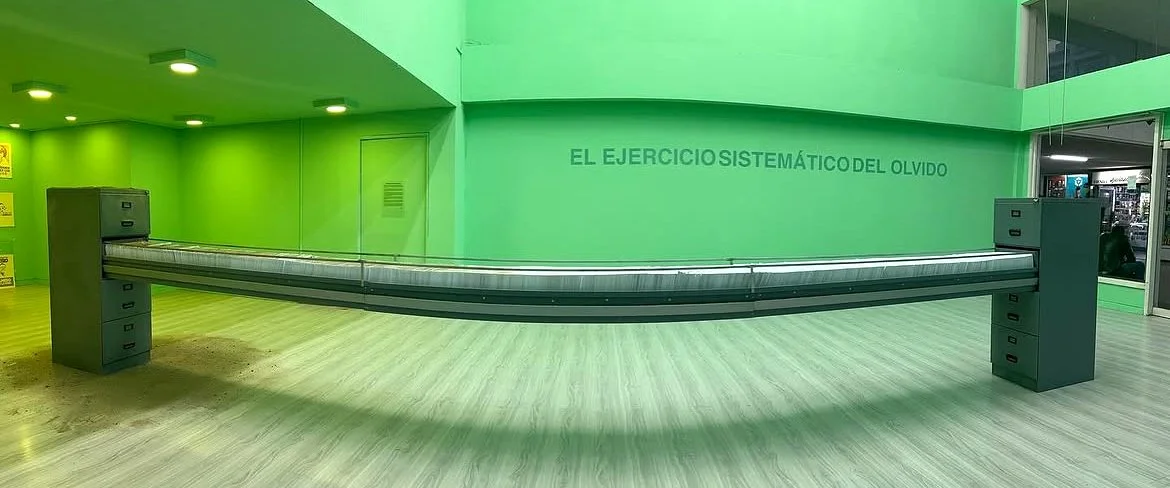
Mordiendo Polvo · Filing cabinet installation · UN_FAIR, Centro Tequendama · Bogotá, Colombia, 2025
-
“Dust, itself formless and without edges, can both dissolve form and reveal it (…)” — (Steven Connor, “Pulverulence”, 2009)
“(…) the testimony of circularity, the impossibility of things disappearing, going away, or being gone.” — (Carolyn Steedman, Dust: The Archive and Cultural History, 2021)
Gonzalo García presents fragments of the visual memory of Colombian electoral campaigns in dialogue with other residues we tend to consider insignificant, although these categories may be interchangeable. He works with material that normally accumulates everywhere but is systematically removed by conservation protocols from any properly cleaned and organized archive: microscopic particles that drift, settle and gather ceaselessly across reality, yet originate in the decomposition of that same reality.
The organic and inorganic residues we call dust are time itself in the process of solidifying. They emerge from mountains and minerals eroded by water and wind, from skin cells and other dead tissues, pollen and spores. Over millions of years, they settle into new stratigraphic layers that recycle earlier ones while adding the components of their own time. Some scientists seek to establish pulverized traces of metals, artificial chemicals and synthetic textiles, radioactive fallout from uranium or plutonium bomb detonations, and the nanoplastics now present in the air as a thin layer marking the rise and decline of human civilization: a human counterpart to the iridium-rich clay that records the end of the Cretaceous.
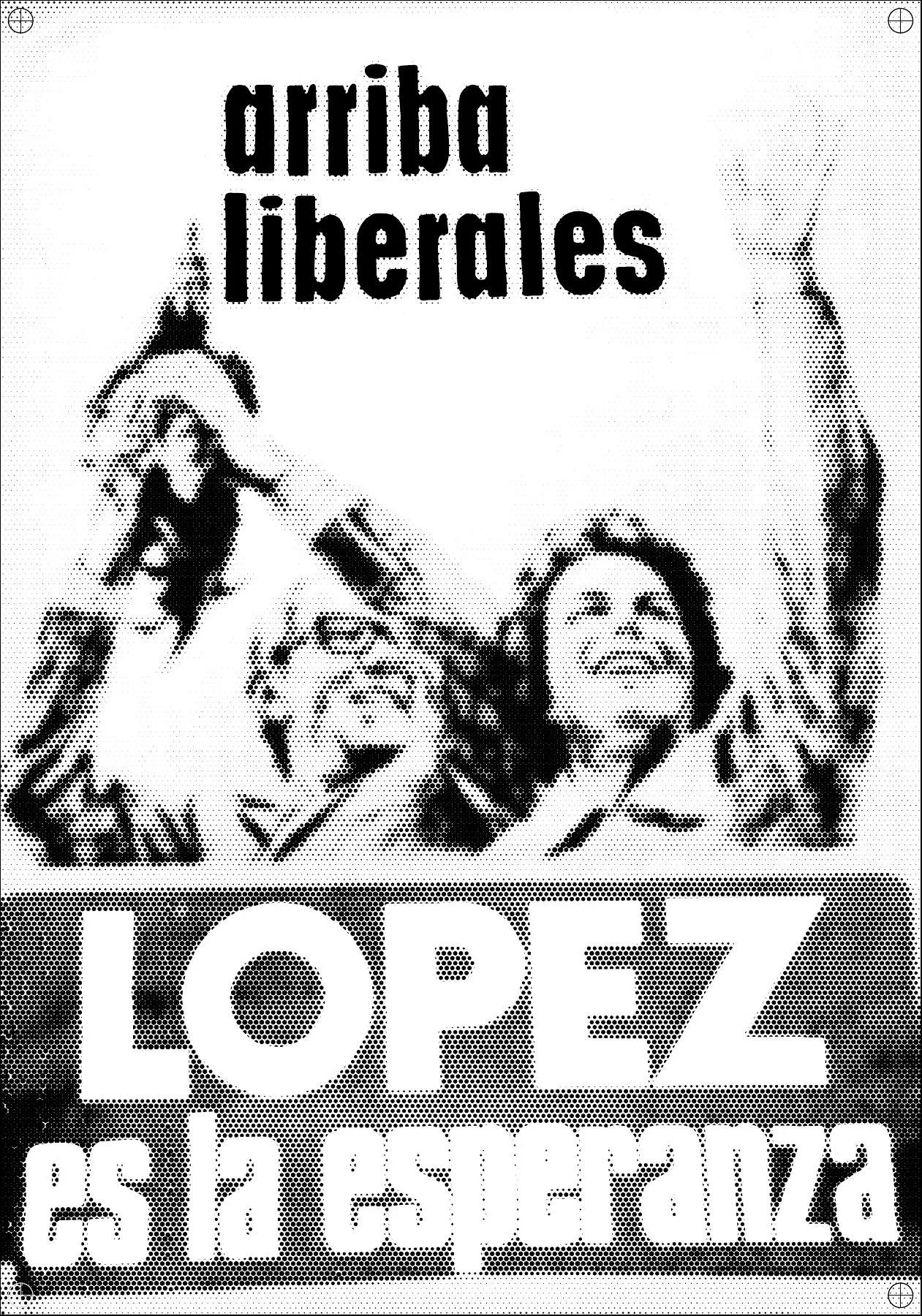
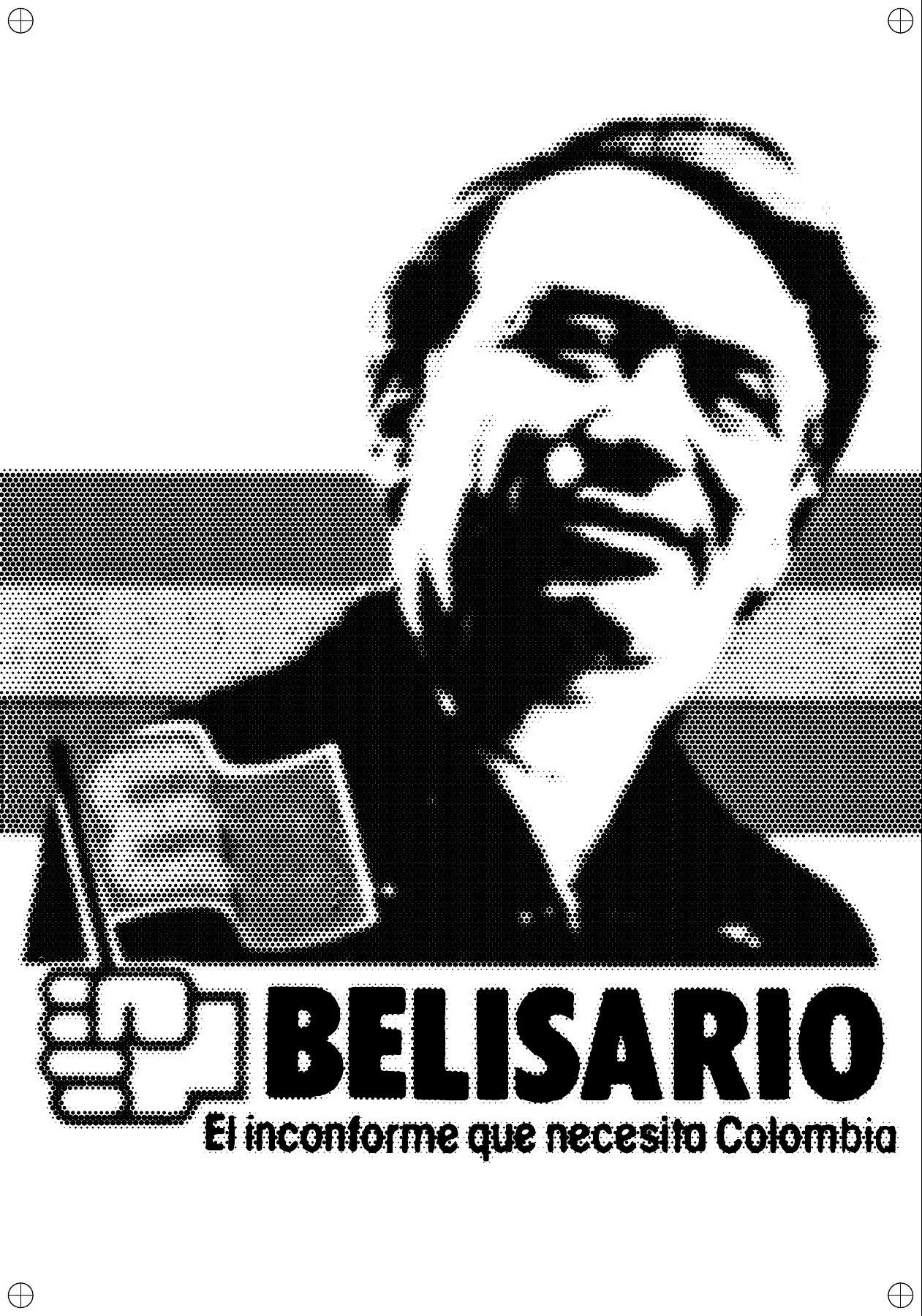
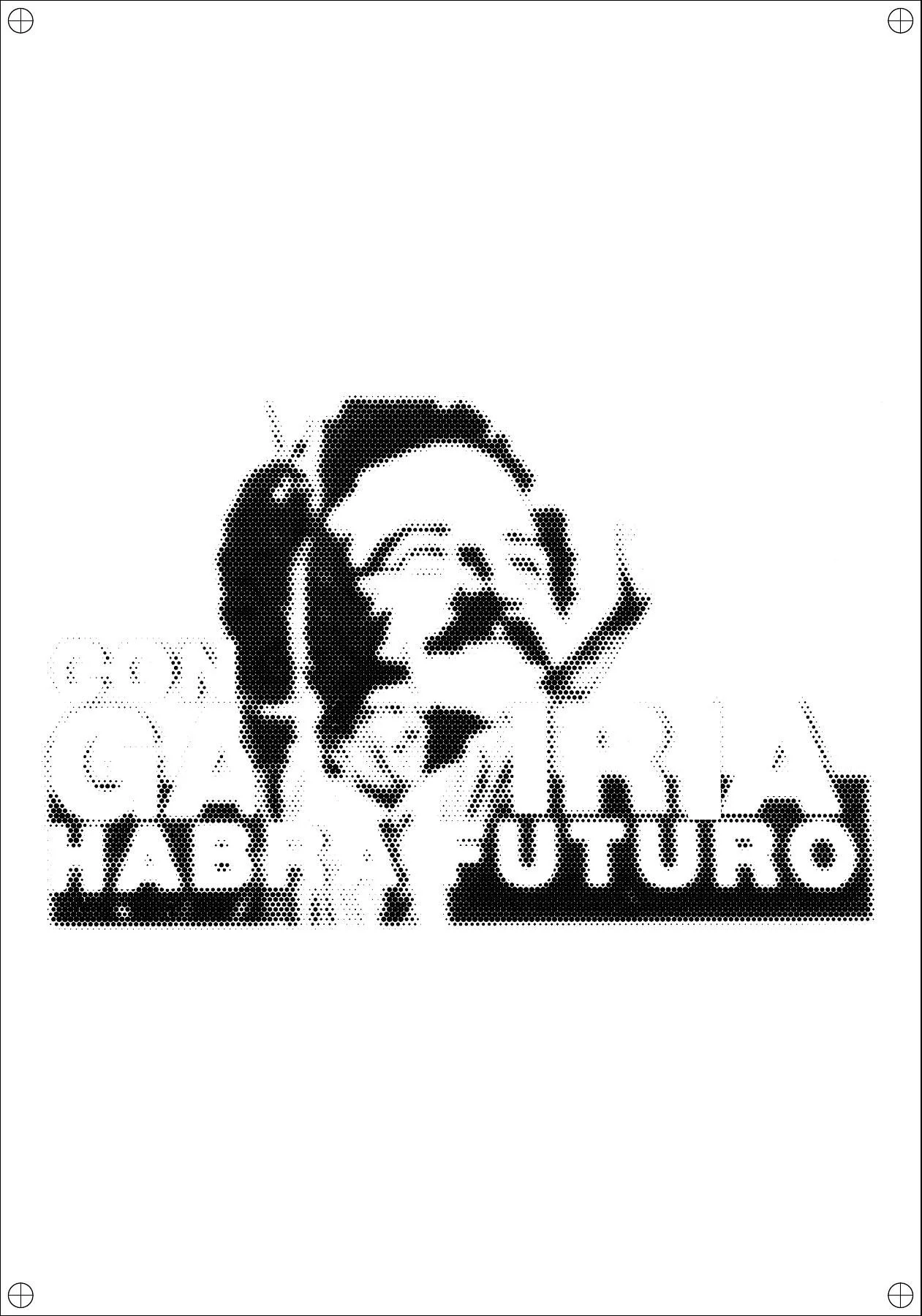
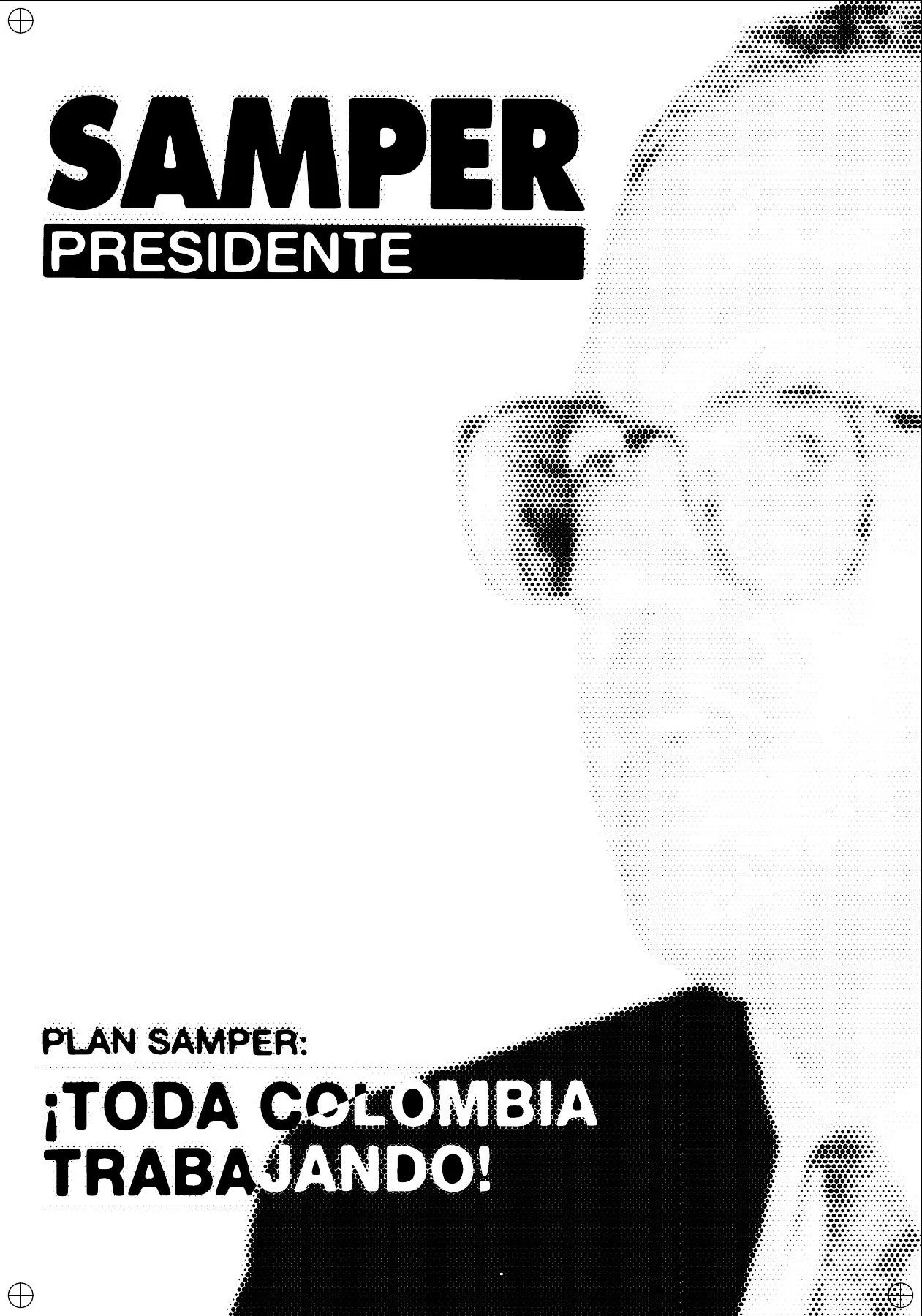
When we speak of corroded political posters, perhaps torn into décollage, it is unclear whether we mean those that briefly occupied urban walls during campaigns or the other cartels that have penetrated society more deeply through their operations: drug trafficking, judicial corruption, waste management. In Spanish, the word cartel carries both meanings. These traces are only marginally preserved in libraries. Most survive as family recollections or in party headquarters, but primarily persist as a fragile collective memory of images and slogans that once made promises to the future.
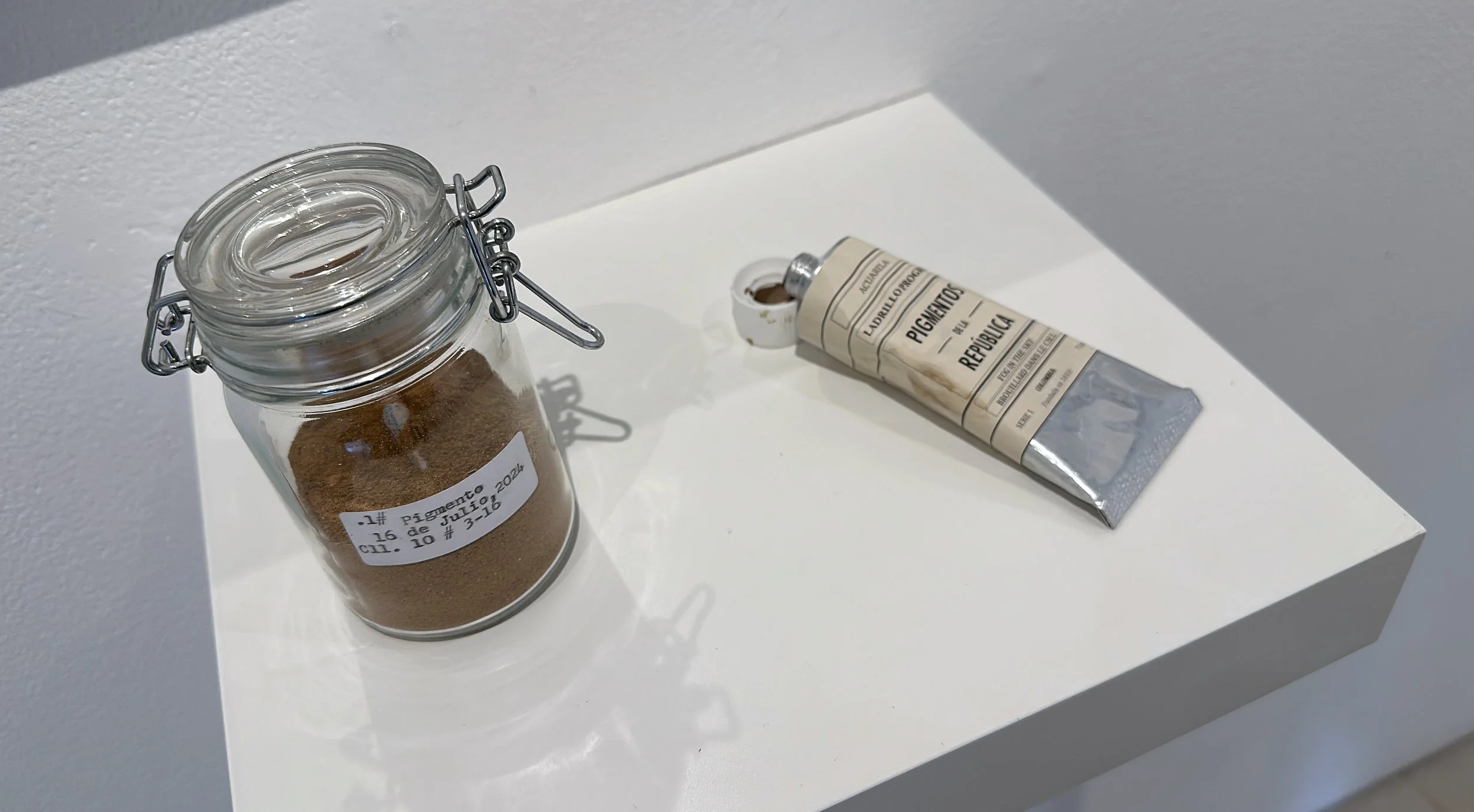
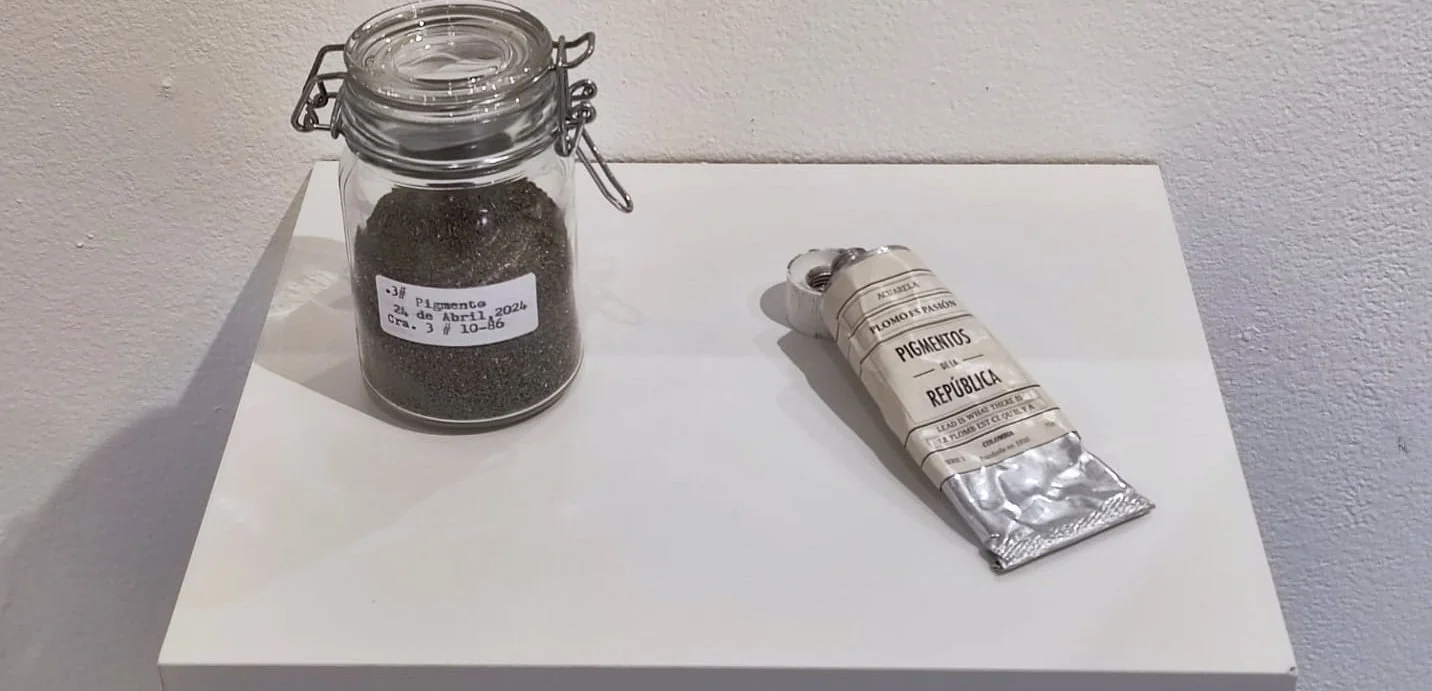
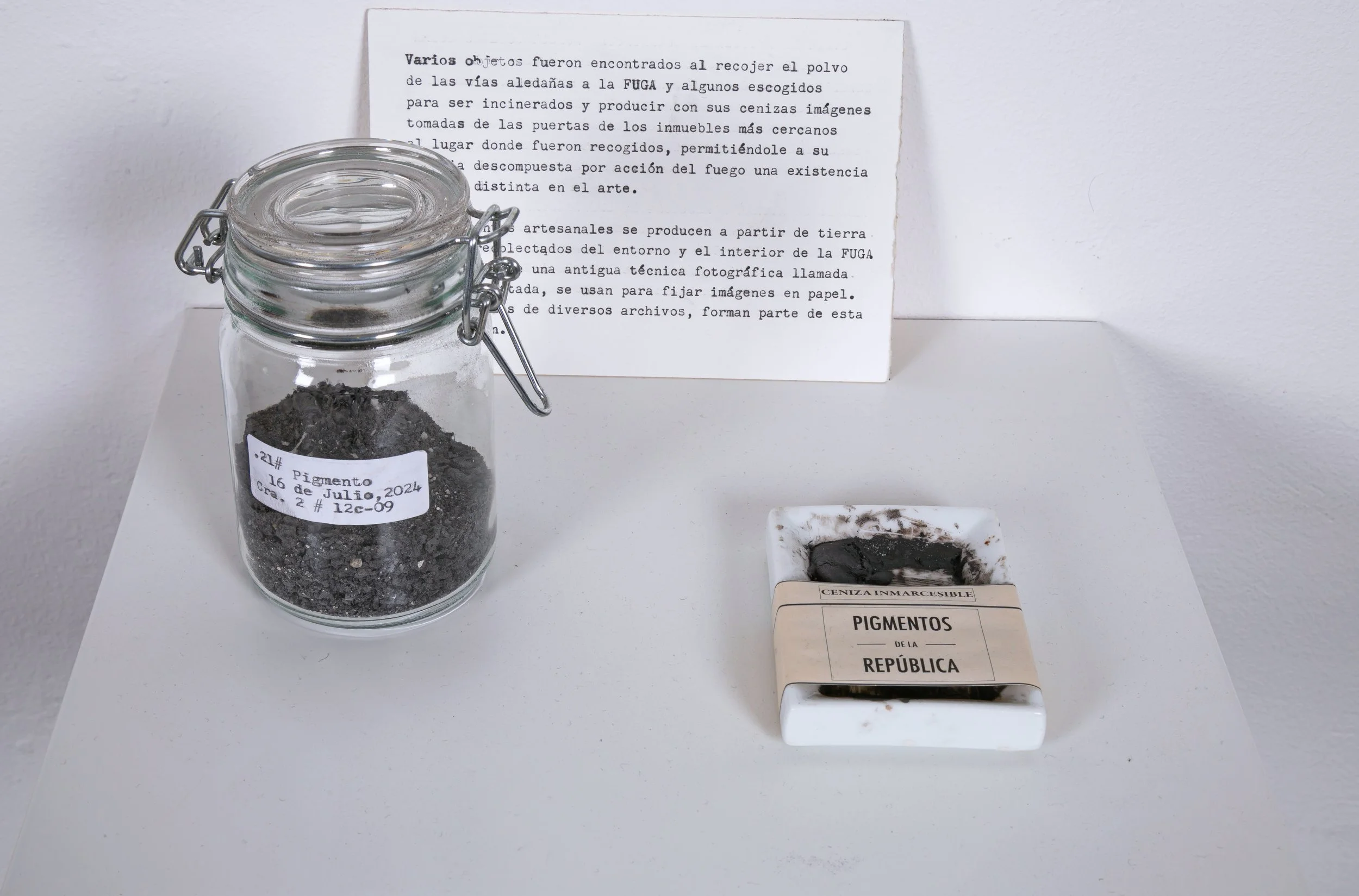
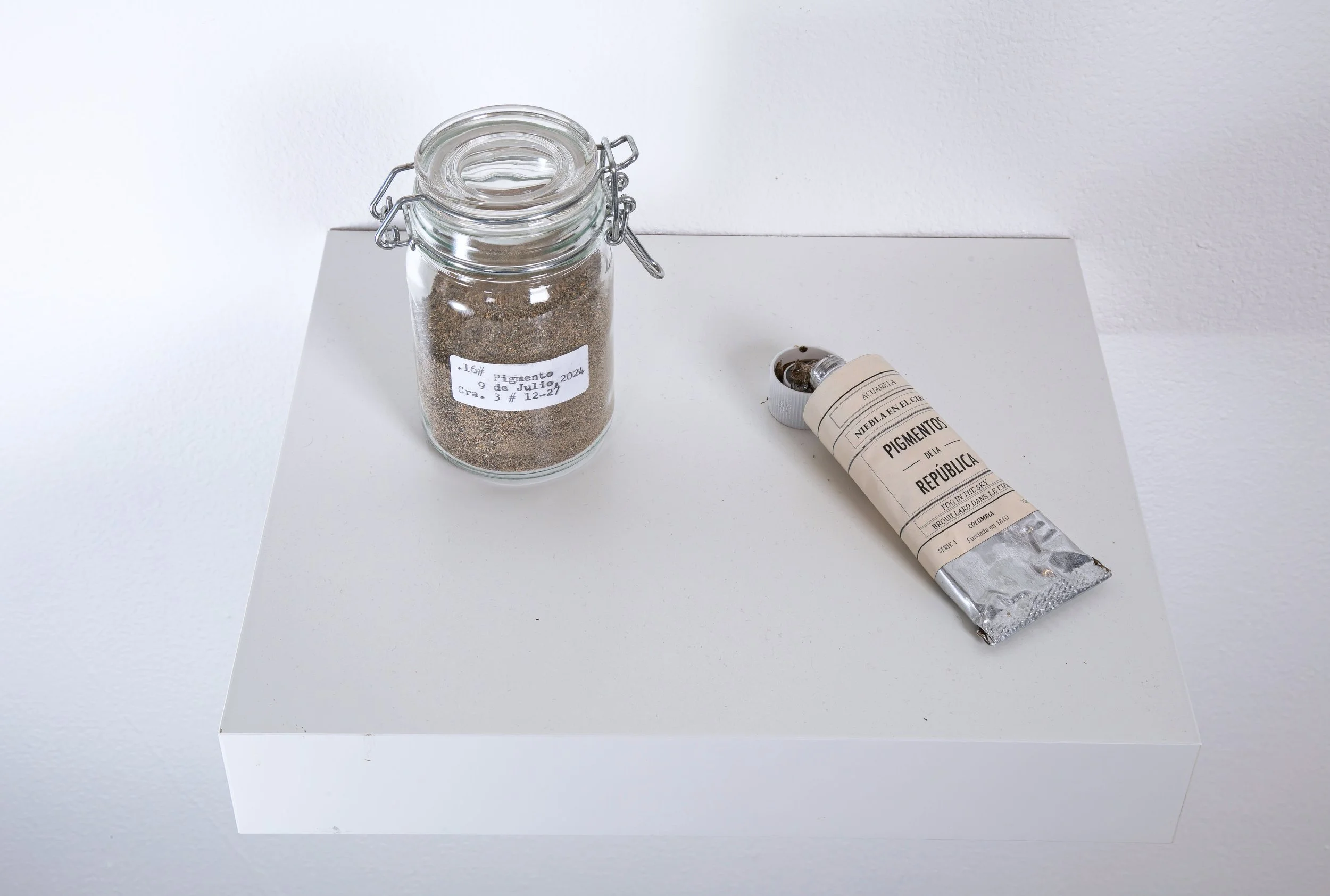
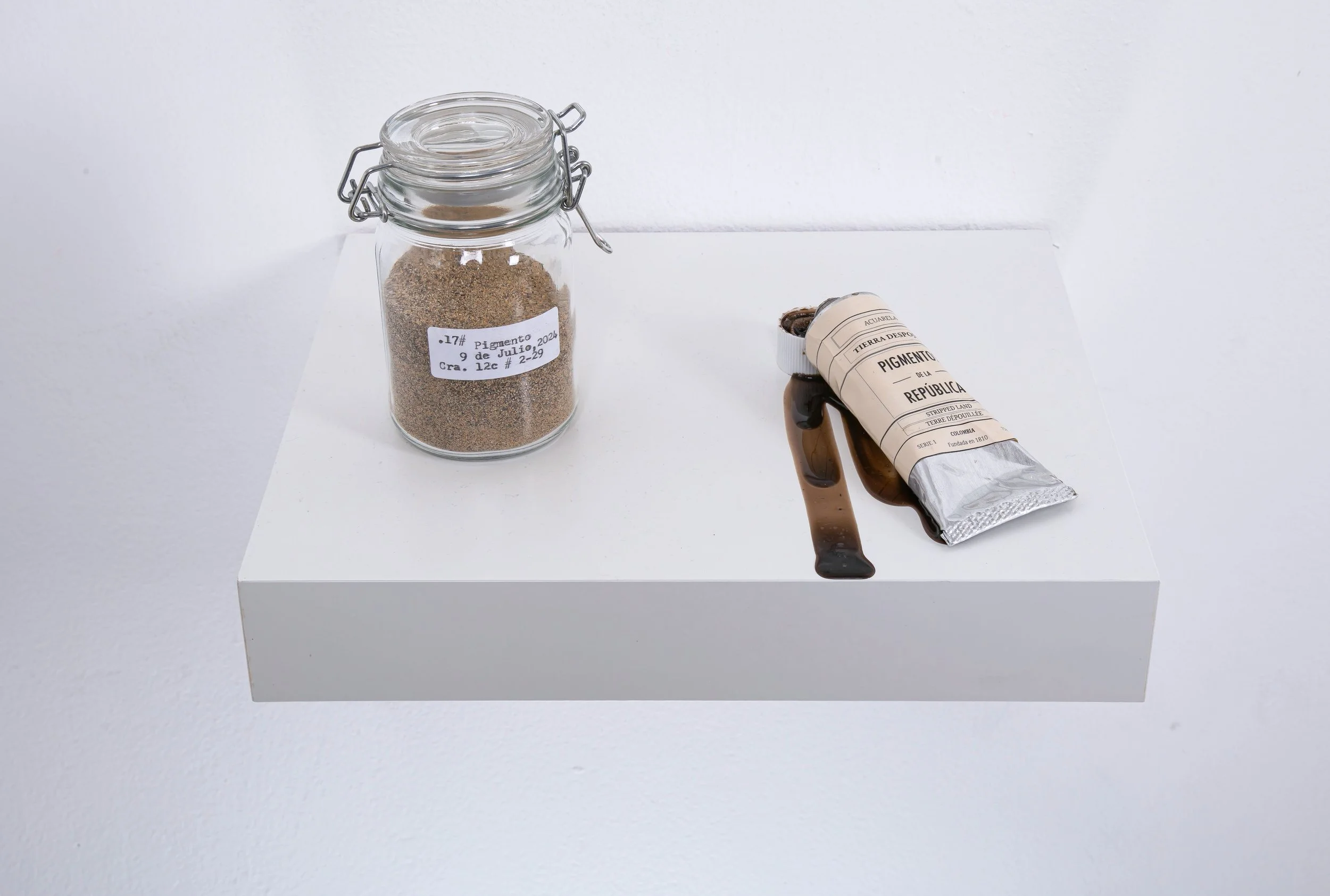
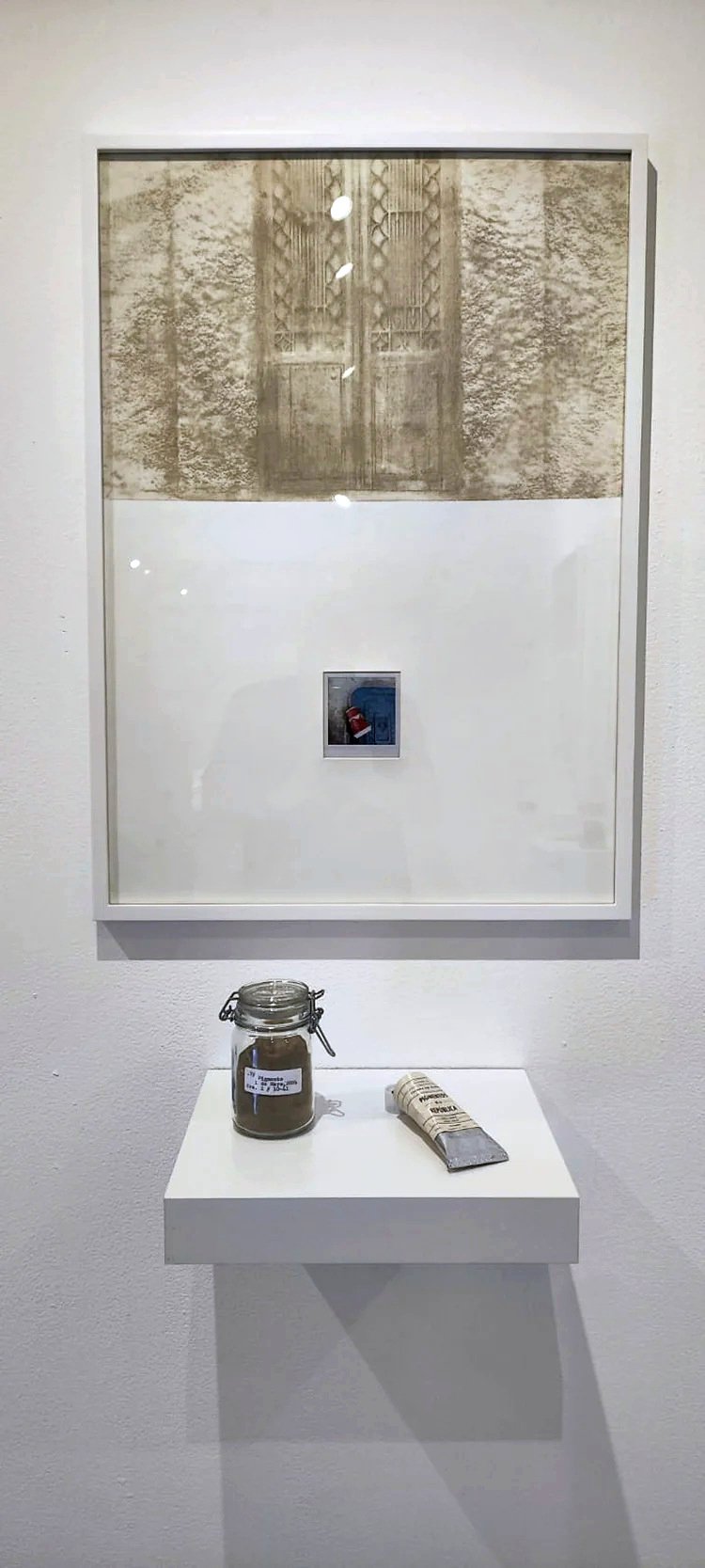
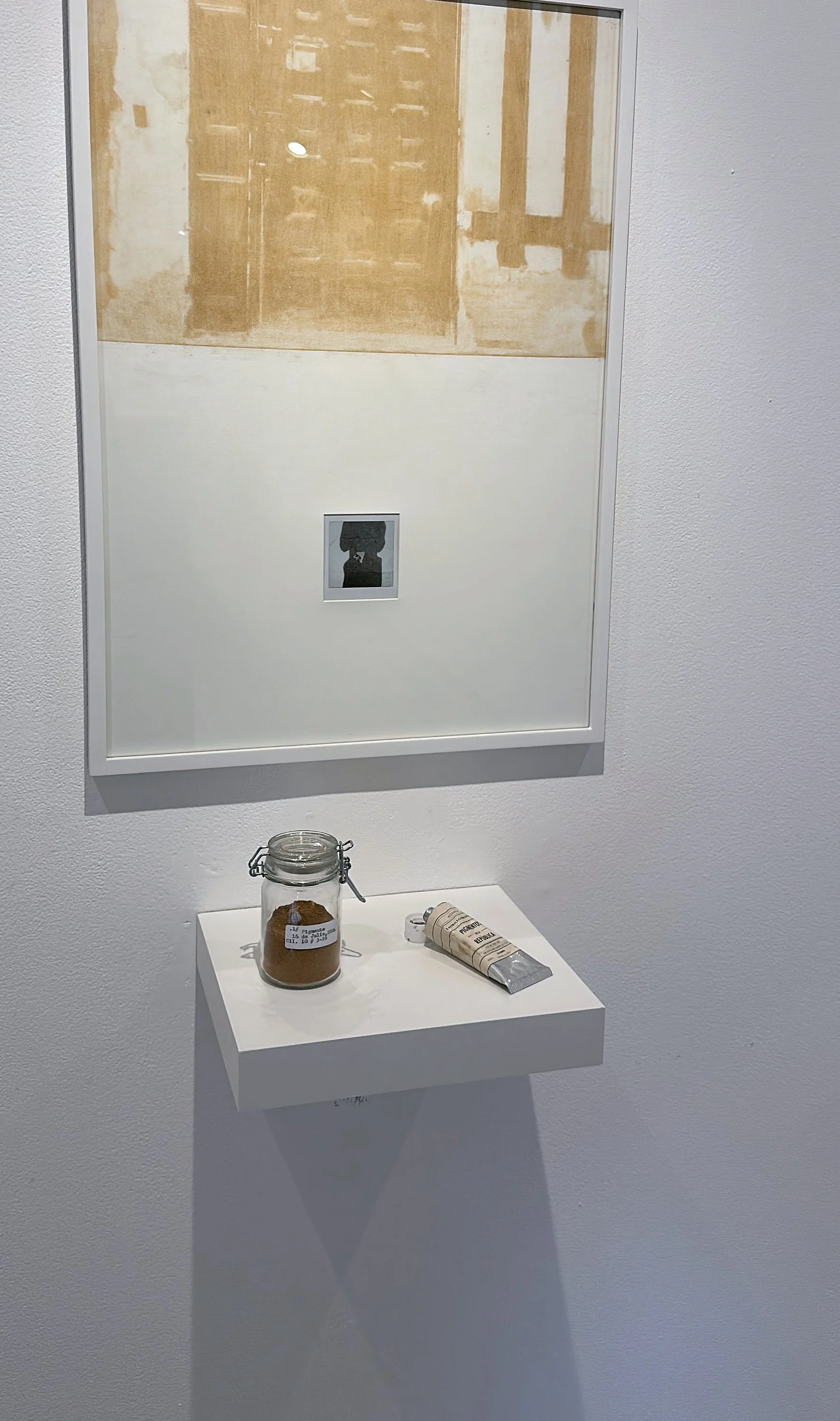
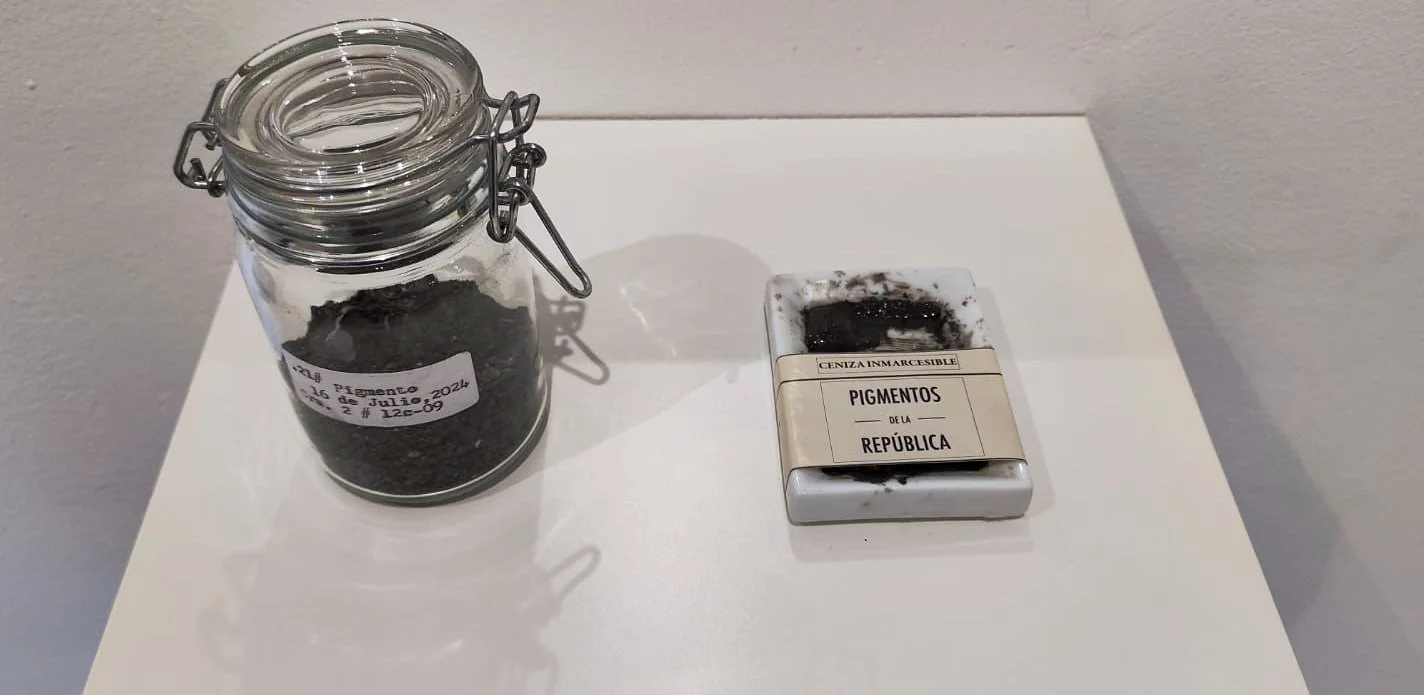
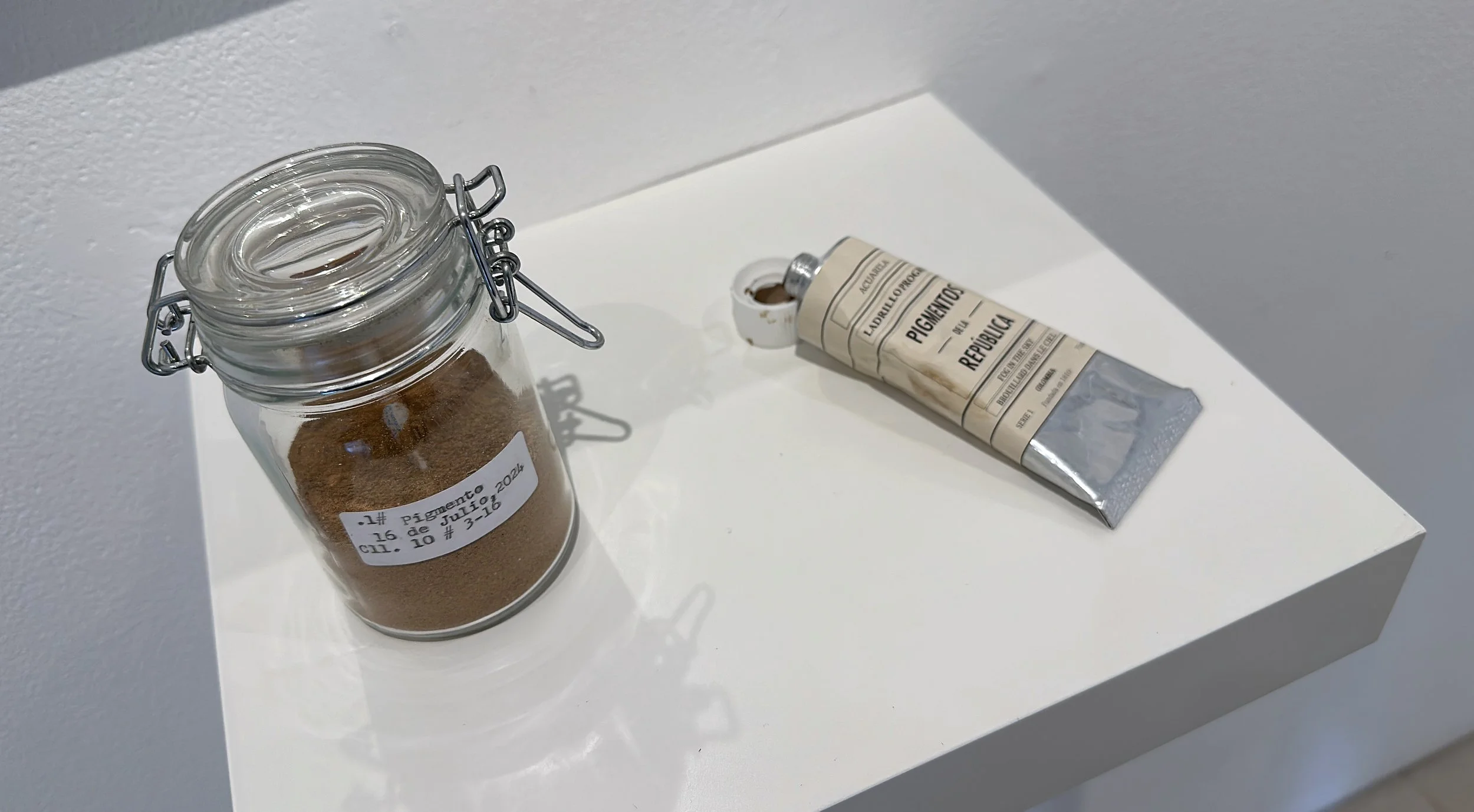
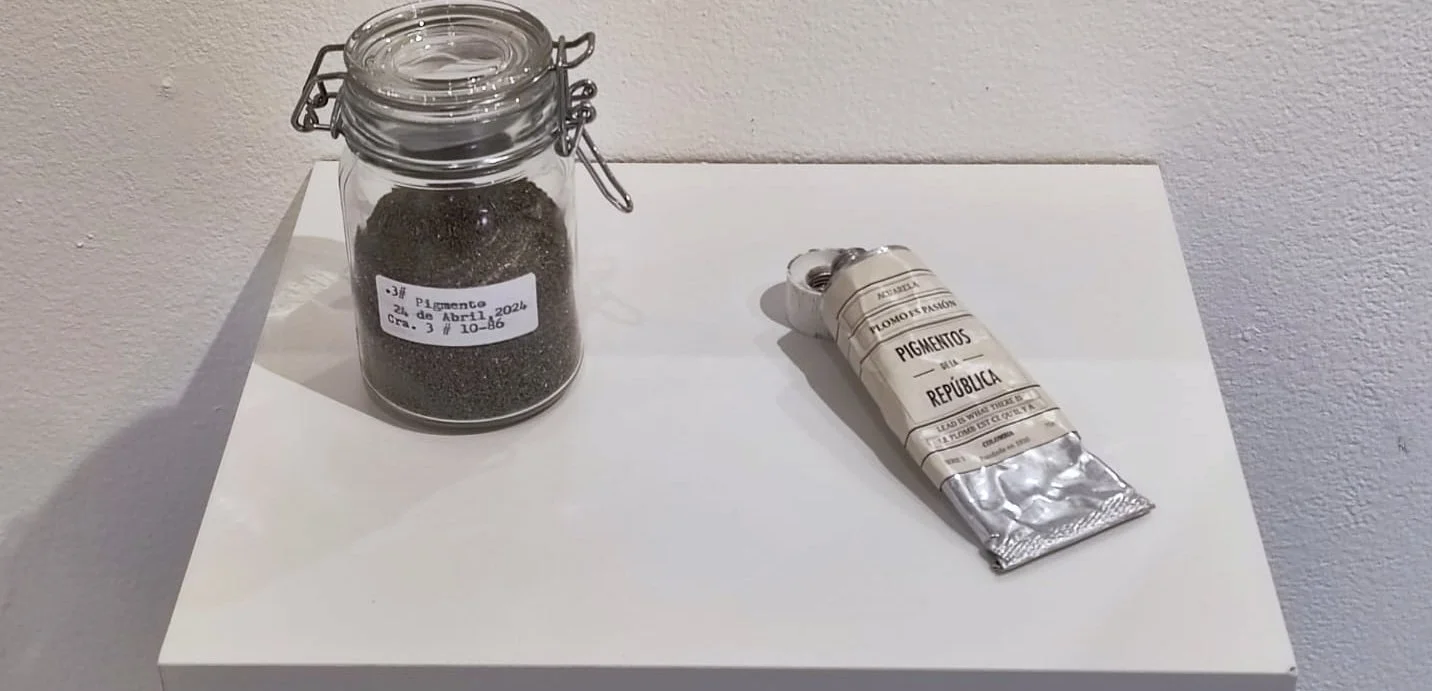
Outside the formal documentary archive, the artist collected residues from the streets surrounding this building and from its interior, including crushed debris from recent renovations. Instead of performing the laboratory analysis initially proposed, he developed a process for producing his own pigments, presented here in handmade versions with inventive names. Through an experimental photographic process that combines photosensitive emulsion with these materials, or detritus, dust becomes fixed in images. The work records the passage of a politics that is both our recent past and a present in constant demolition.
Emilio Tarazona, curator
Mordiendo Polvo
Collected dust becomes photographic pigment, bringing electoral images and archival furniture into a material investigation of political memory.
Read more
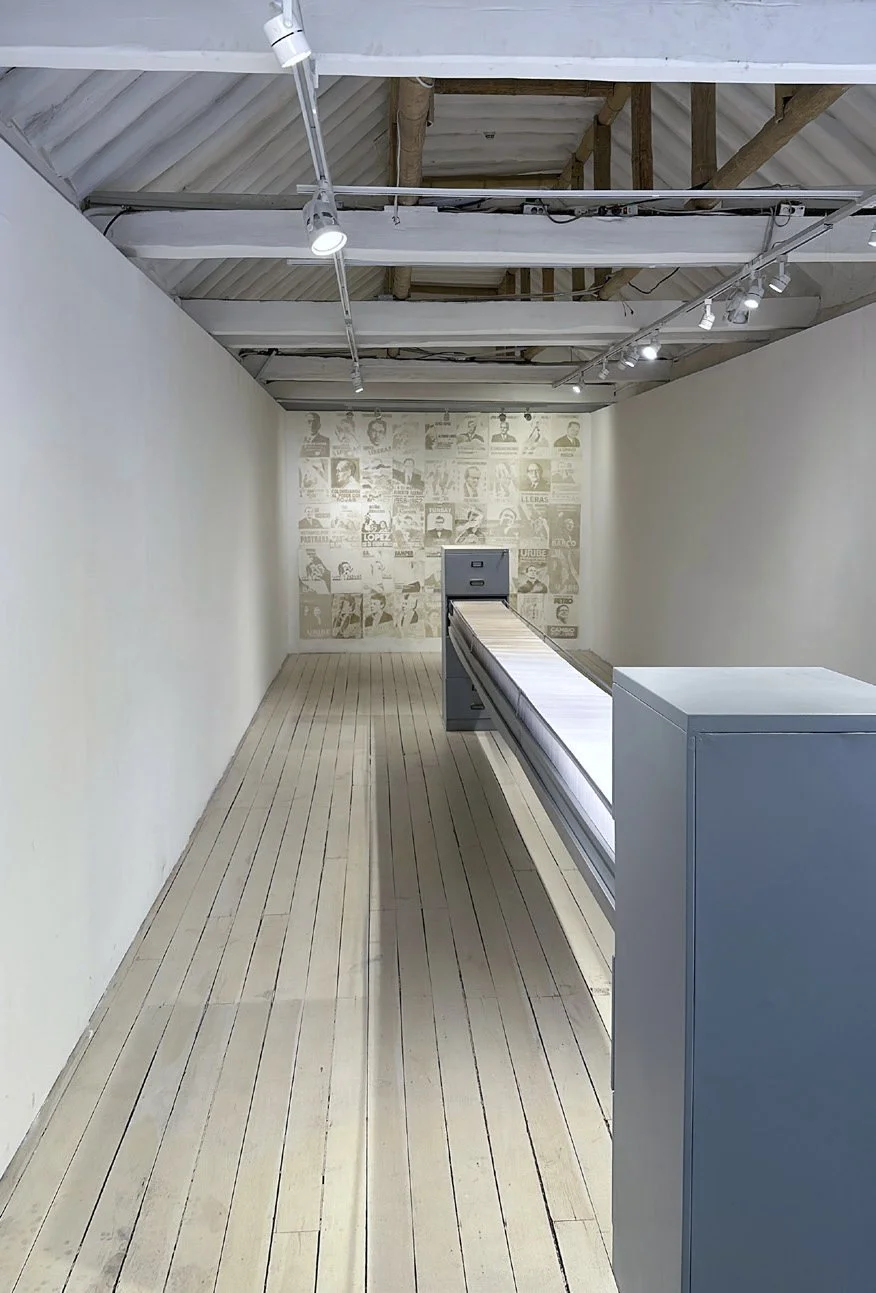
Mordiendo Polvo brings together collected dust, experimental photographic images and archival furniture to examine how political memory is preserved, transformed and sometimes lost. Dust gathered from the Fundación Gilberto Alzate Avendaño and its surroundings becomes a pigment through which images of Colombian electoral campaigns reappear. Presented alongside an extended filing cabinet, these images establish a relationship between the material residue of a place and the institutional systems through which its history is remembered.
The project begins with a contradiction: in an archive, dust is systematically removed to protect the objects and documents it contains, even though that same dust is formed from the gradual deterioration of the world around them. I became interested in this material as a form of involuntary memory, one that accumulates without distinguishing between what history considers significant and what it allows to disappear.
Full Artist Text
Mordiendo Polvo begins with something that is usually removed before it can become an object of attention: dust.
In archives, libraries and institutional spaces, dust is treated as a threat to conservation. It is cleaned away, removed and controlled to protect documents and objects. Yet that same dust consists of remnants of the reality the archive seeks to preserve: fibres, minerals, organic particles, skin, pollution, and residues of objects and materials that slowly decompose.
I became interested in this contradiction. The archive seeks to preserve a stable memory while systematically removing the matter that records its own ageing. Dust thus functions as an involuntary archive: an accumulation that follows no curatorial, institutional or historical criteria and indiscriminately brings together remnants of what has been present.
At different stages of the project, I have collected dust and other residues to transform them into pigment and photosensitive material. The image ceases to be merely a representation of an event and begins to be physically made from matter connected to a history, a place or a disappearance. This logic was already present in Tiempo Muerto, where residues of brick or metal became images; Mordiendo Polvo extends that investigation towards the archive, the library and the relationship between institutional memory and matter.
The project has developed in relation to the Fundación Gilberto Alzate Avendaño and subsequently in other contexts. I am interested in how each geographical shift changes the material and symbolic composition of dust: there is no universal dust. Each place produces its own residue and, with it, a possible image.
Mordiendo Polvo therefore investigates a memory that is not preserved intact. A memory that erodes, mixes, settles and becomes matter once again.
The Work
An extended filing cabinet meets images made from dust, bringing institutional order into contact with matter that resists classification.
Read more
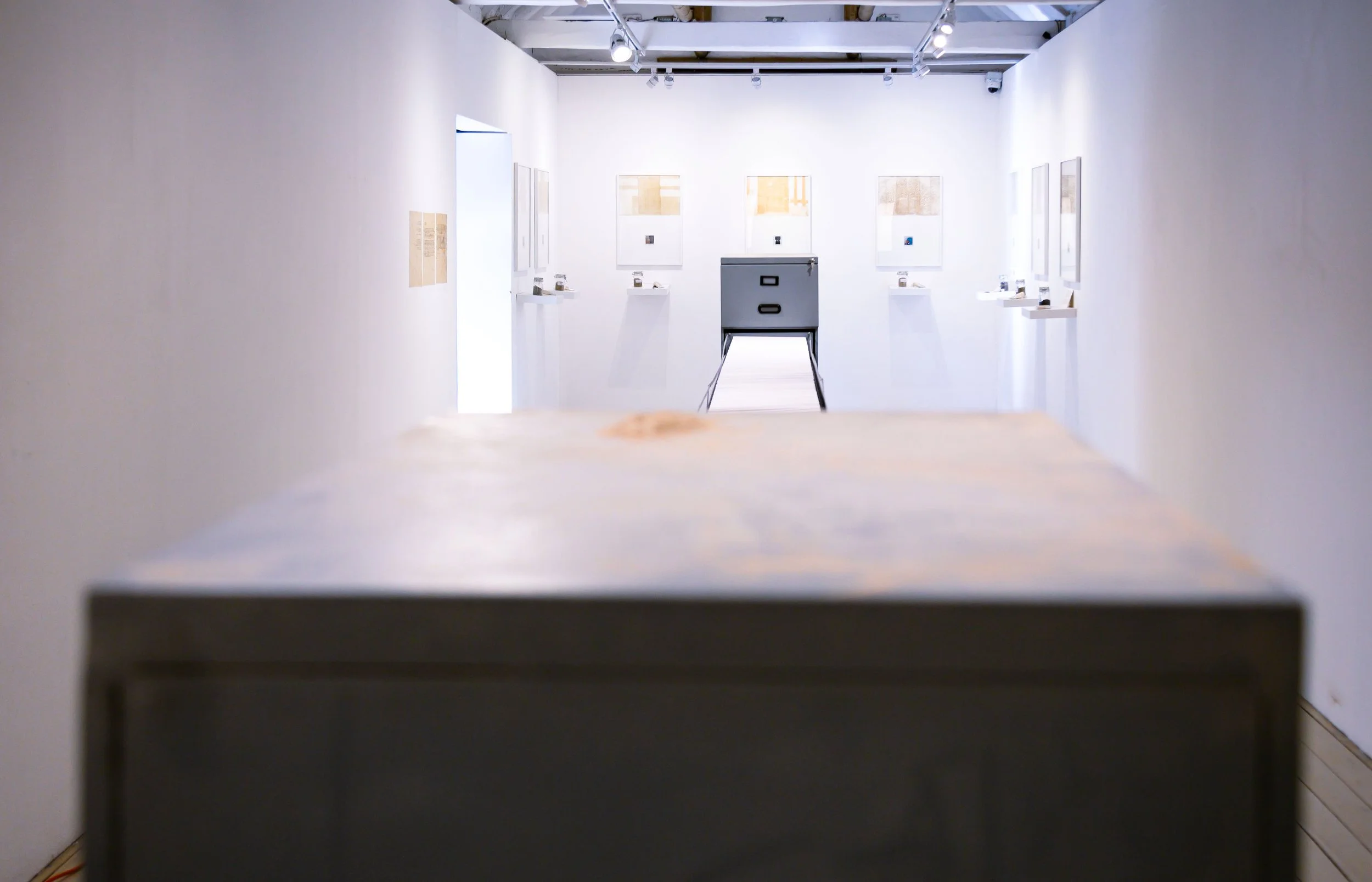
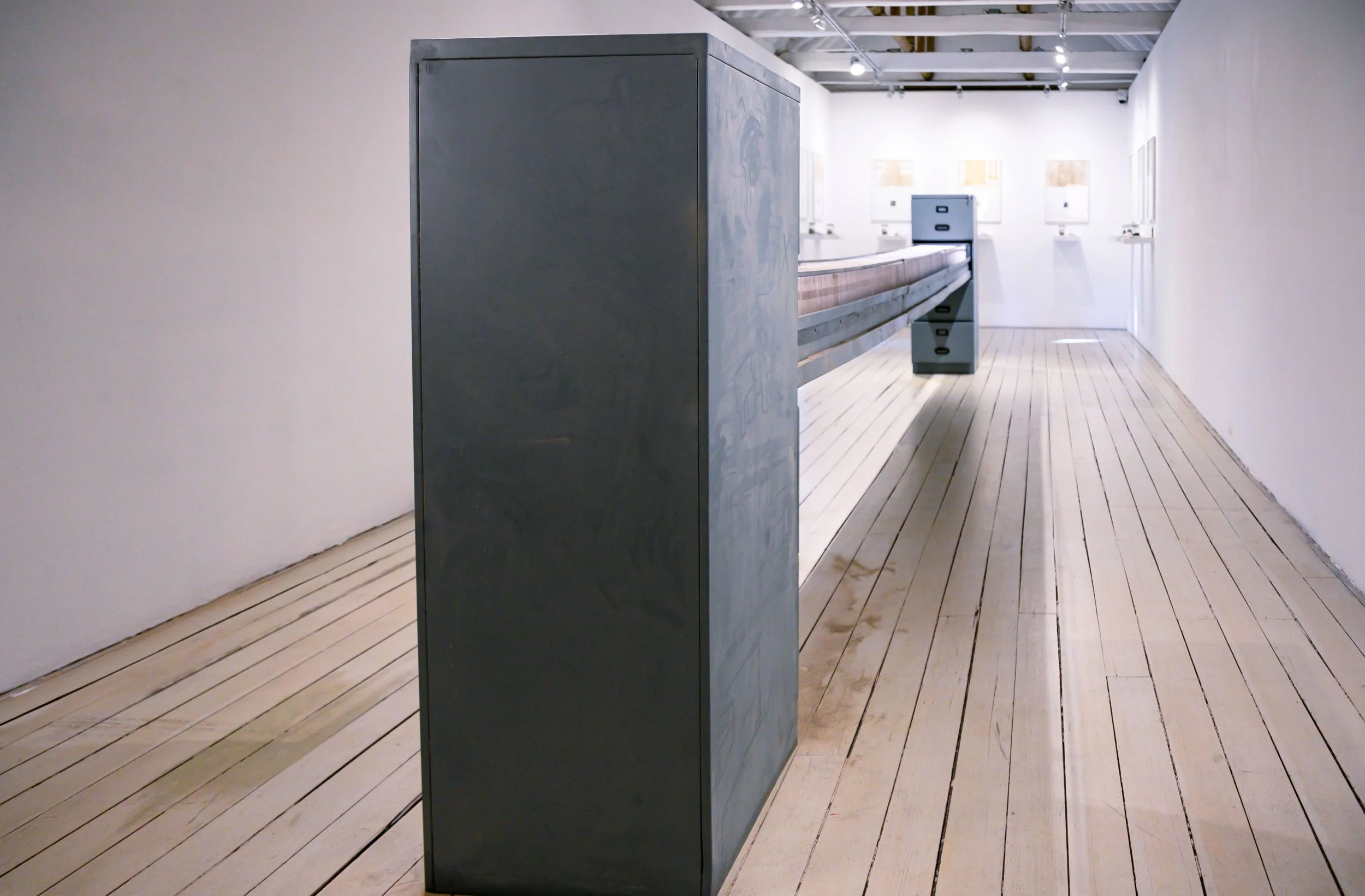
The installation brings together two apparently different ways of organizing memory. The filing cabinet belongs to a familiar institutional vocabulary: it is designed to classify documents, separate information and make the past accessible through an ordered system. The photographic works, by contrast, are produced with a substance that resists classification. Dust accumulates indiscriminately, combining particles of different origins, materials and periods.
By extending the filing cabinet beyond its ordinary proportions and placing it in dialogue with images made from collected residue, I wanted to make these contrasting processes visible. The cabinet no longer functions simply as furniture, just as dust ceases to be something that must be cleaned away. Both become elements through which to consider the fragile relationship between the material survival of an object and the survival of the histories attached to it.
The work does not attempt to reconstruct a complete historical account. It places different forms of evidence together and asks what remains visible when the systems intended to preserve memory are confronted with the materials they habitually discard.
Promises Made to the Future
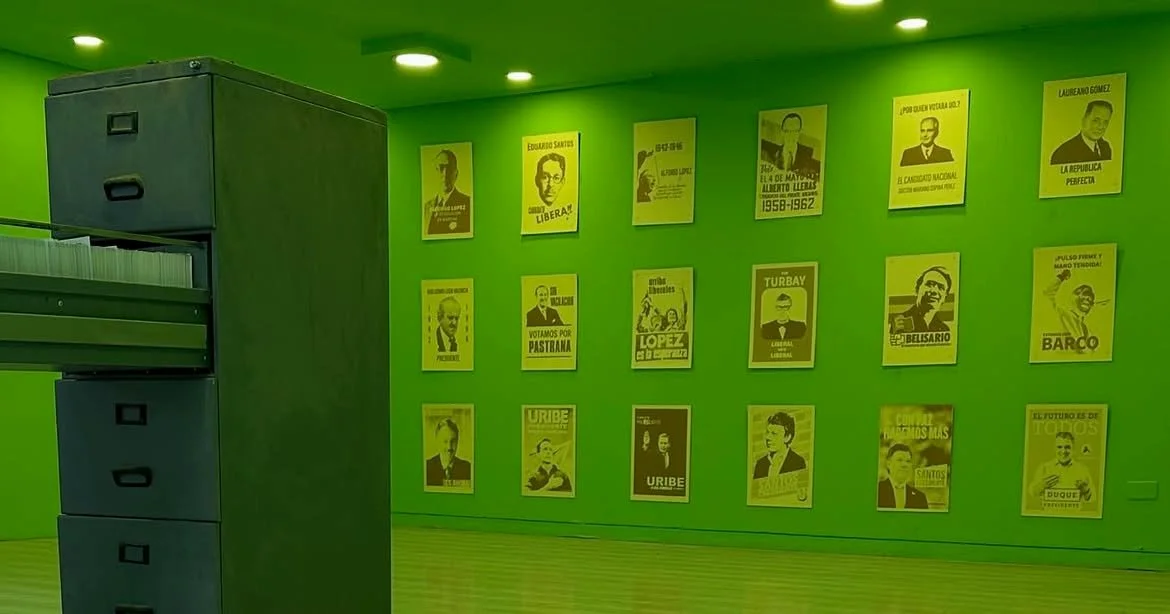
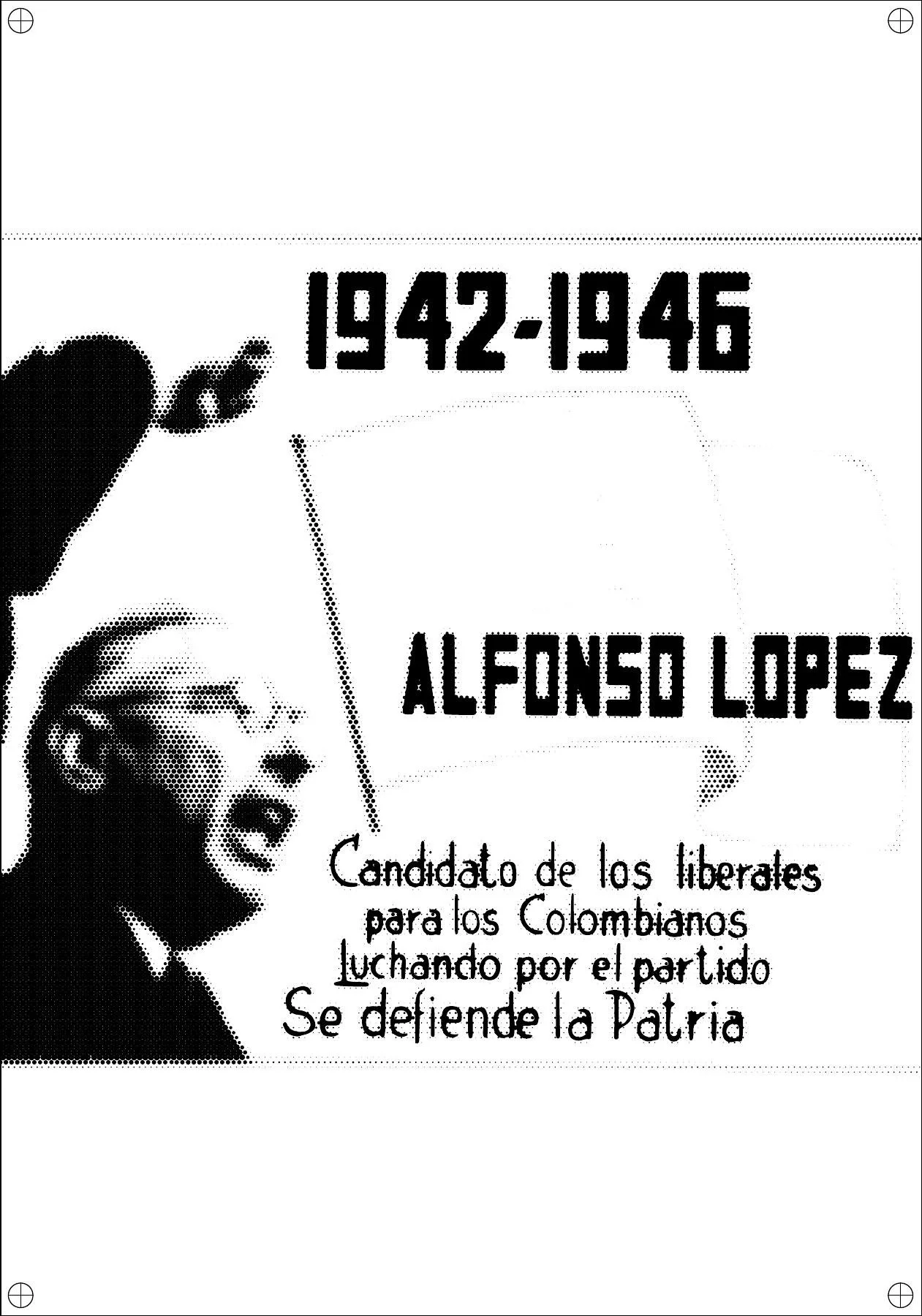
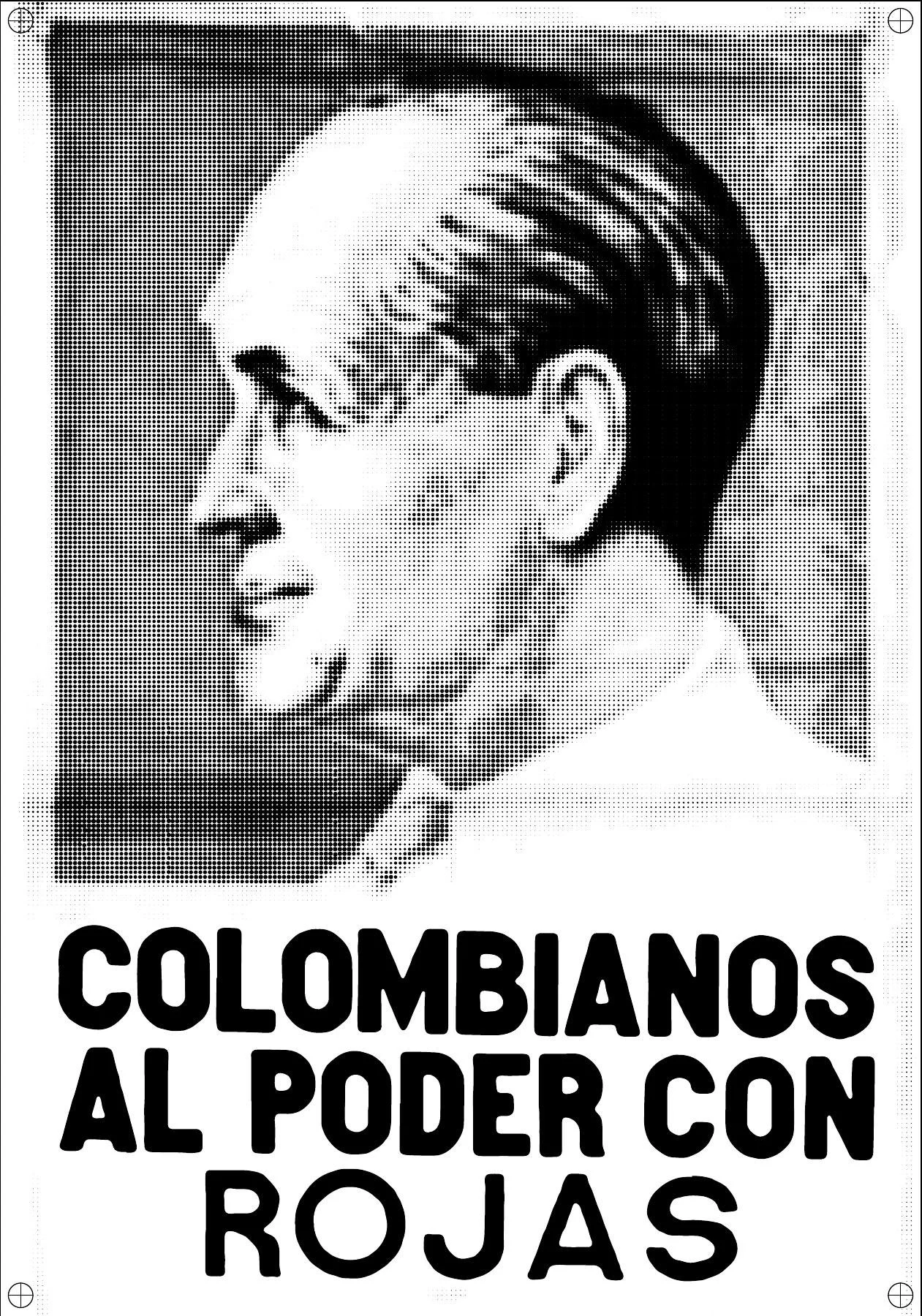
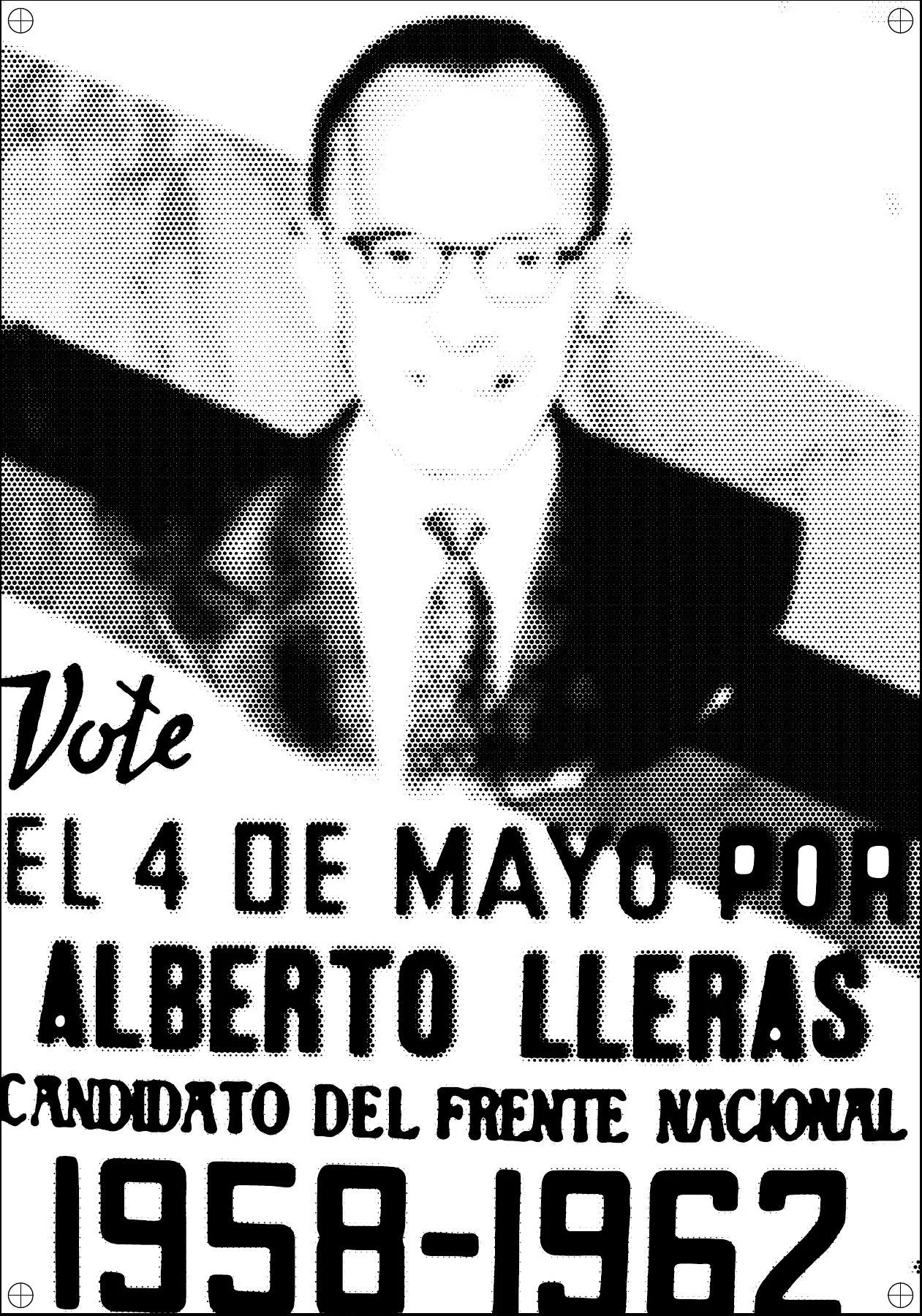
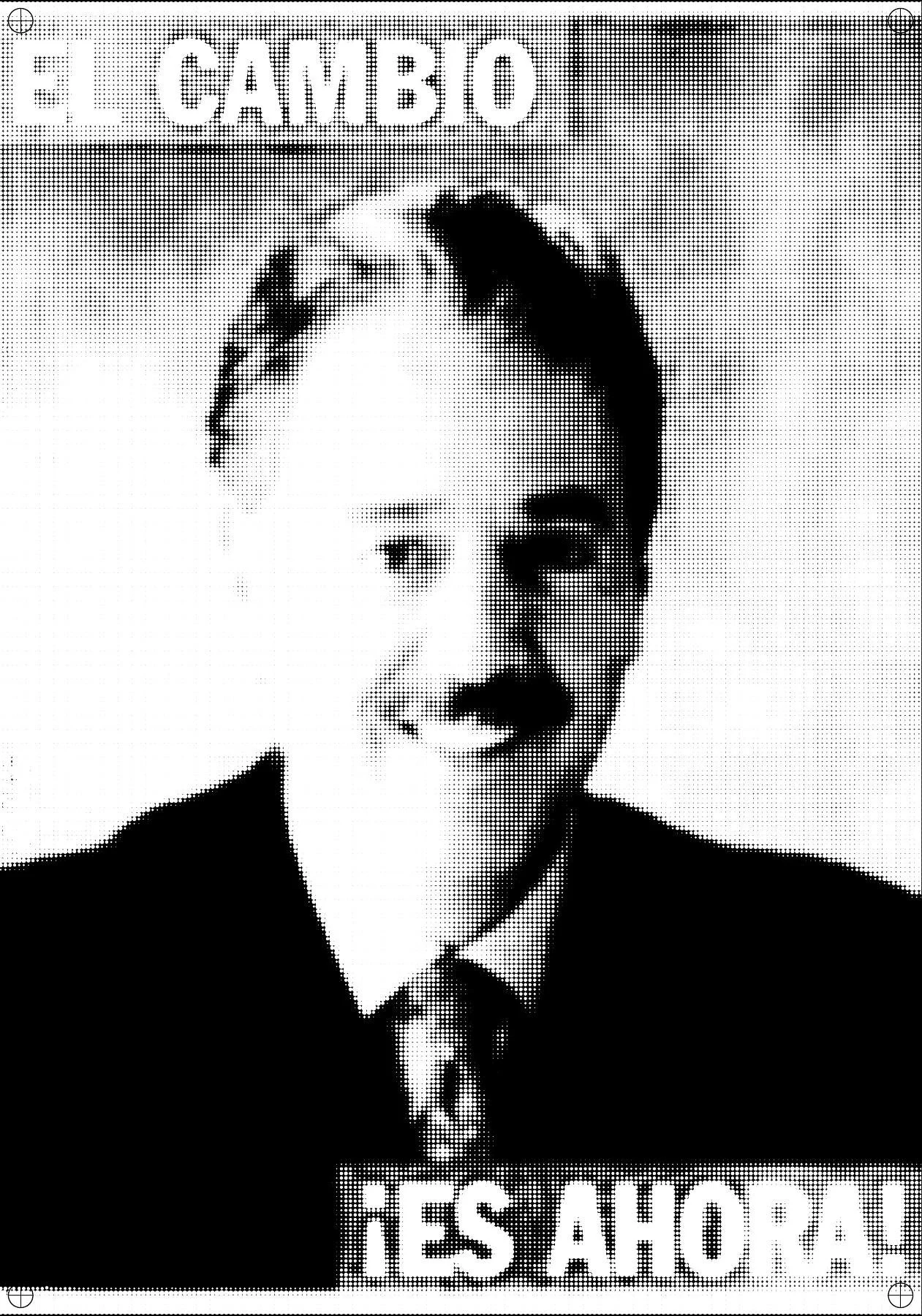
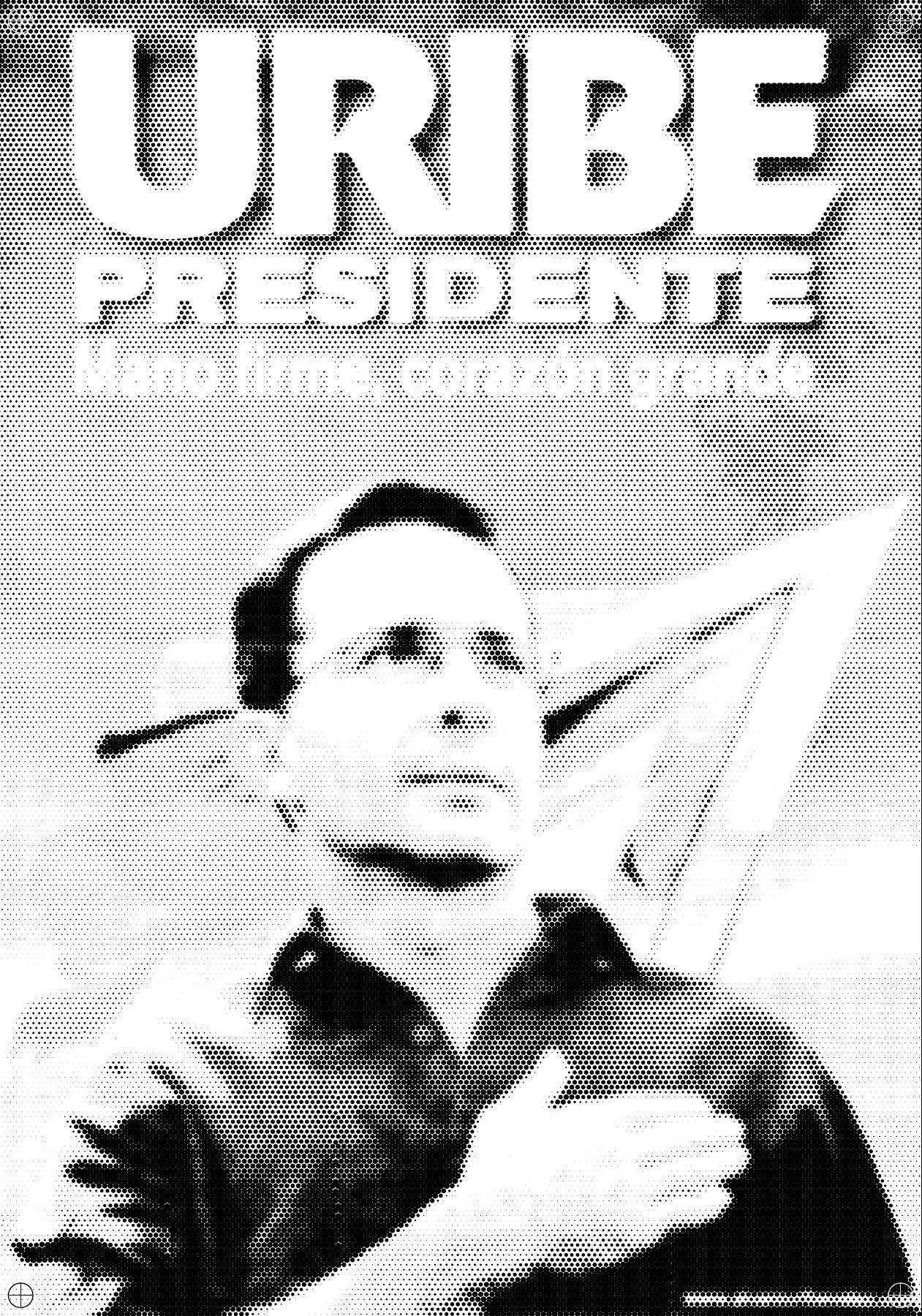
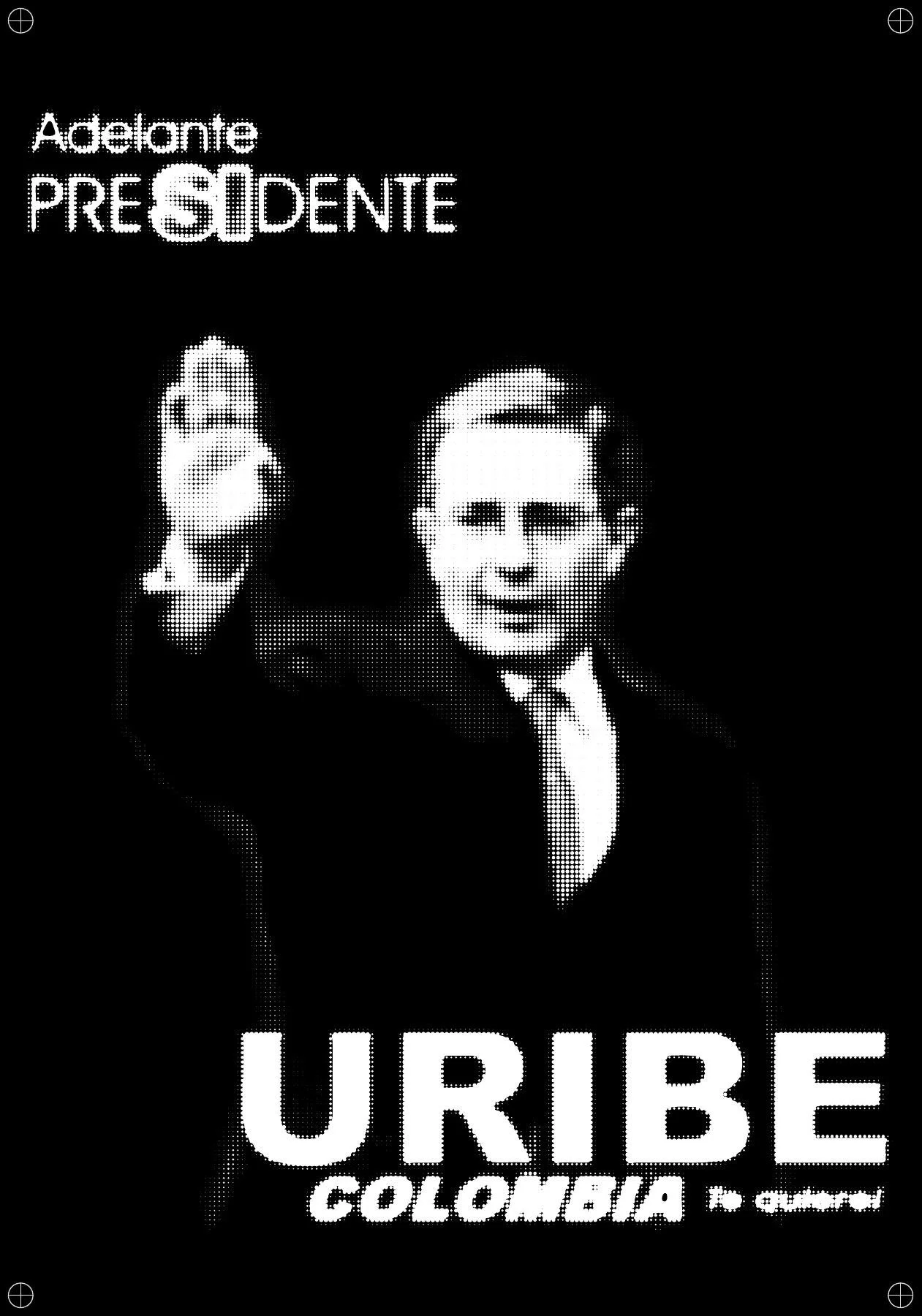
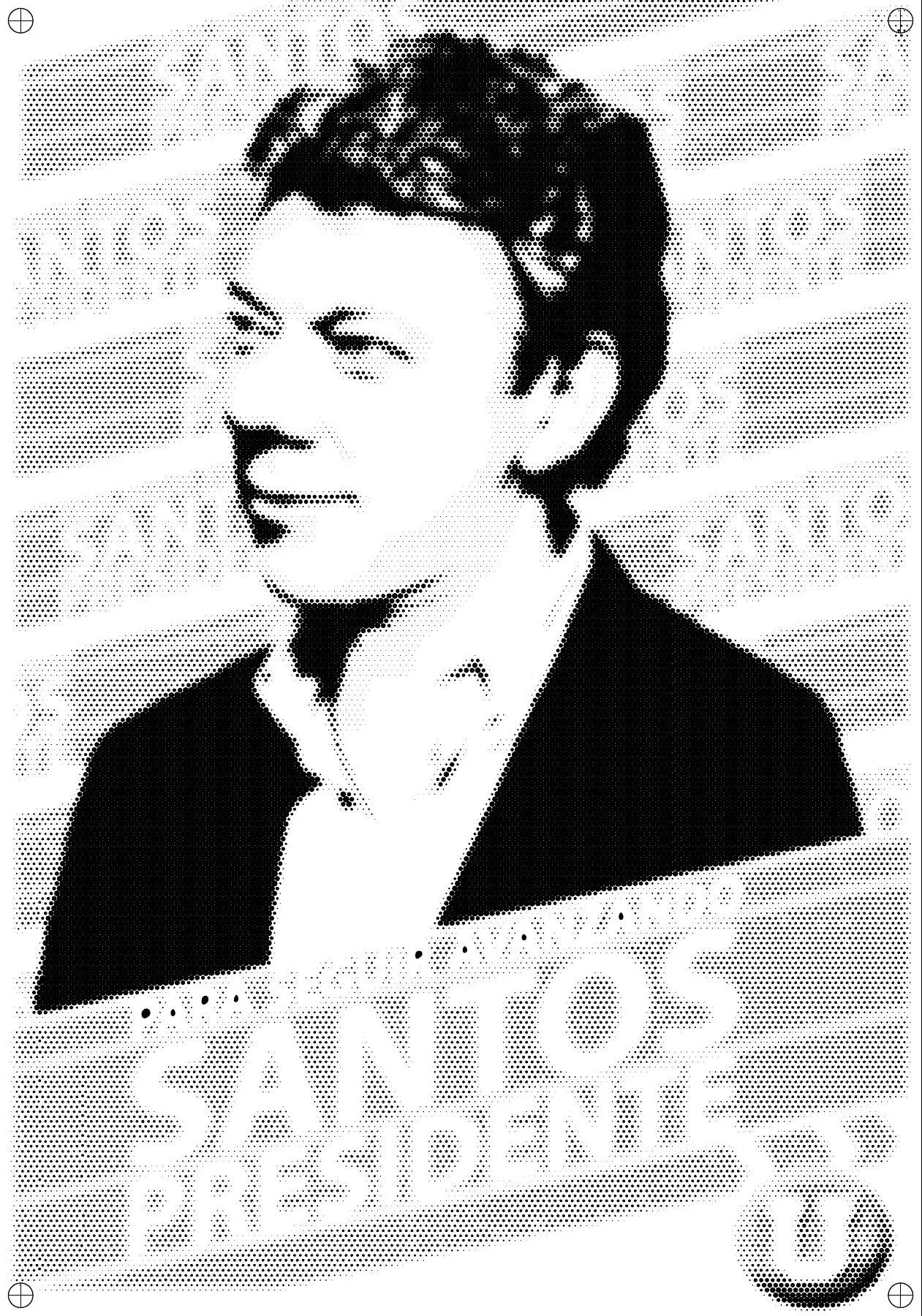
Campaign portraits and slogans return as dust-based photographic prints, connecting promises of the future with the erosion of political images.
Read more
Political campaigns produce an immense quantity of images intended to occupy public space and capture attention for a relatively short period. Portraits, slogans and declarations appear on walls, in newspapers and around public gatherings, giving visible form to promises about a future that has not yet arrived. Their purpose is immediate, but their ambition extends beyond the electoral moment: they seek to establish a recognizable image of authority and secure a lasting place in public memory.
Once a campaign ends, much of this visual material disappears. Posters are removed or covered by new ones, while the faces and phrases that once seemed omnipresent begin to survive only in fragments. I became interested in this distance between the public intensity of an image and the precariousness of its survival.
Recreating these images through a photographic process that uses collected dust introduces a different understanding of time. The material that carries the image is no longer associated with the promise of something to come, but with the gradual transformation of what has already taken place. Images originally designed to announce the future return as residues of the past, bringing political language into contact with the erosion of the surfaces that once displayed it.
The Language of the Promise
The language of political campaigning is built around repetition. Ideas such as renewal, unity, progress or stability acquire persuasive force through their constant circulation, often appearing in similar forms across different political moments. A slogan compresses a complex social reality into a memorable phrase, while the image of a candidate gives that phrase a face through which it can be recognized and repeated.
What interests me is not only the political content of these promises, but their persistence as a form of collective imagination. The visual language of a campaign may disappear from the streets while many of its expressions continue to circulate. In this sense, electoral propaganda belongs simultaneously to a specific historical moment and to a longer history of expectations, desires and recurring political narratives.
Mordiendo Polvo approaches these images from the moment when their original function has been displaced. Removed from the urgency of a campaign, they become objects through which to observe the relationship between public persuasion, historical memory and the material forms that allow an image to endure.
The Spectre: The Image That Wasn't There
Reconstructed electoral imagery responds to gaps in the archive, distinguishing contemporary artistic constructions from surviving historical documents.
Read more
While researching the visual history of Colombian political campaigns, I encountered an absence that gradually became central to the project. Official archives contain speeches, documents, portraits and records of significant political events, but much of the imagery that once accompanied everyday political life is far more difficult to locate. The posters, temporary signs and visual arrangements that occupied public squares and electoral rallies often belonged to an ephemeral culture of propaganda that was not preserved with the same attention as formal historical documents.
This difficulty changed the way I approached the images. Rather than treating the archive as a complete source from which the past could simply be recovered, I began reconstructing aspects of the visual atmosphere of these public gatherings. The resulting images refer to a recognizable political culture without presenting themselves as original historical documents. They are contemporary constructions responding to fragments, references and absences within the available record.
I think of these images as spectres because they evoke something that once occupied public space but can no longer be retrieved in its original form. Their ambiguity belongs to the work. Reconstruction does not restore the past or fill every gap in the archive; instead, it makes those gaps perceptible and raises a question about the relationship between what a society experienced and what its institutions eventually chose, or managed, to preserve.
The Archive as a Systematic Practice of Forgetting
An archive is usually understood as a place where memory is preserved, yet preservation also depends on choices about what is collected, classified and maintained. Countless other traces remain outside those systems or disappear before they can enter them. I began to think of the archive, in this sense, as a systematic practice of forgetting: not necessarily through deliberate destruction, but through the ordinary processes of selection and exclusion that make historical preservation possible.
This contradiction became especially apparent in my research into Colombian electoral propaganda. Official portraits, speeches and formal documents were easier to find than much of the temporary imagery that had once occupied public squares and political rallies. The difference between the public visibility of those images and their limited survival in collections suggested that the history of political representation could not be reconstructed solely from what the archive happened to contain.
The missing images became as significant to my work as the ones that survived. Reconstructing aspects of that ephemeral visual culture was not an attempt to substitute fictional documents for historical evidence. It was a way of making the incompleteness of the record perceptible and questioning how the histories we experience become the histories we are able to consult.
Biting the Dust
Dust carries political images while exposing their material instability: representation persists through the residue of another time and place.
Read more
The title Mordiendo Polvo draws on an expression associated with defeat, collapse and the end of an ambition. Its meaning becomes particularly suggestive when brought into contact with political imagery, whose purpose is often to project permanence, authority and control over the future. The figures represented in these images once sought public recognition through promises and carefully constructed appearances, yet their visual presence was ultimately subject to the same processes of displacement and disappearance as the surfaces on which they were displayed.
Dust complicates this apparent opposition between permanence and loss. It is commonly associated with deterioration and death, but it also consists of matter that continues to circulate after the objects from which it originated have changed or disappeared. Its accumulation records transformations that are rarely visible in the moment they occur.
In the photographic works, dust becomes both the material through which an image returns and a reminder of its instability. The political portrait is no longer preserved as an apparently intact representation; it acquires a new physical condition through the residue of another time and place. The image persists, although neither its material nor its meaning can remain entirely unchanged.
Dust, Mortality and Circularity
The early research for Mordiendo Polvo explored the longstanding association between dust, mortality and the return of matter to the earth. That symbolic history became particularly relevant to the title of the work, where the idea of defeat intersects with the persistence of the physical substances that remain after an ending.
I was also interested in a different understanding of dust: not simply as the final state of something destroyed, but as material that continues to move, accumulate and become part of other environments. This relationship between disappearance and persistence recalls the circular figure of the ouroboros, which appeared in my original reflections on the project.
The connection is not intended as a literal explanation of the materials. It offers a way to think about memory as an ongoing process in which things are covered, dispersed, transformed and occasionally brought back into view. The archive attempts to stabilize a particular version of the past, while the dust settling on its contents records the impossibility of separating that past completely from the passage of time.
What the Archive Removes
Dust collected around FUGA becomes an involuntary record of the materials and activities that institutional conservation usually removes.
Read more
The conservation of historical objects depends on practices intended to slow deterioration. Cleaning, classification and the control of environmental conditions help ensure that documents and artworks remain available for future study. Yet these same procedures also remove traces of the environments in which objects have existed. Dust is treated as an unwanted accumulation, even though it contains fragments of the materials, activities and transformations that have occurred around the archive.
I began to think about this contradiction while working with residue collected in and around the Fundación Gilberto Alzate Avendaño. Rather than seeing dust only as evidence of neglect or decay, I approached it as material produced by the continuous interaction between an institution and its surroundings. Particles from the street, the building and its everyday use accumulate without following the distinctions through which an archive organizes its collection.
This difference is central to the project. An institutional archive establishes relationships between documents through deliberate systems of selection and interpretation. Dust produces another kind of accumulation, one that brings together materials without assigning them a hierarchy. Using that matter to make images allows these two processes to encounter one another within the same work.
The Institution That Remembers
The original development of Mordiendo Polvo took place in relation to the Fundación Gilberto Alzate Avendaño in Bogotá, an institution whose name and historical collections are connected to the country's political memory. This context led me to consider not only the objects preserved within an archive, but also the authority involved in determining how a particular account of the past is maintained and made accessible.
My early research engaged with Jacques Derrida's reflections on the relationship between archives, institutions and the power to interpret historical documents. I was interested in the way memory acquires a physical and administrative location, becoming part of a system that determines how it can be consulted, understood and transmitted.
The name of the institution also raised questions about political remembrance. The survival of a public figure within an institutional structure is not equivalent to an unchanging historical judgment. Interpretations shift, and the meaning of a political legacy remains subject to disagreement and revision.
Within this context, the use of dust introduced a material that resisted the stability traditionally associated with preservation. It allowed me to approach the institution not as a neutral setting for an installation, but as part of the historical and conceptual circumstances from which the work emerged.
Dust and the Writing of History (Carolyn Steedman)
Carolyn Steedman's Dust: The Archive and Cultural History (2002) helped me think about the uneasy relationship between what survives materially and what can be written as history. Steedman does not present the archive as a complete repository of the past. She approaches the historian's work through the fragments, omissions and material traces that remain, while also considering the bodily experience of encountering documents and dust. Her discussion of Jules Michelet, who imagined breathing in the dust of the dead while working in archives, is particularly suggestive for a project in which that usually discarded substance becomes a material for making images.
What interests me in this reading is the difference between the remains of an event and the story subsequently constructed from them. Documents do not contain a whole past waiting to be retrieved intact, and dust cannot recover that totality either. Each provides traces that invite interpretation while leaving important absences unresolved. The reconstructed electoral images in Mordiendo Polvo occupy precisely this uncertain space between surviving evidence and a visual history that can no longer be fully assembled.
Steedman's reflection on the persistence of historical matter connects with the physical operation of the work, but it is not a theory that I simply illustrate. In the studio, dust becomes pigment; in an archive, the historian turns surviving fragments into a narrative. Both transformations depend on decisions about form and meaning. The connection makes visible the difference between what continues to exist and what a society eventually recognizes as part of its memory.
Bibliographic reference: Carolyn Steedman, Dust: The Archive and Cultural History (Rutgers University Press, 2002), especially 'In the Archon's House,' 'Something She Called a Fever: Michelet, Derrida and Dust,' and 'The Story of the Dust.' Publisher: https://www.rutgersuniversitypress.org/dust/9780813530475. Attribution note: this is the artist's interpretation of Steedman's historiographical argument, not a quotation or a verbatim formulation by Steedman.
From Residue to Image
Experimental gum bichromate printing transforms collected residue into the physical surface of an image, connecting photography with the material history of place.
Read more
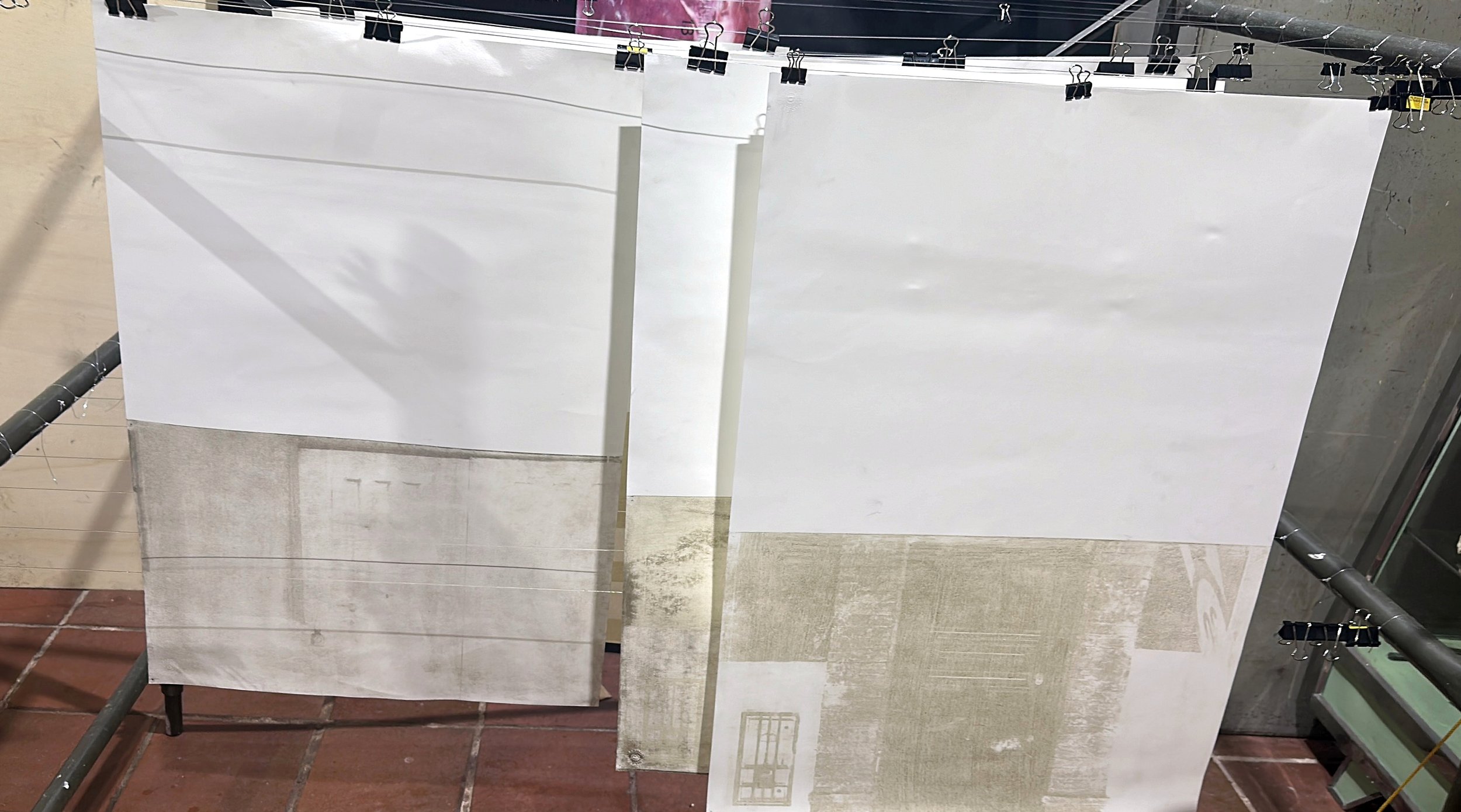
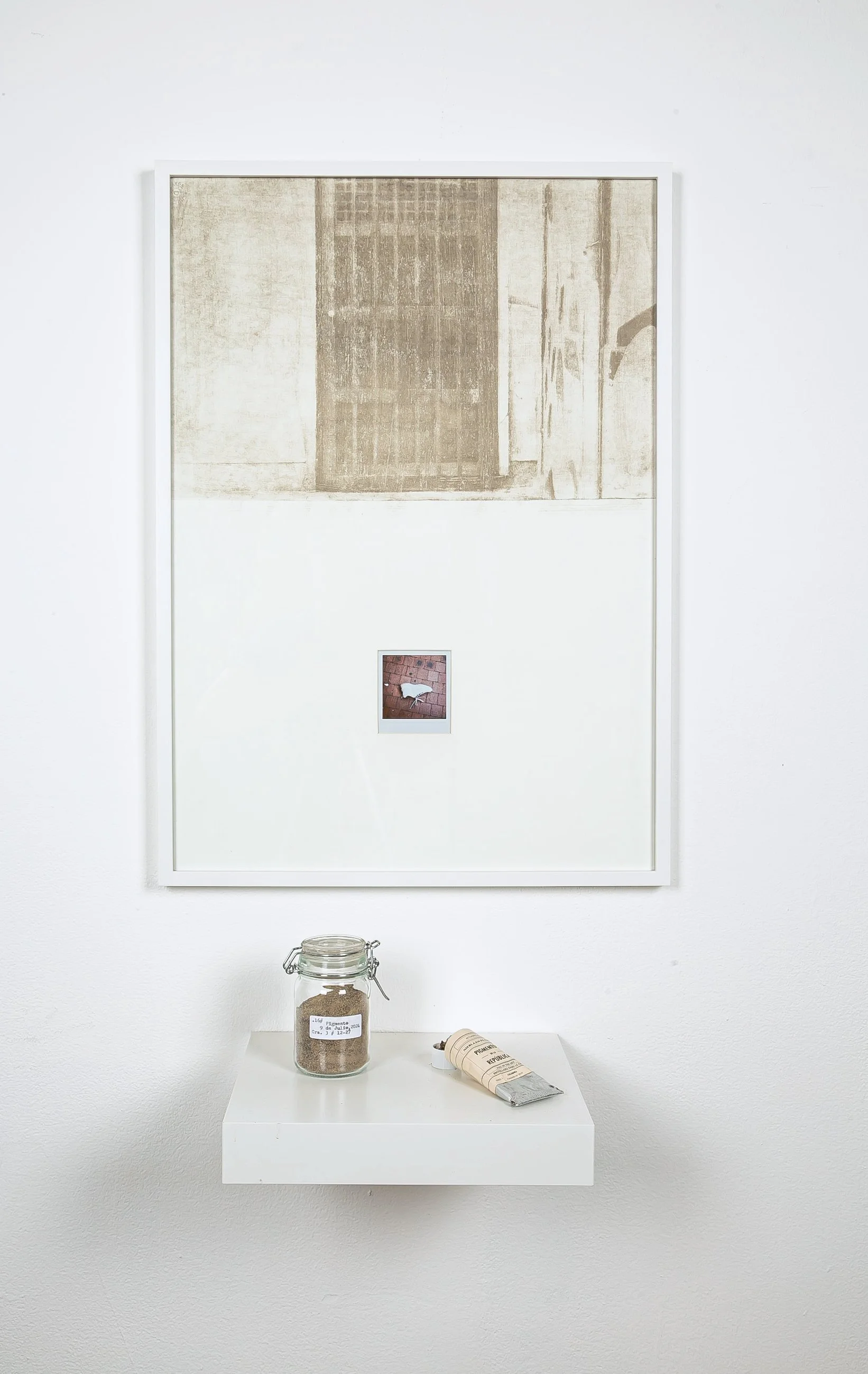
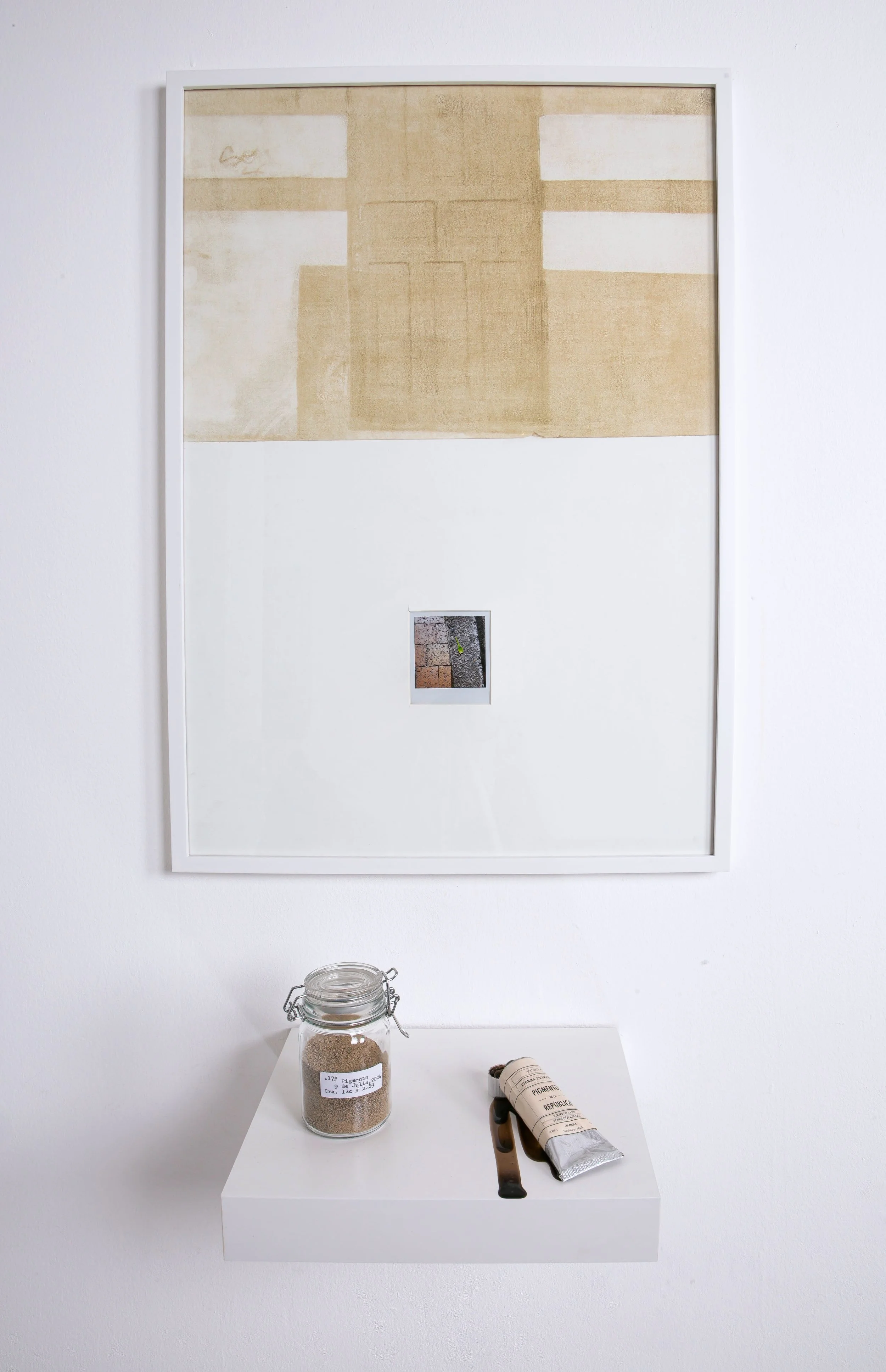
The transformation of collected dust into pigment is one of the central operations of Mordiendo Polvo. Through an experimental photographic process based on gum bichromate, material gathered from an environment becomes part of the physical surface of an image. What would ordinarily be removed during cleaning acquires a different role through its relationship with a photosensitive emulsion and exposure to light.
This procedure interested me because it complicates the distinction between representing a place and working with matter taken from it. The resulting image does not simply depict a historical subject; it incorporates material connected to the context in which the work developed. Photography becomes a way of organizing both light and residue, bringing a process of image formation into contact with the material history of an environment.
The investigation continues questions I had previously explored in Tiempo Muerto, where found materials and residues were transformed into images. In Mordiendo Polvo, that relationship extends toward institutions, political representation and the unstable boundary between preservation and disappearance. The residue is no longer something left outside the work; it becomes one of the conditions through which the image can exist.
Material Research
The project developed through successive experiments involving dust collection, pigment preparation, photographic negatives and the application of photosensitive materials. These tests established the relationship between the properties of the collected residue and the visual qualities of the resulting photographic images.
The original project proposals also considered methods of cataloguing dust, laboratory analysis and additional devices for displaying samples and archival material. Those studies remain part of the research history, although the realized work evolved through decisions made during production.
The final process emphasized the creation of handmade pigments and their use in experimental photographic printing. Keeping the distinction between the proposals and the realized works is important, since the changes that occur during production are themselves part of the history of an artistic investigation.
The Cabinet
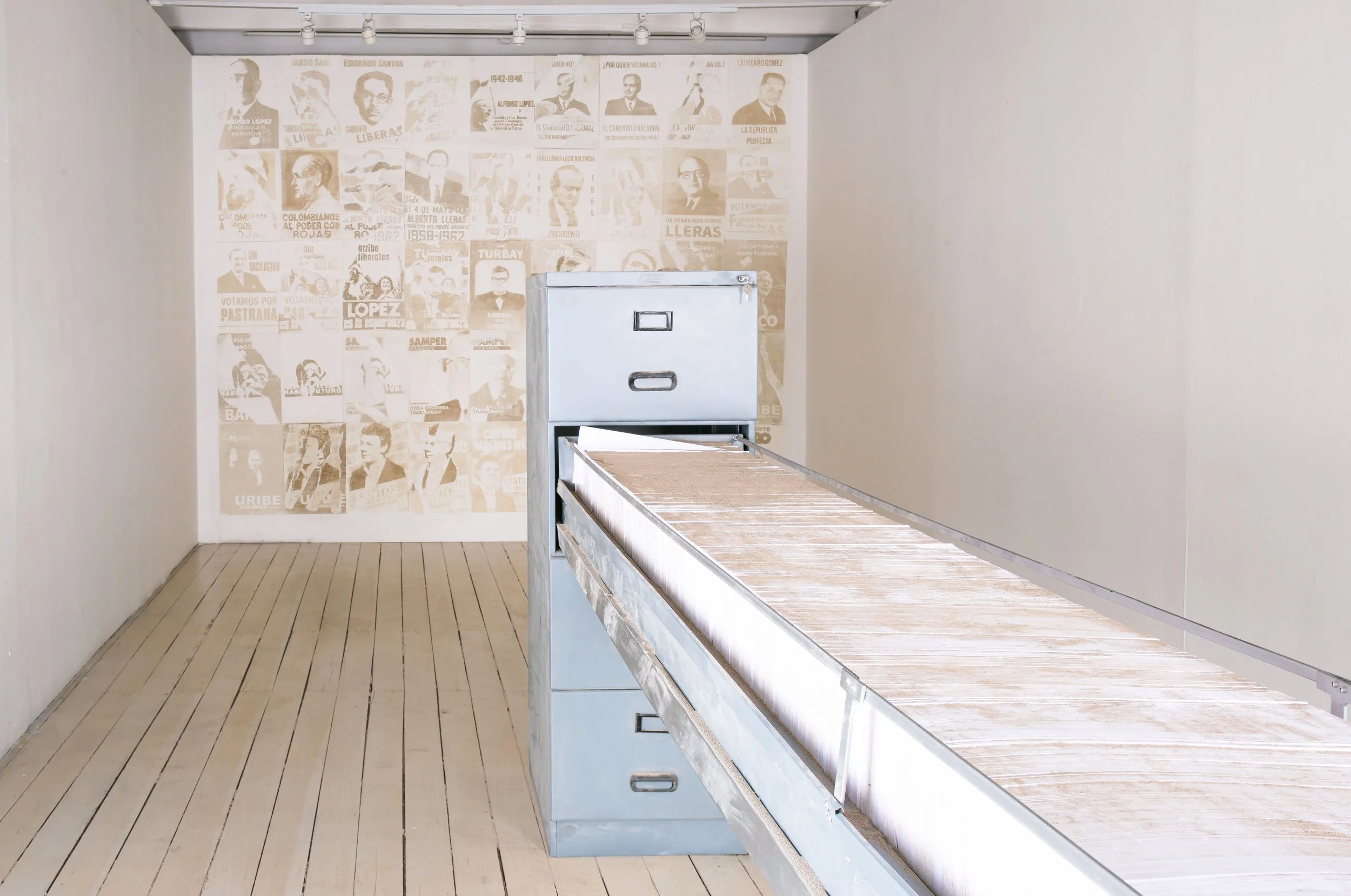
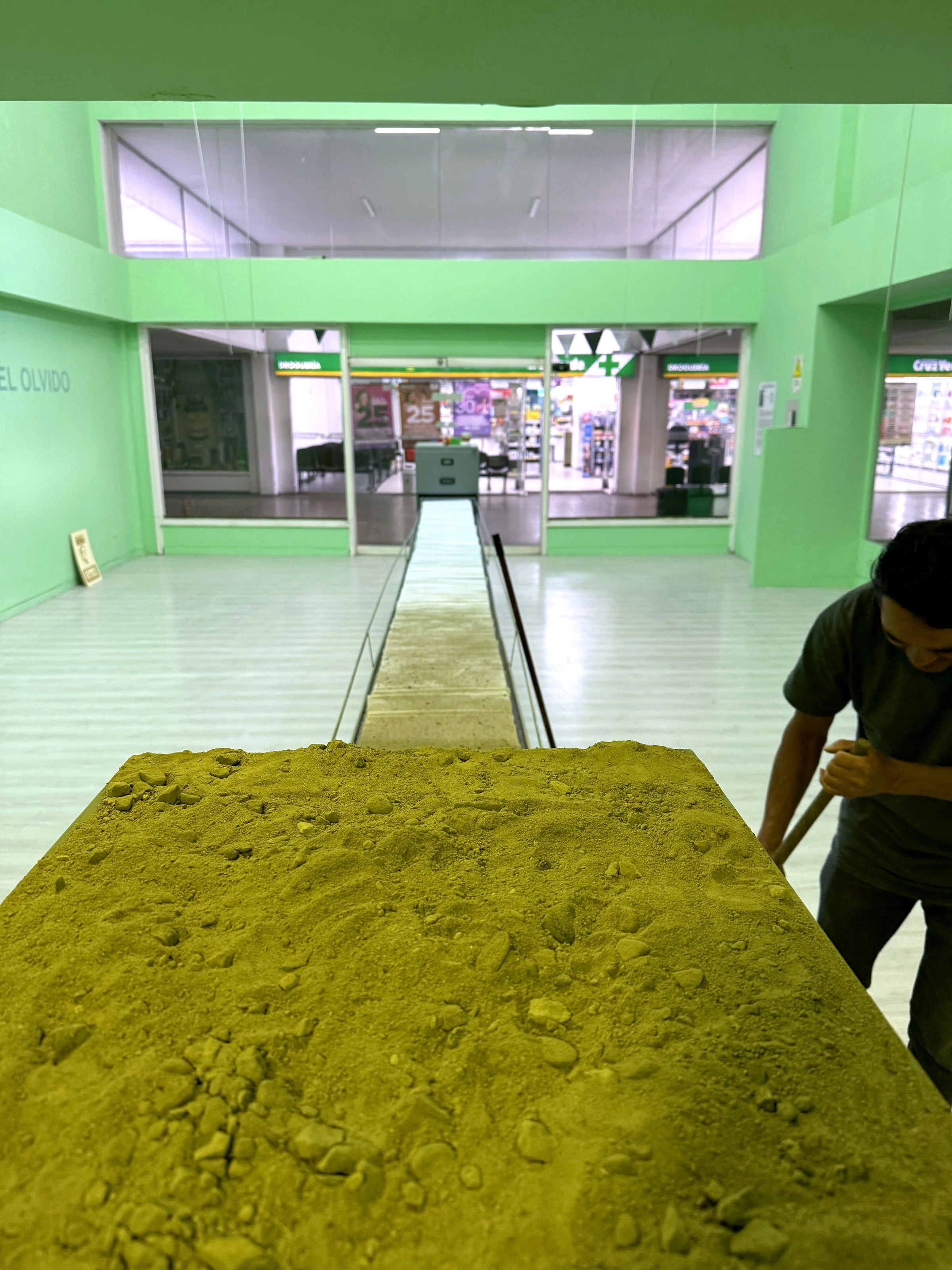
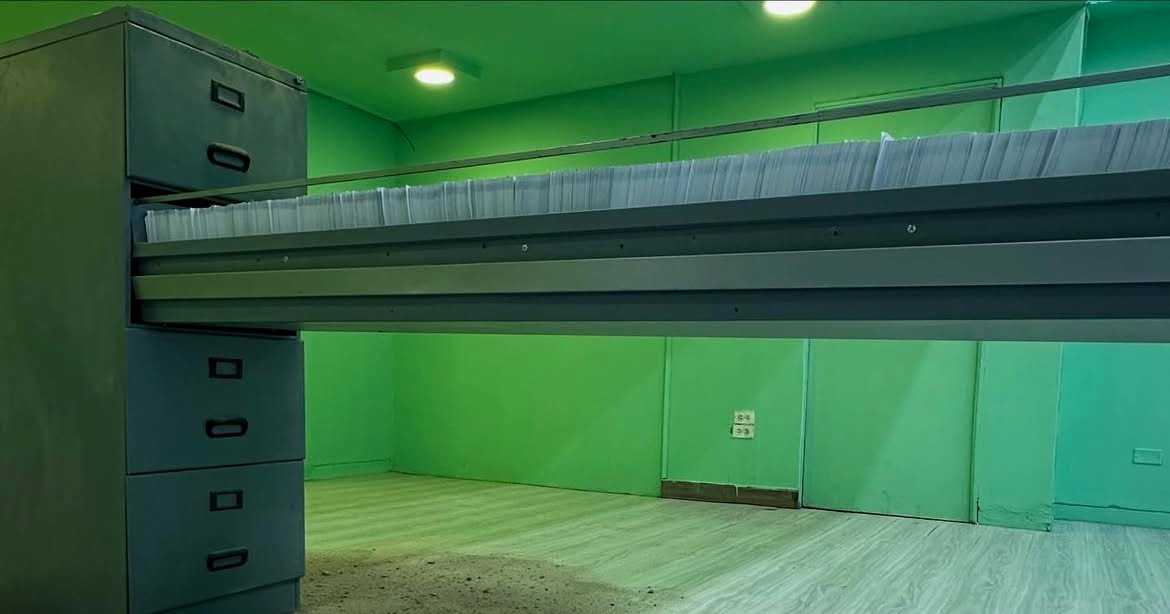
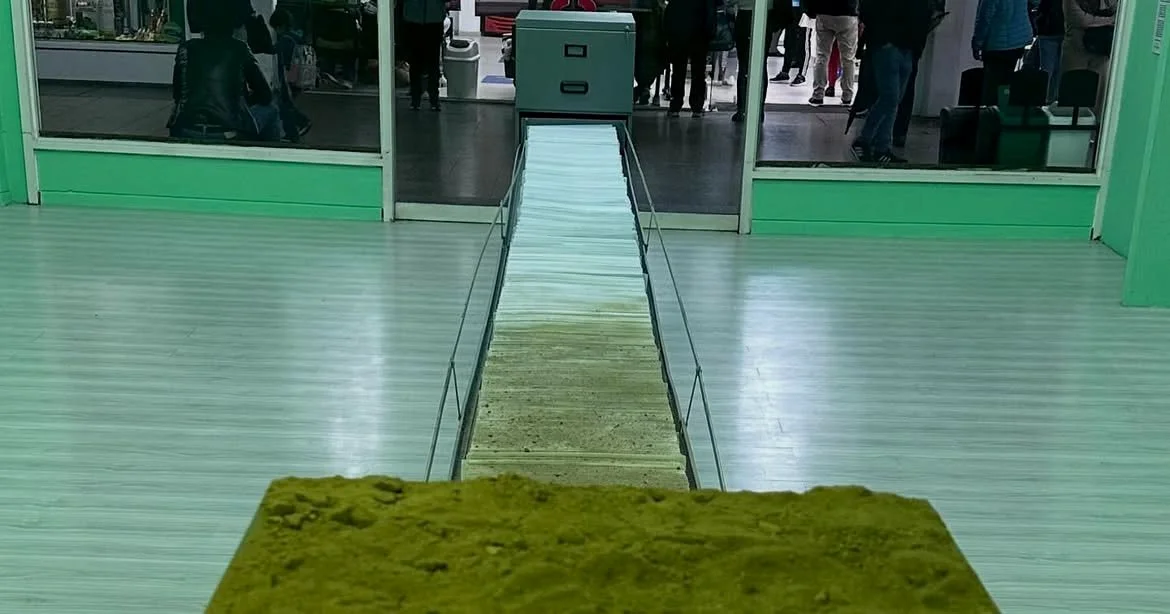
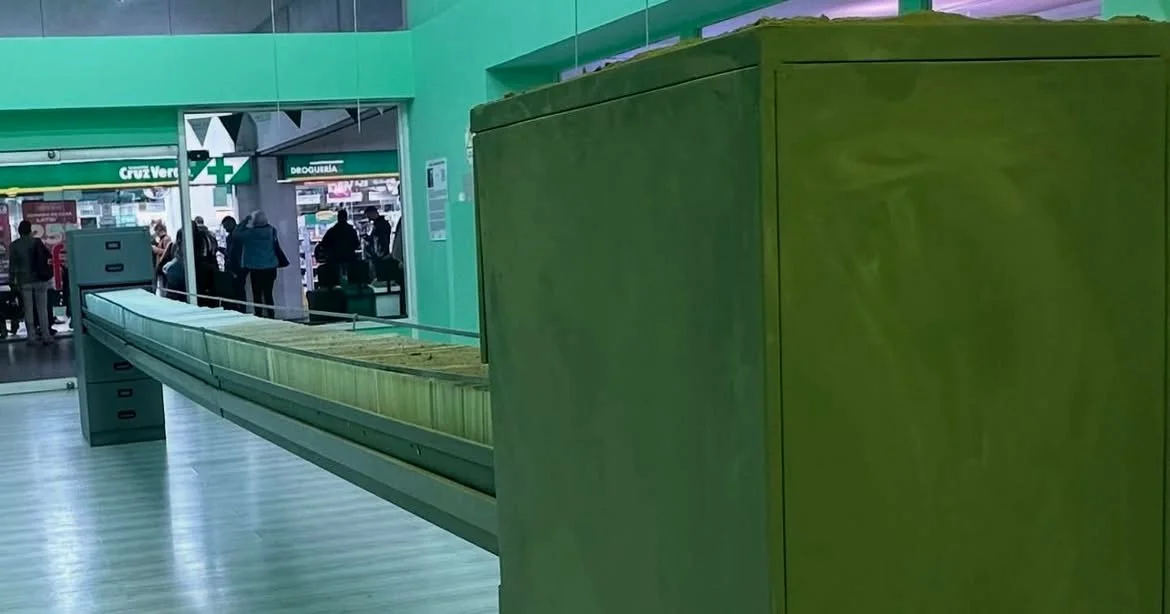
An extended cabinet moves from dusty surfaces toward white folders, questioning how institutional order shapes the memory it preserves.
Read more
The filing cabinet belongs to a familiar architecture of institutional memory. Its drawers and compartments are designed to give documents a specific place, making information available through a system of separation and retrieval. By extending this ordinary object into the exhibition space, I wanted to interrupt its practical familiarity and make its relationship with the organization of knowledge more apparent.
Within Mordiendo Polvo, the cabinet also introduces a spatial dimension to the photographic images. The material that once accumulated unnoticed around documents and furniture now appears in the same room as an object intended to preserve them. The installation therefore establishes a relationship between the physical presence of the archive, its systems of order and the residues produced by its continued existence.
Rather than representing an archive as a complete storehouse of the past, the work examines its fragility as a material and institutional construction. The cabinet remains recognizable, but its altered scale and function allow it to be encountered differently: not only as a place in which information might be stored, but as an object through which the conditions of remembering become visible.
The gradual movement from dusty surfaces toward clean white folders adds a further dimension to the cabinet. Developed for an exhibition at the Fundación Gilberto Alzate Avendaño, the work asks whether the institutional preservation of a political legacy can also change the way its contradictions are seen. In this setting, cleaning is not only a practical act of conservation; it becomes an image through which to question the symbolic purification of memory.
The Archon: Memory, Authority and Erasure
Mordiendo Polvo was developed for the VII Biennial of Visual and Plastic Arts held at the Fundación Gilberto Alzate Avendaño in Bogotá in 2024. The institution's history was central to my research. Established by Bogotá's City Council in 1970, ten years after Alzate Avendaño's death, the Foundation was conceived in part as a tribute to a figure whose political career continues to invite conflicting interpretations. The act that created the institution publicly celebrated his legacy, transforming his name into the identity of a cultural institution and giving that remembrance a lasting physical address.
I became interested in what happens when the memory of a political figure is given an institutional home. Jacques Derrida's discussion of the archon in Archive Fever offered a way of approaching this question. In the ancient model he examines, the archon safeguards official documents but also holds the authority to interpret them. The archive is therefore connected not only to preservation but also to questions of jurisdiction, classification and the power to establish meaning. An institution may protect historical material without being neutral about the stories that material is made to tell.
The cabinet in the installation translates this problem into a physical process. Its passage from accumulated dust toward increasingly clean surfaces and white folders suggests both conservation and the possibility of erasure. Within the historical context of the Foundation, I saw this gradual whitening as a way of asking whether official commemoration can make a contested political legacy appear more orderly, coherent or innocent than the history from which it emerged. The blank folders do not provide a verdict; their apparent purity leaves open the question of what has been preserved and what has been obscured.
This is an artistic interpretation, not a claim that the Foundation was deliberately created to conceal or rehabilitate a particular political history. The work holds that possibility as a question about institutions and the uses of memory. Cleaning can be an act of care, but it can also become a metaphor for the selective construction of what a society agrees to remember.
Historical Context — The Politics of Remembrance
Public monuments and institutional names provide documentary context for the questions of political remembrance raised by the installation.
Read more
Gilberto Alzate Avendaño's name survives in institutional histories and public monuments, even as the meanings attached to his political legacy remain contested. During the protests of 1 May 2021 in Manizales, a bust representing him was pulled from its pedestal and marked with paint. After newspaper reports briefly questioned the sculpture's identity, the city's cultural and tourism institute identified it from archival records as a work made by Mardoqueo Montaña in 2000. The episode offers a concrete instance of how commemoration, public disagreement and archival authority intersect.
These images are presented as documentary context for the development of Mordiendo Polvo, not as artworks made by Gonzalo García Gaitán. Their purpose is to situate the institutional questions raised by the filing cabinet and the historical figure whose name was given to the Foundation.
The Work in Space
At FUGA, photographs, pigments and archival furniture connect the installation with the institution and surroundings from which its materials emerged.
Read more
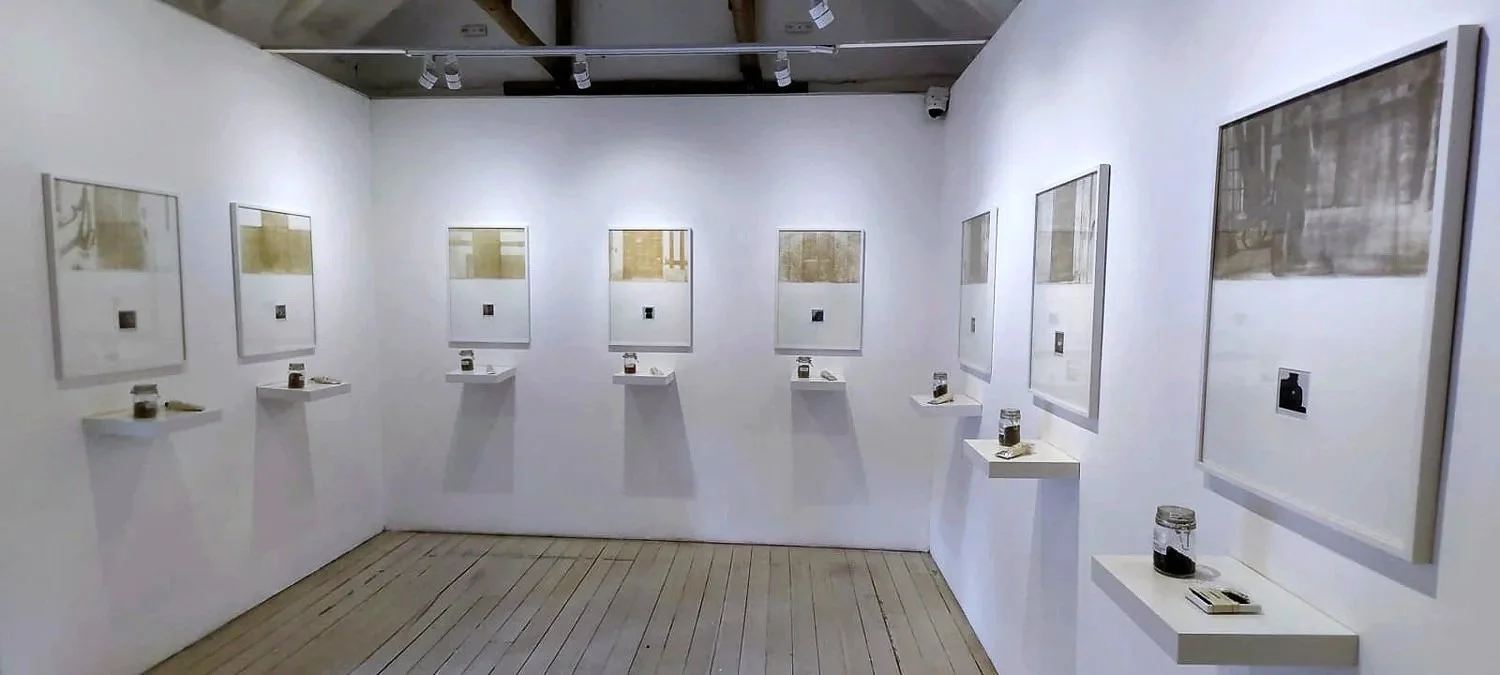
The presentation at the Fundación Gilberto Alzate Avendaño brought the work into direct contact with the institutional context that informed its development. Photographic images produced with collected dust appeared alongside archival furniture and other material elements, establishing a relationship between the building, its surroundings and the political histories associated with its collections.
The installation drew attention to the physical conditions through which memory is maintained. Within a cultural institution devoted in part to historical preservation, the materials habitually treated as residue became the means of producing new images.
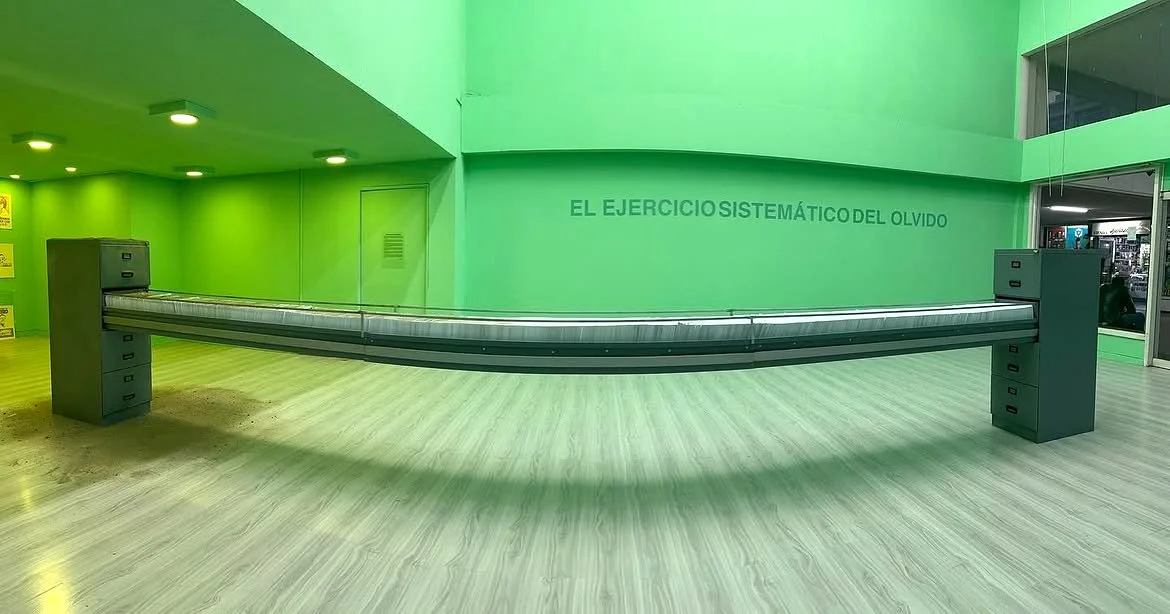
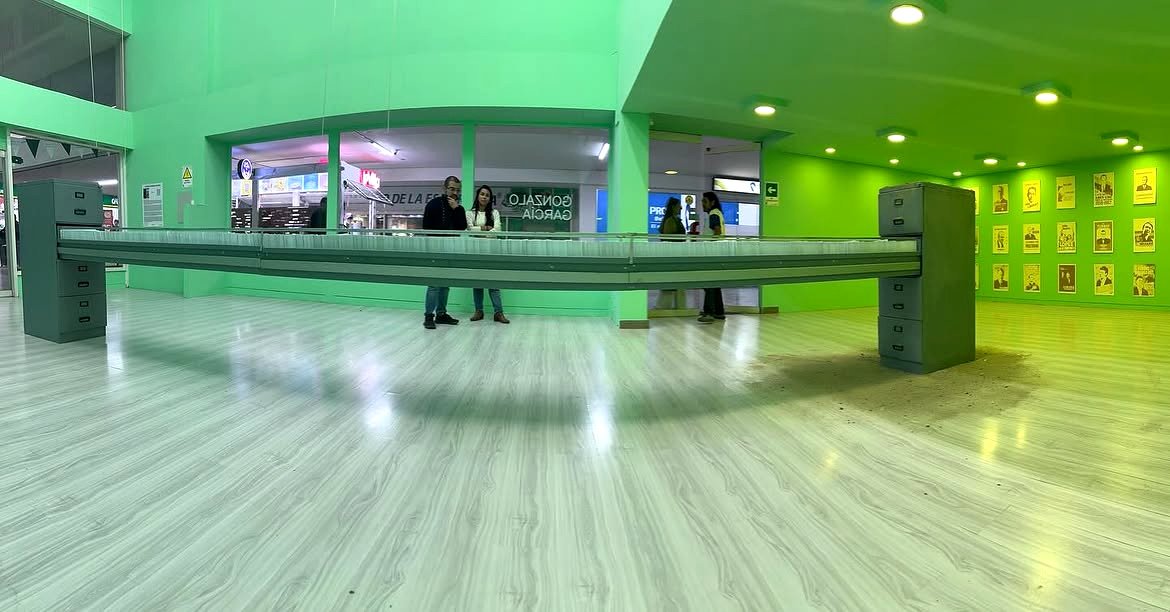
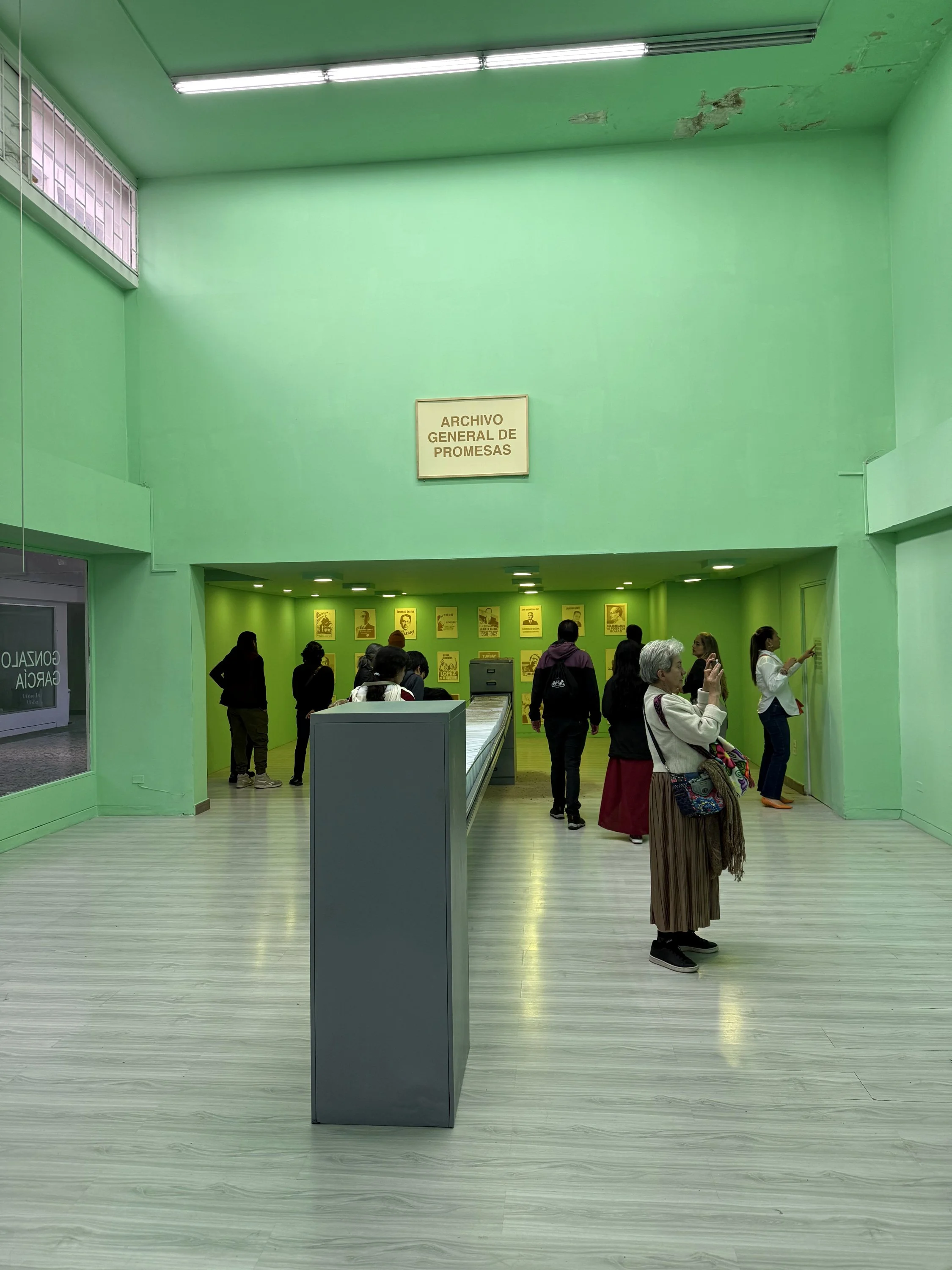
UN_FAIR — Centro Tequendama
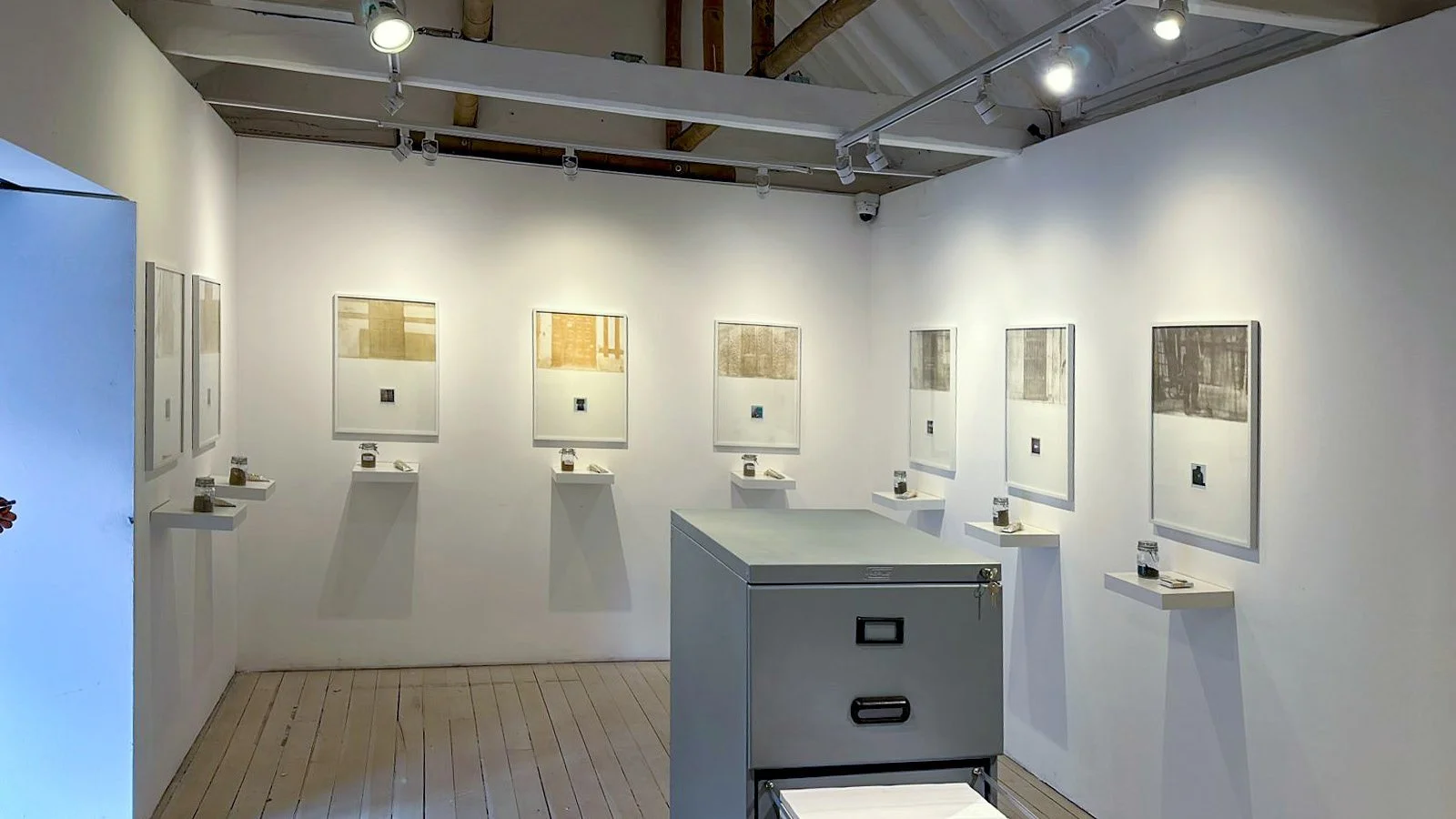
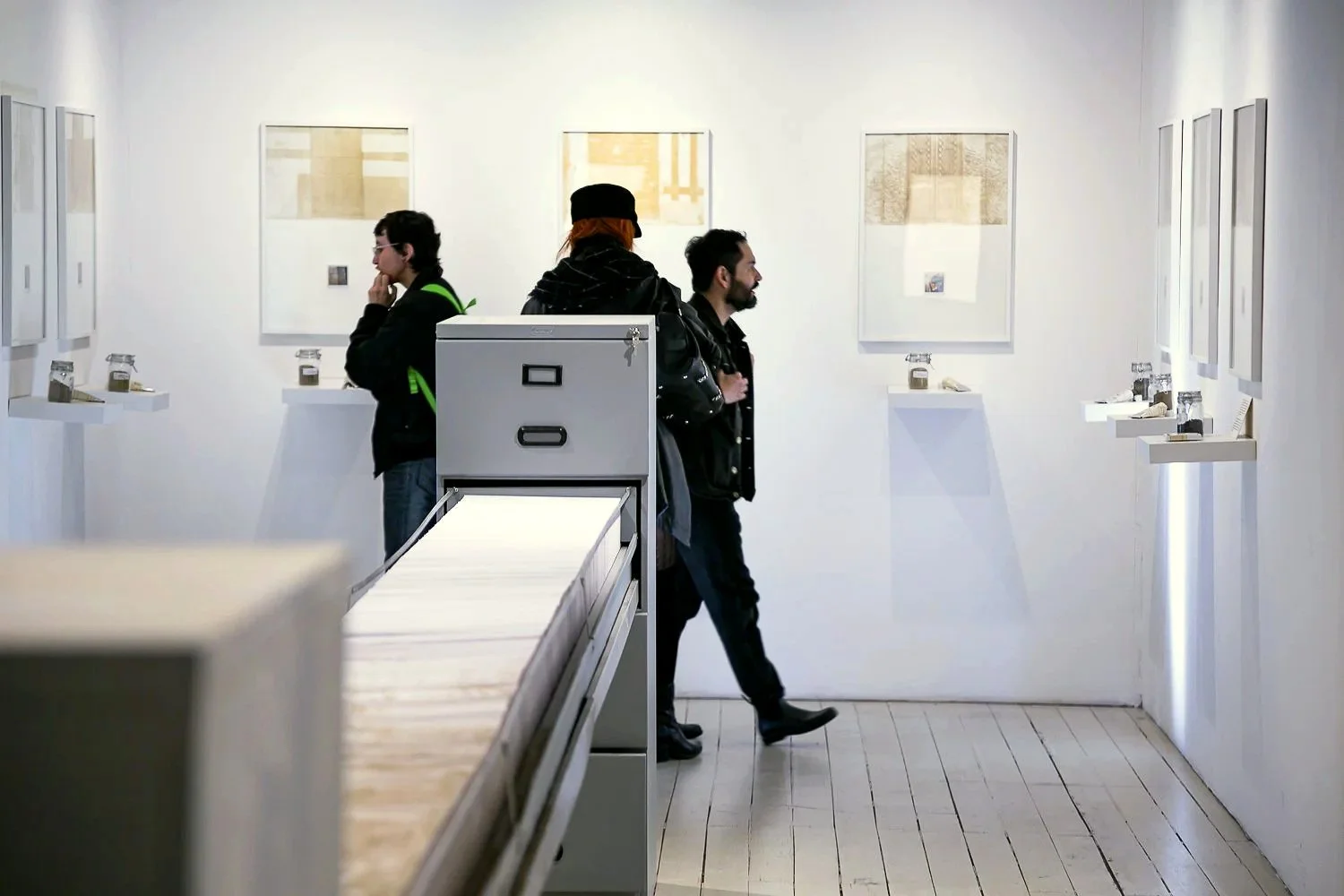
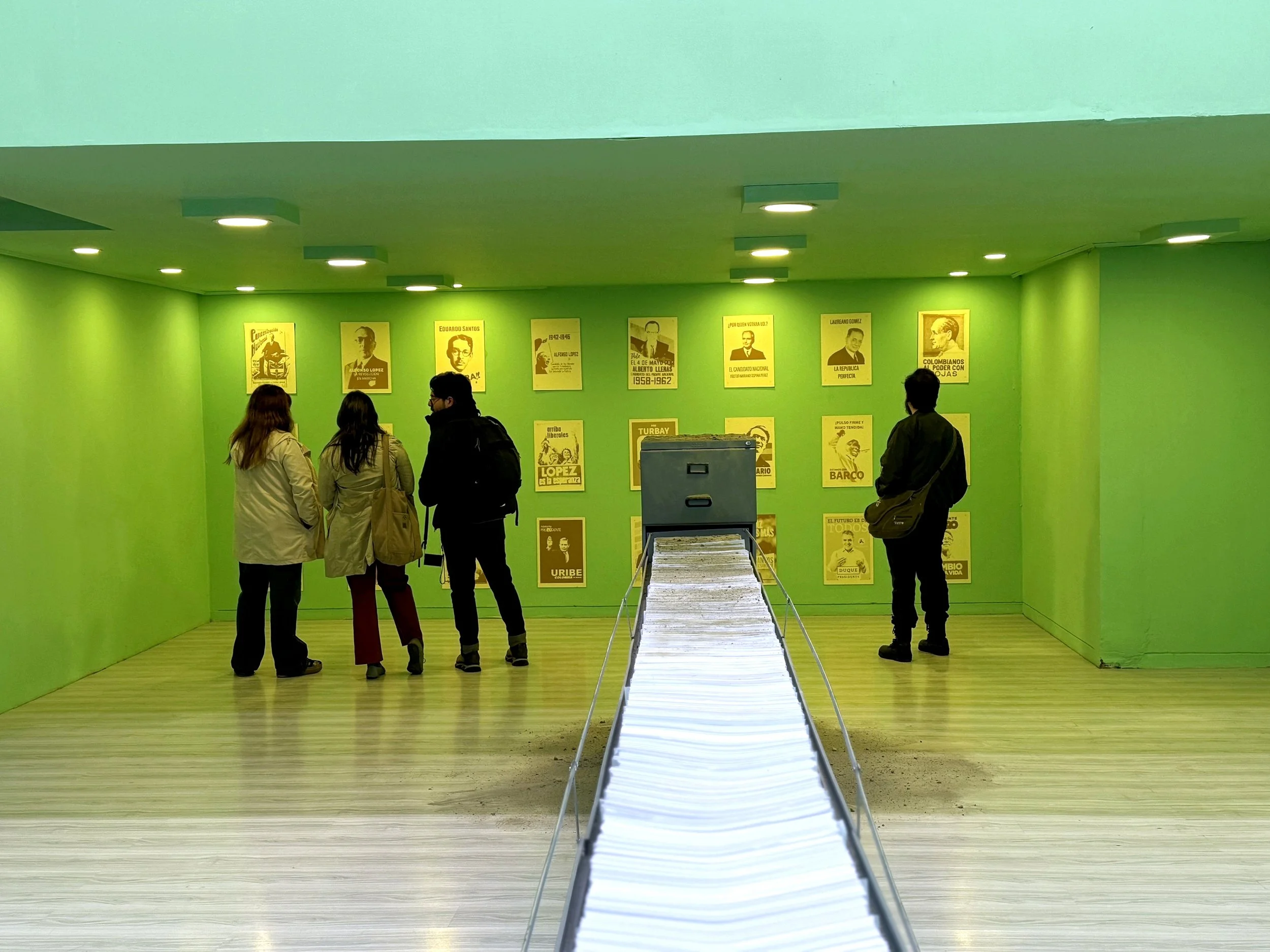
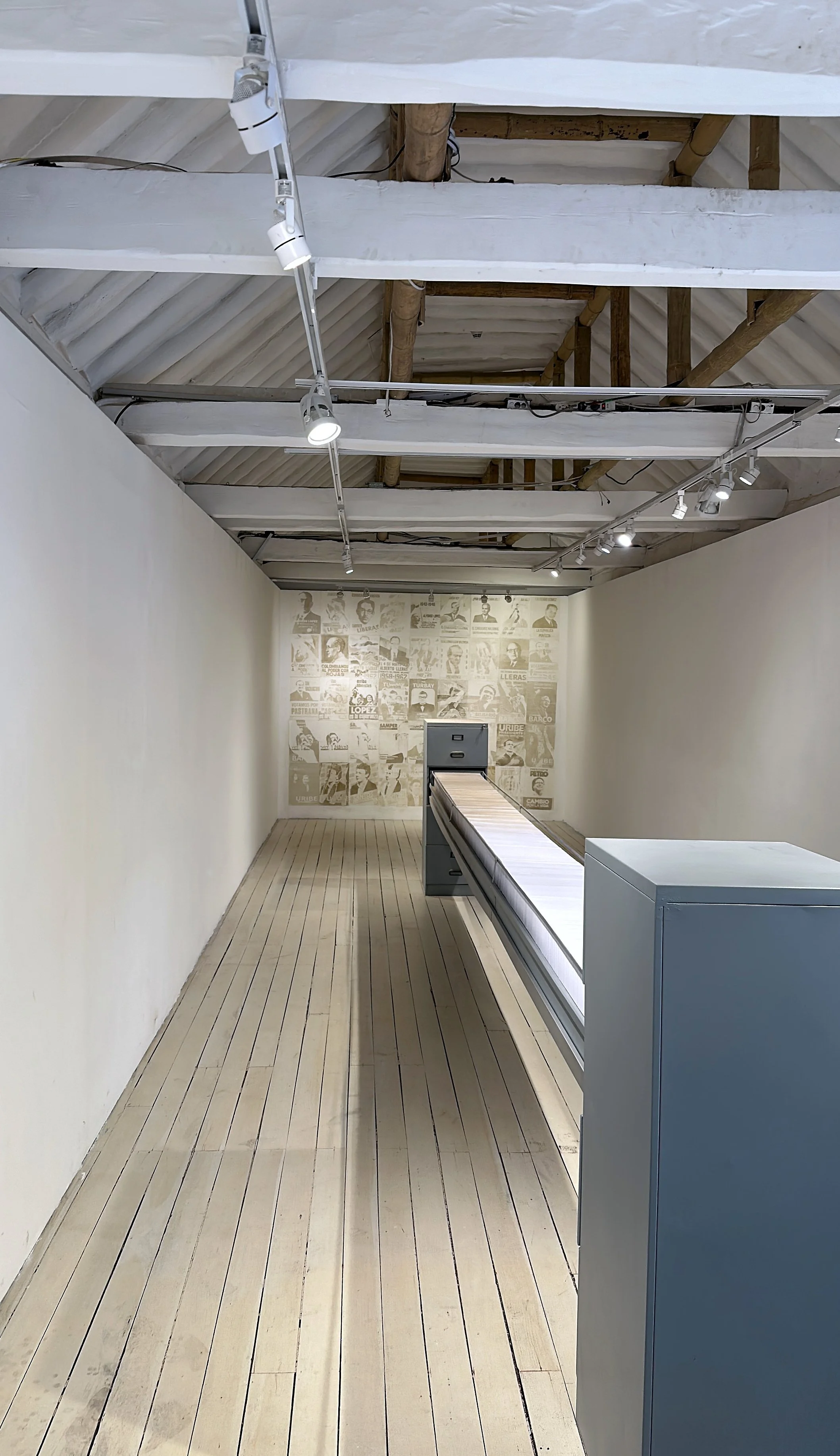
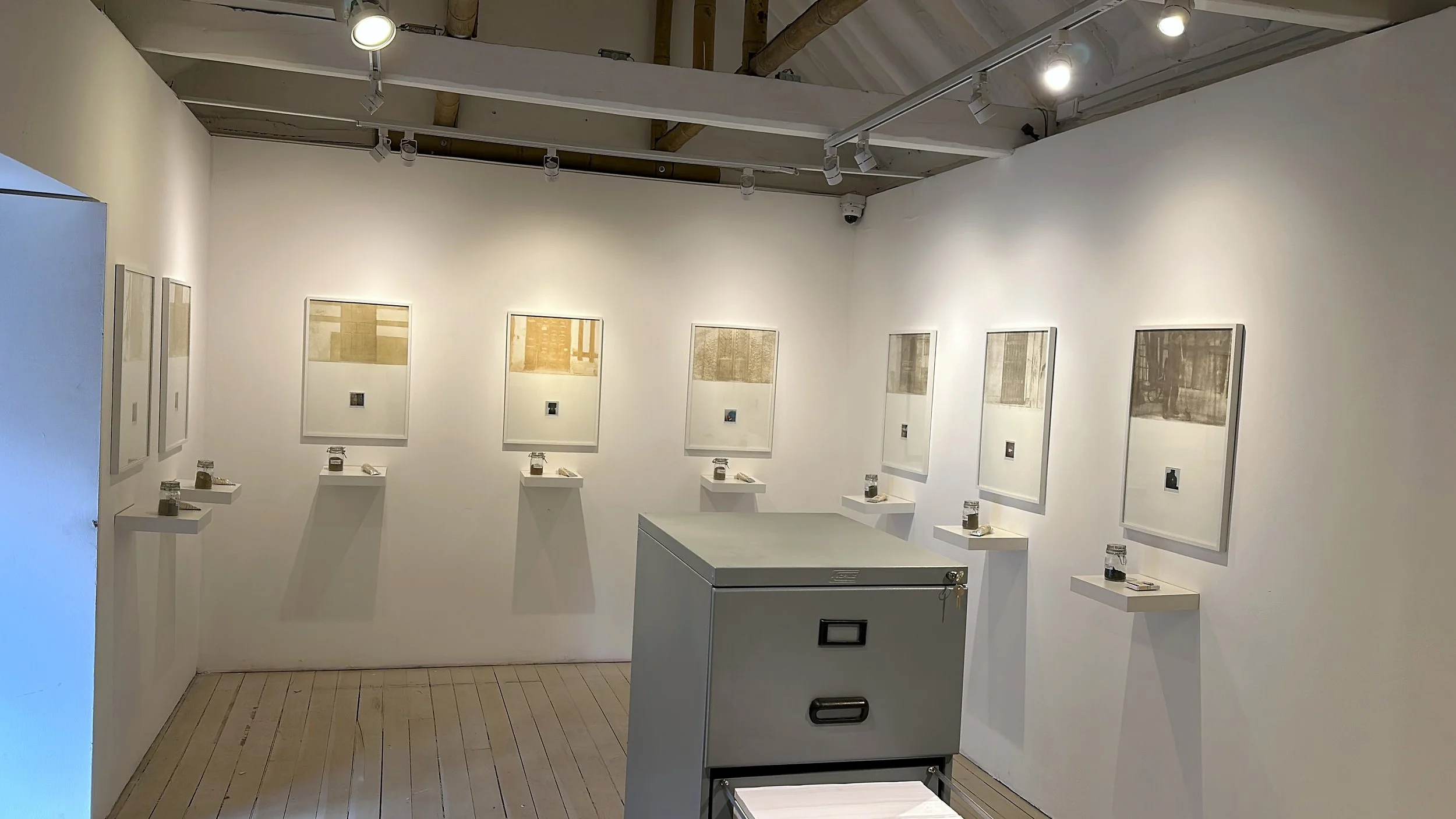
The 2025 presentation at Centro Tequendama reconfigures the cabinet and photographic works within another architectural setting and the movement of visitors.
Read more
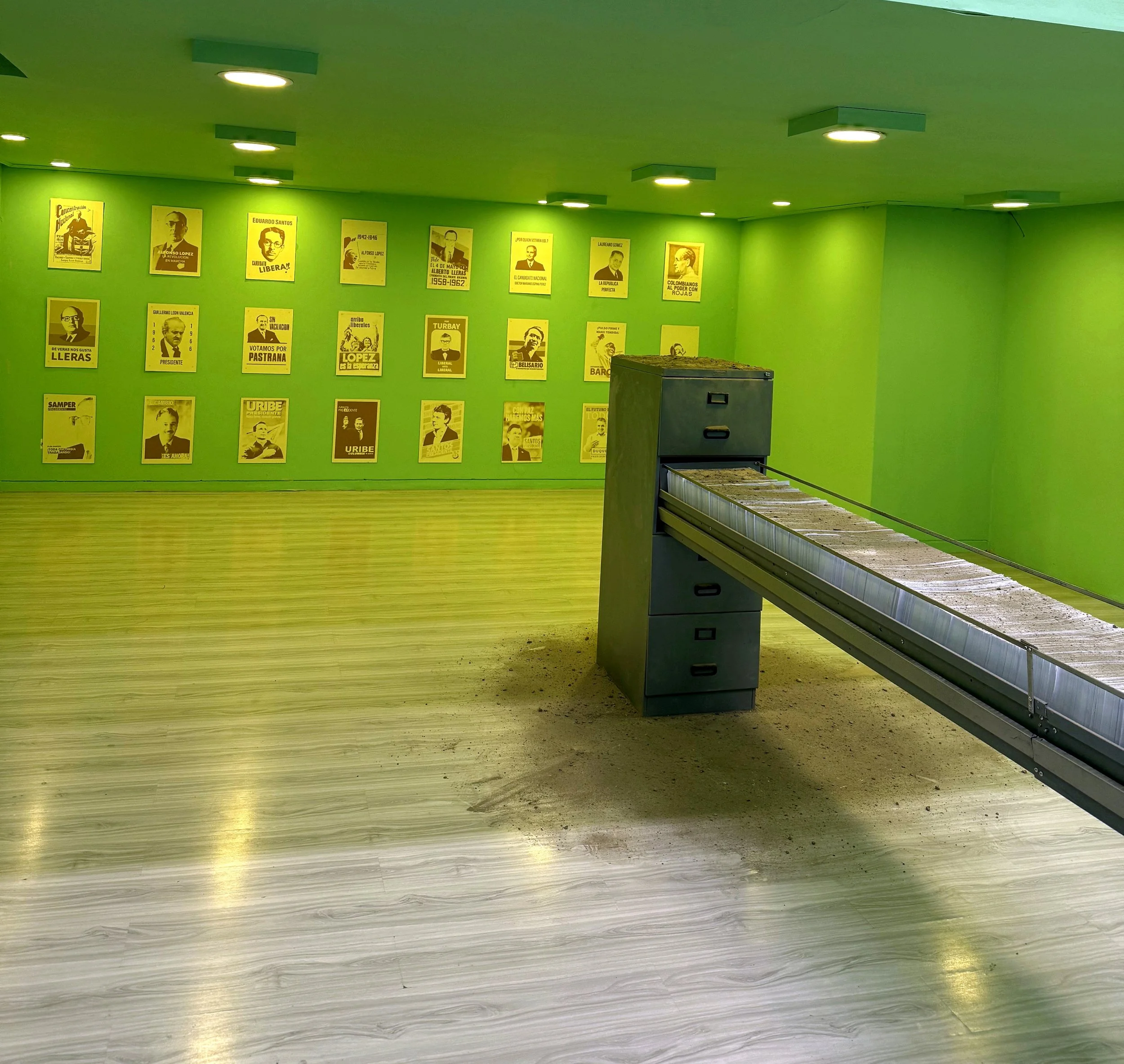
The subsequent presentation at UN_FAIR placed the photographic works and the extended cabinet within a different architectural and exhibition context. Although the relationship between dust, political imagery and archival memory remained central, the installation acquired another spatial reading through its interaction with the surrounding architecture and the movement of visitors.
These photographs document that configuration and form part of the continuing history of the project.
Early Studies
Printing tests and preparatory material document the development of the project, distinguishing research and proposed configurations from completed installations.
Read more
The development of Mordiendo Polvo involved a series of material experiments, spatial proposals and investigations into the relationship between photographic images and archival objects. These studies reveal questions that are not always apparent in the finished installation, particularly the practical and conceptual decisions involved in transforming found residue into pigment, reconstructing aspects of political imagery and adapting archival furniture for an exhibition space.
The preparatory material also documents how the project changed between its original conception and its realized forms. It is presented here as a record of the process rather than as evidence that every proposed component was completed.
Research and Unrealized Proposals
Technical
Mordiendo Polvo / Installation
Gonzalo García Gaitán Mordiendo Polvo, 2024–Present
Installation and experimental photography using collected dust, handmade pigments, gum bichromate and archival furniture.
Dimensions and configurations vary.
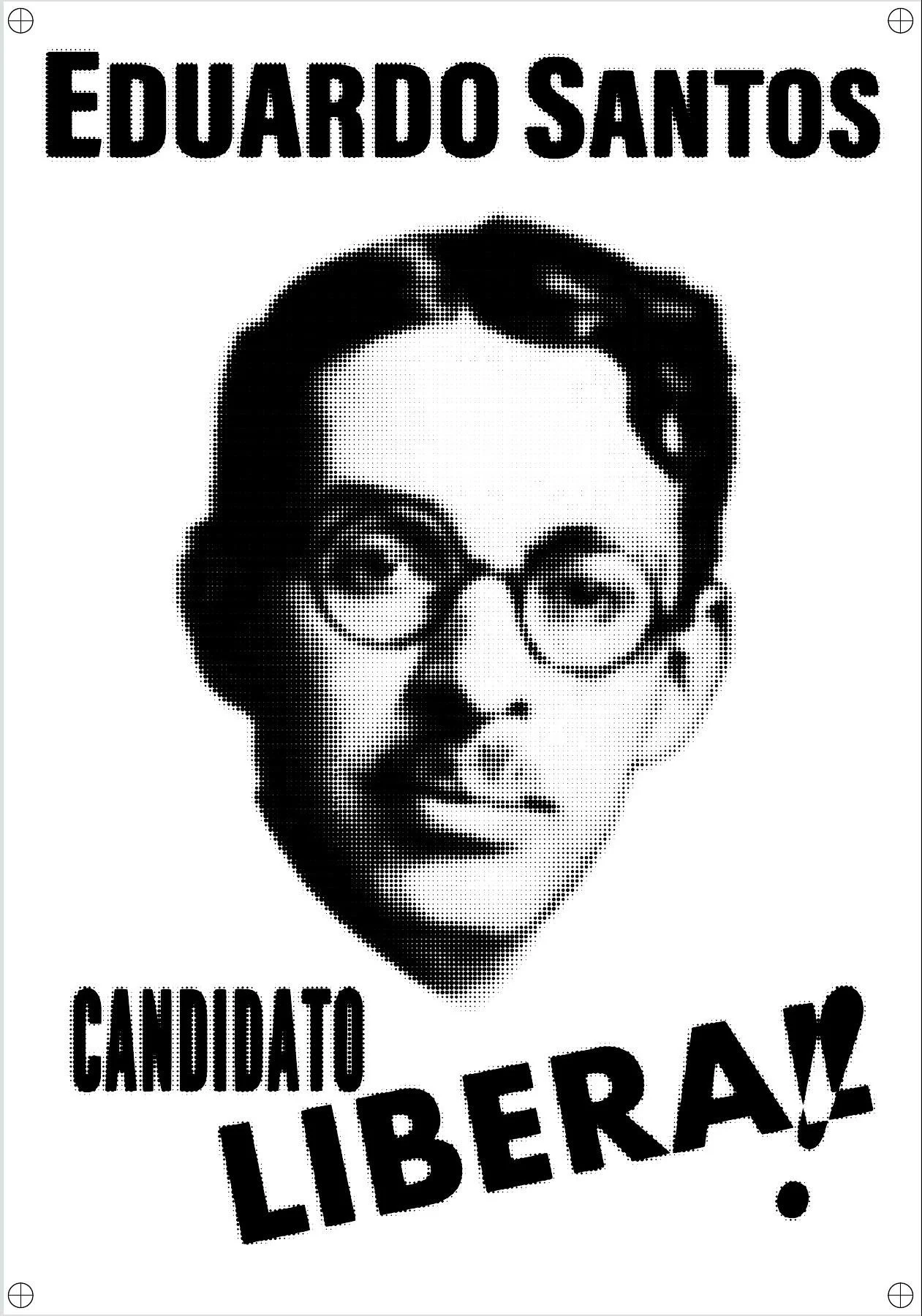
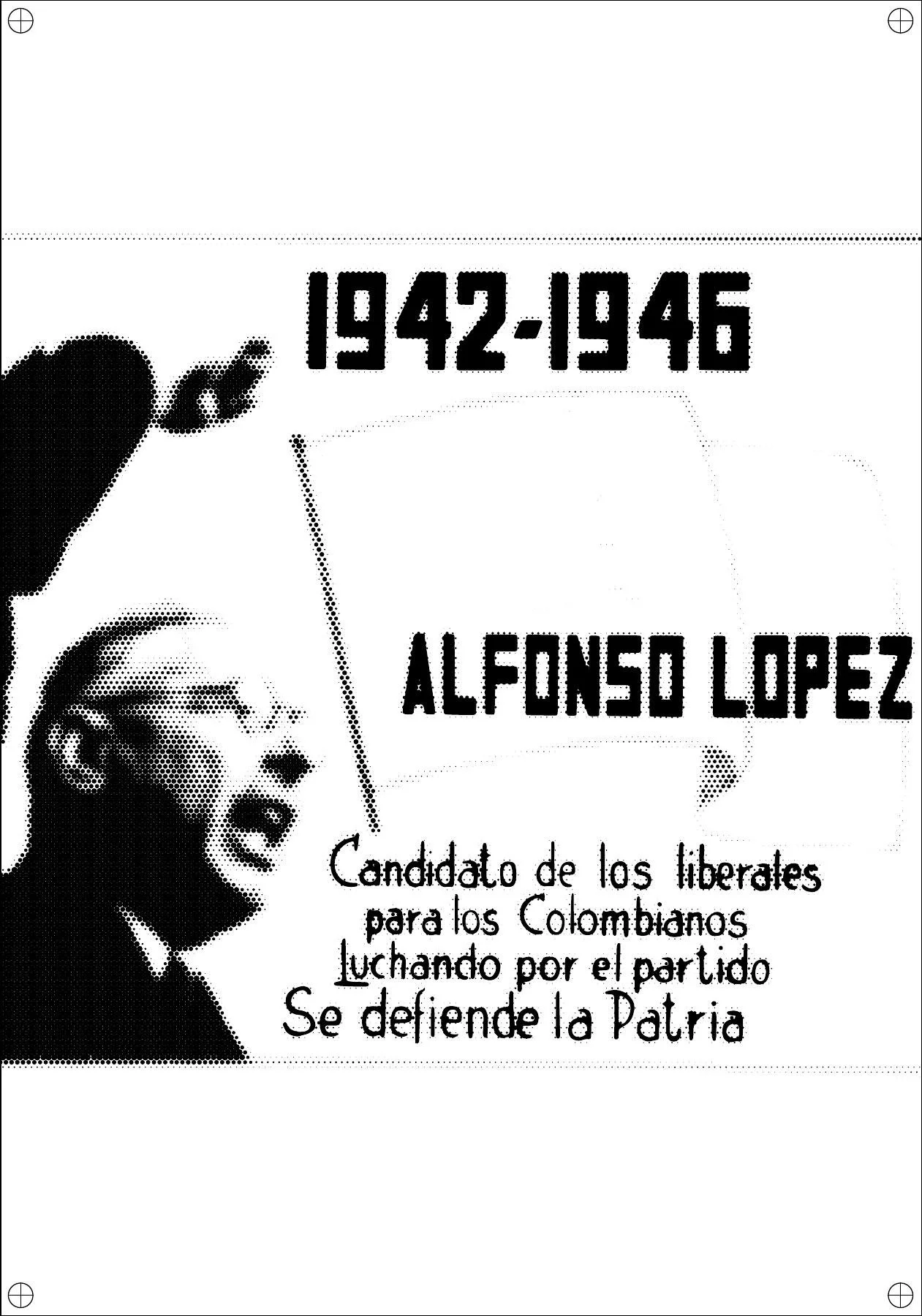
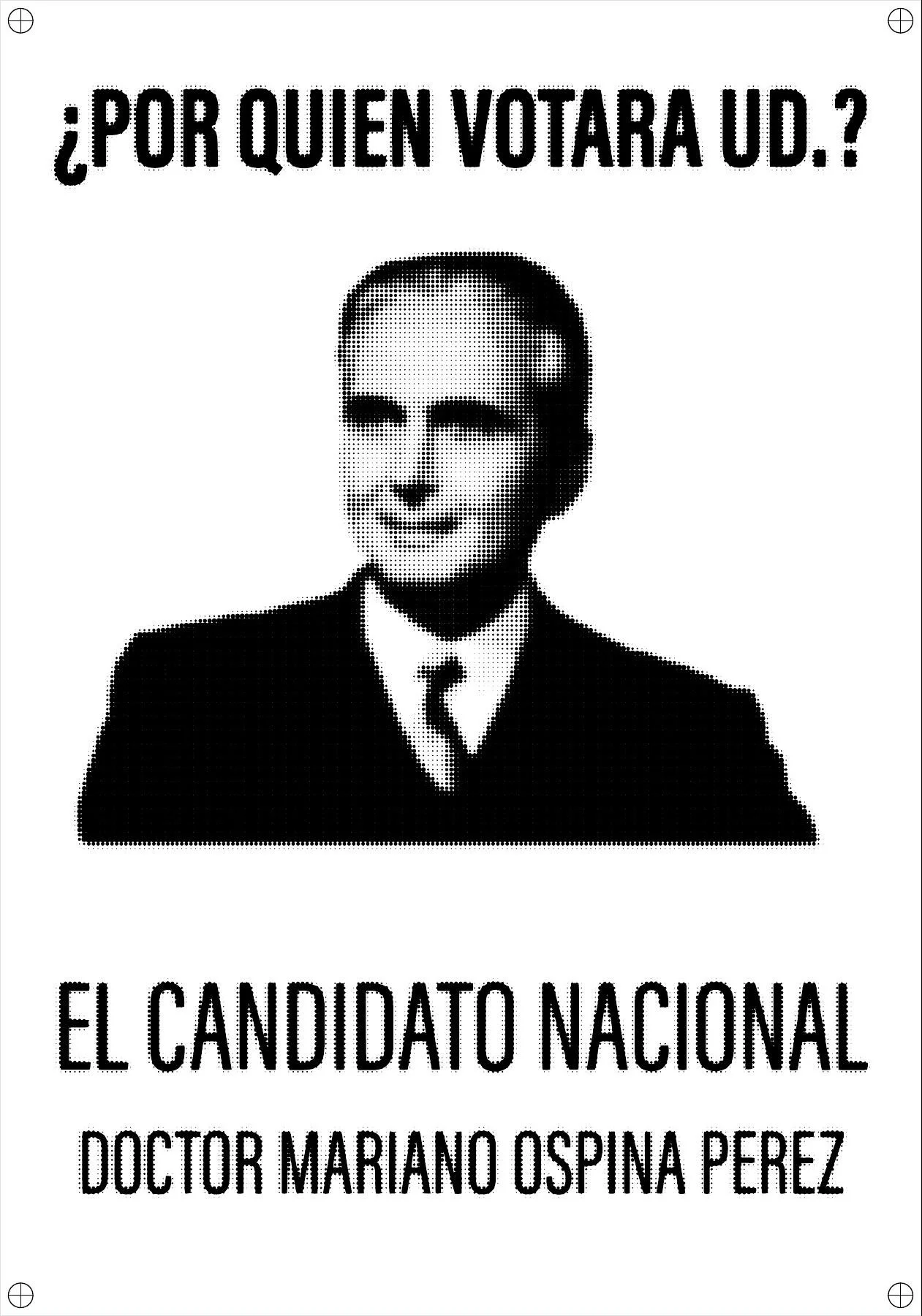
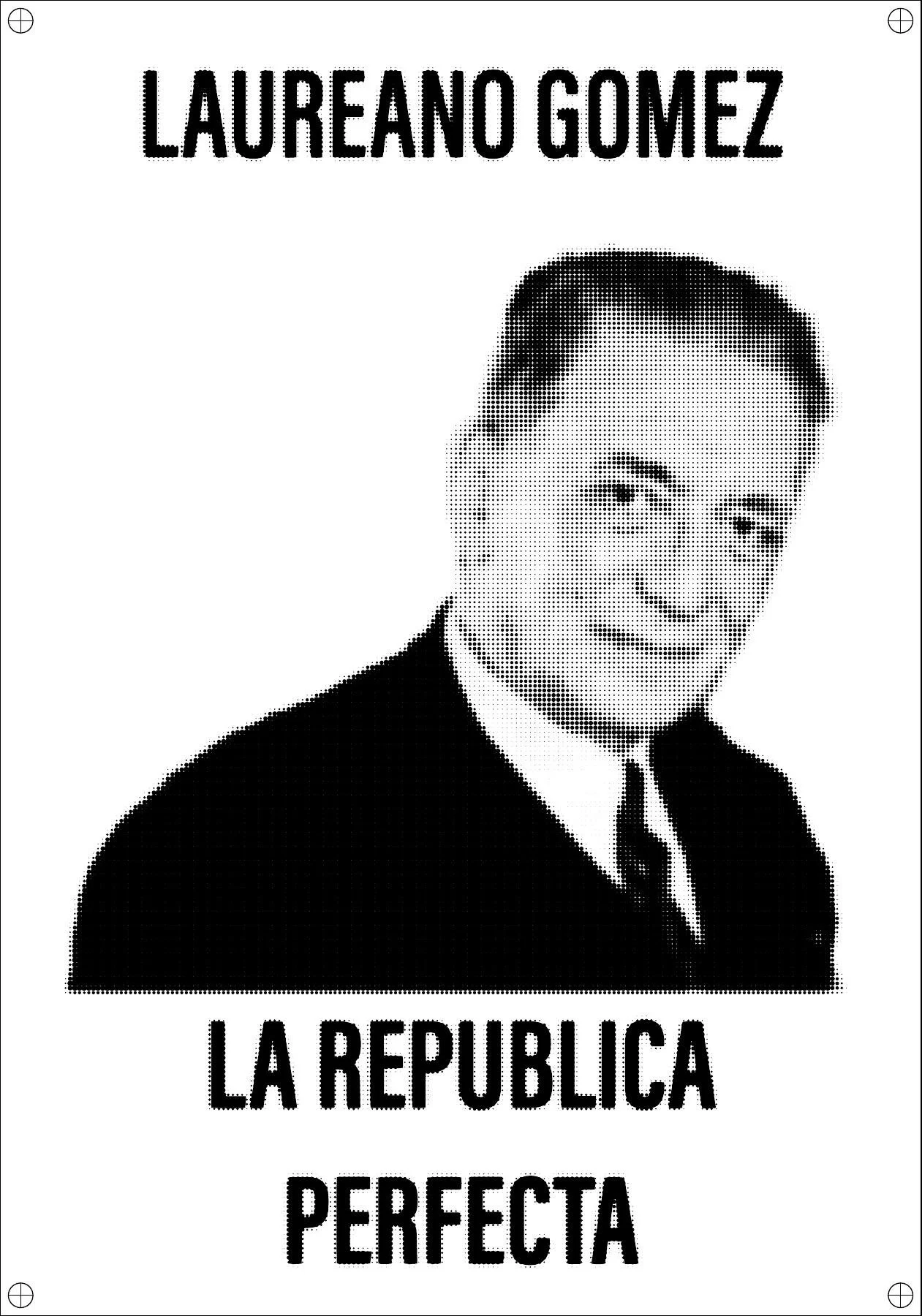
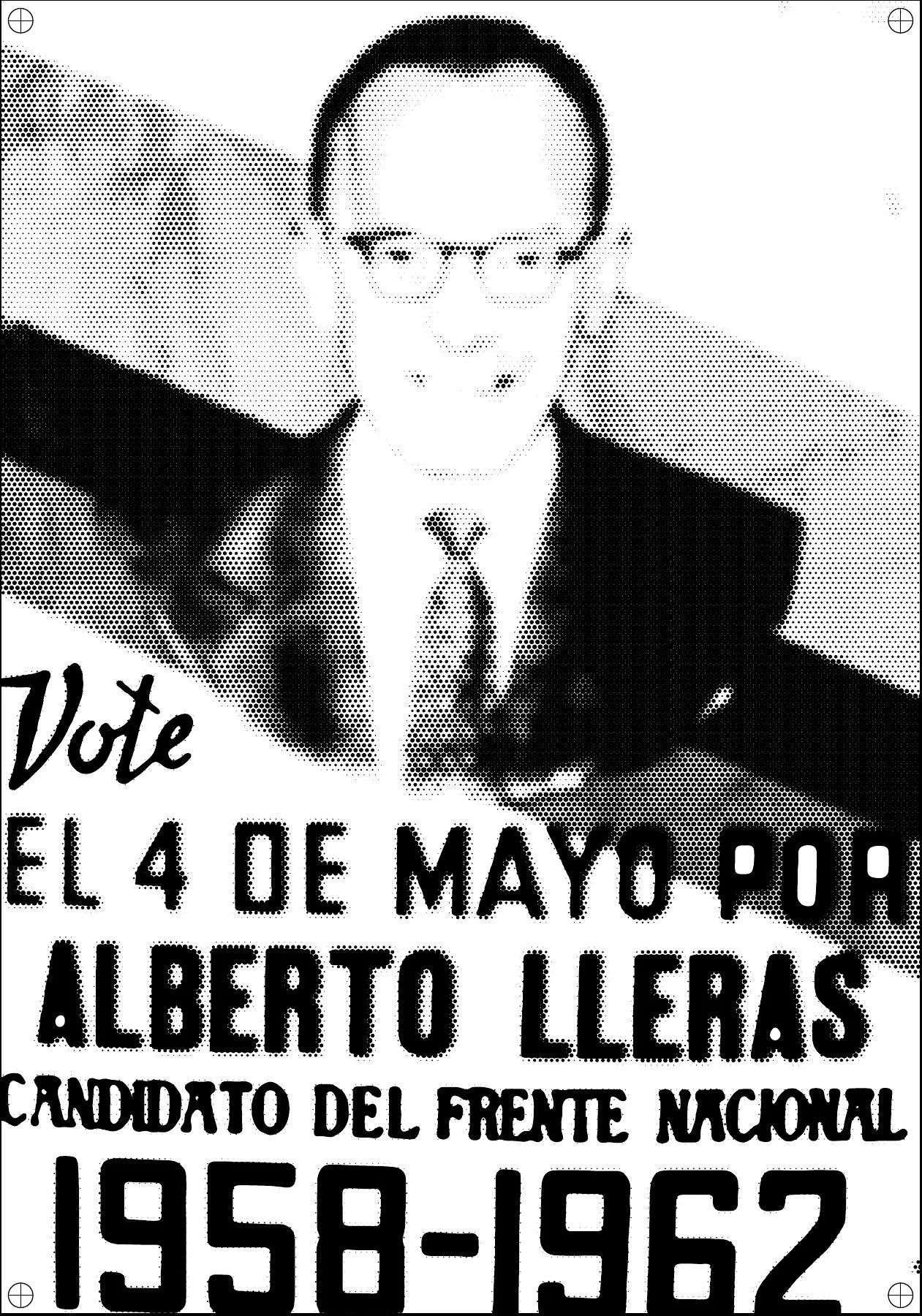
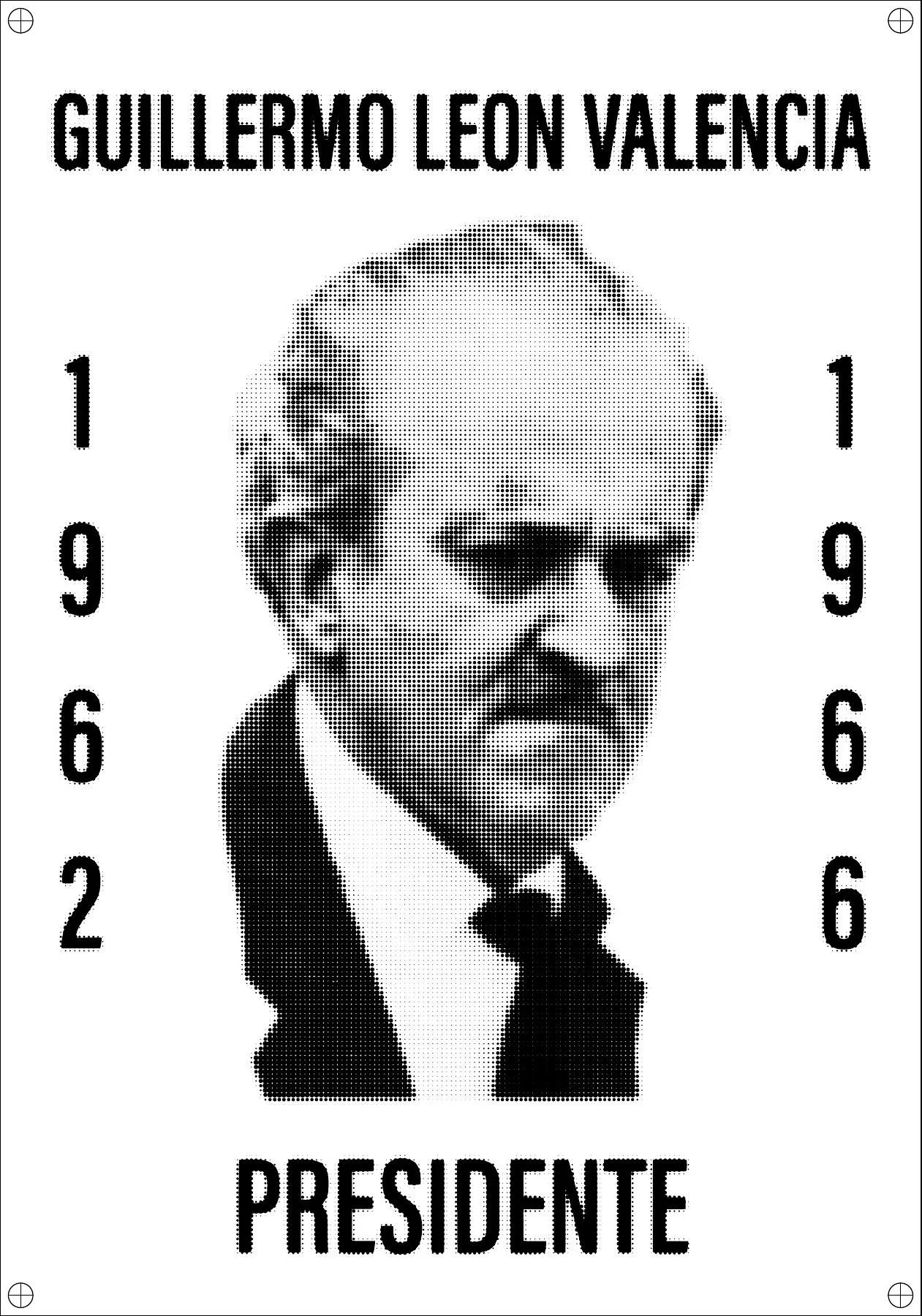
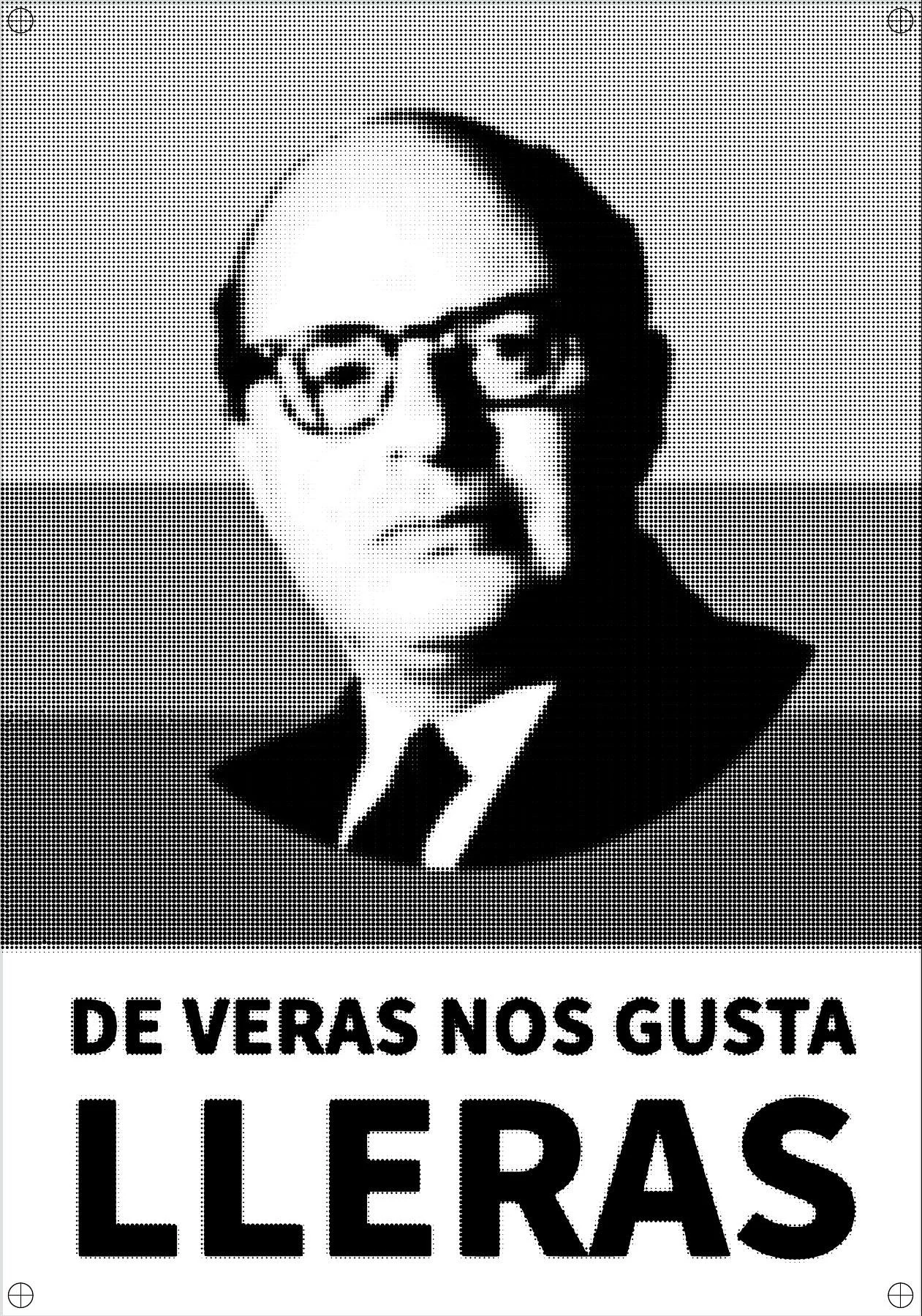
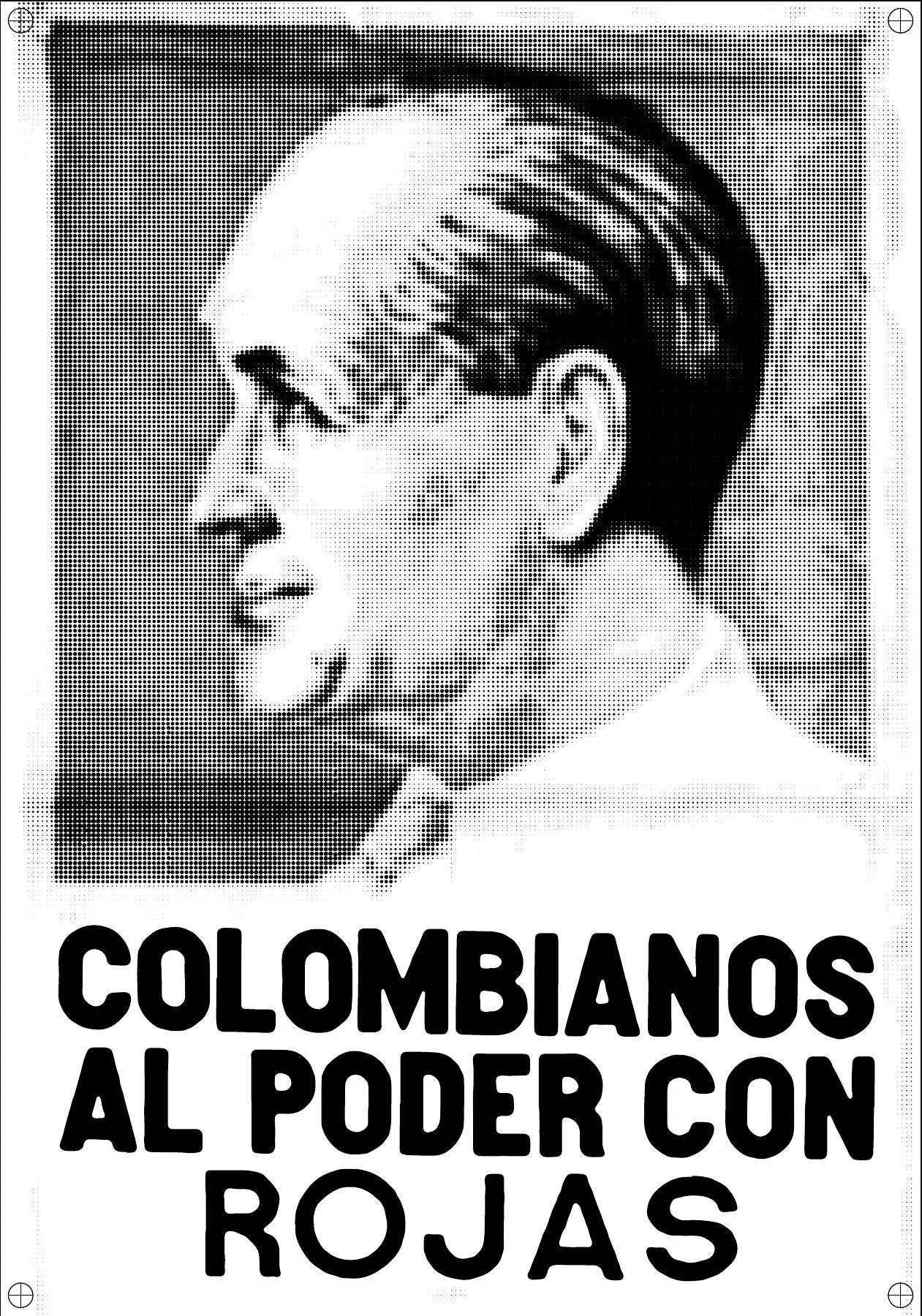
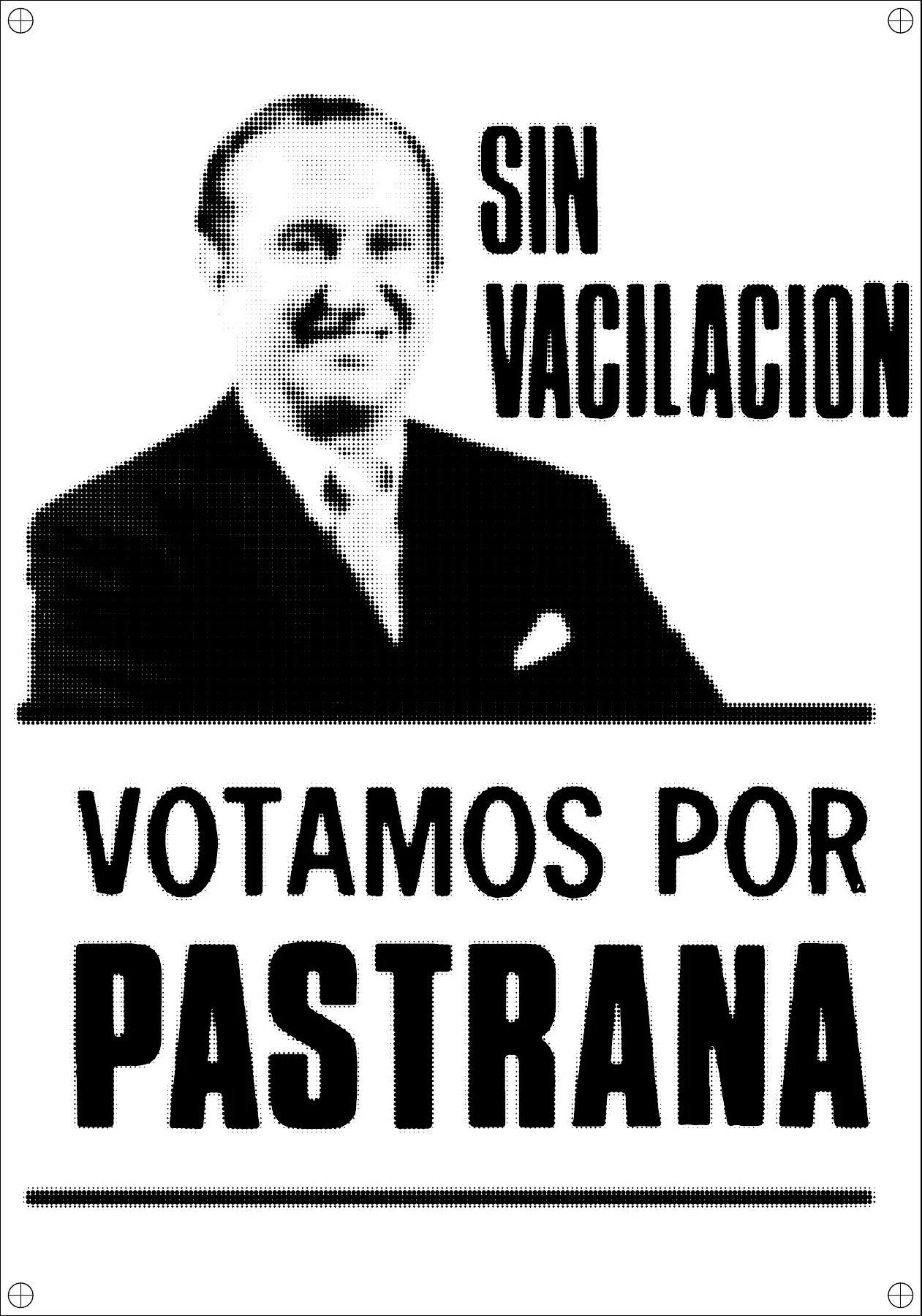
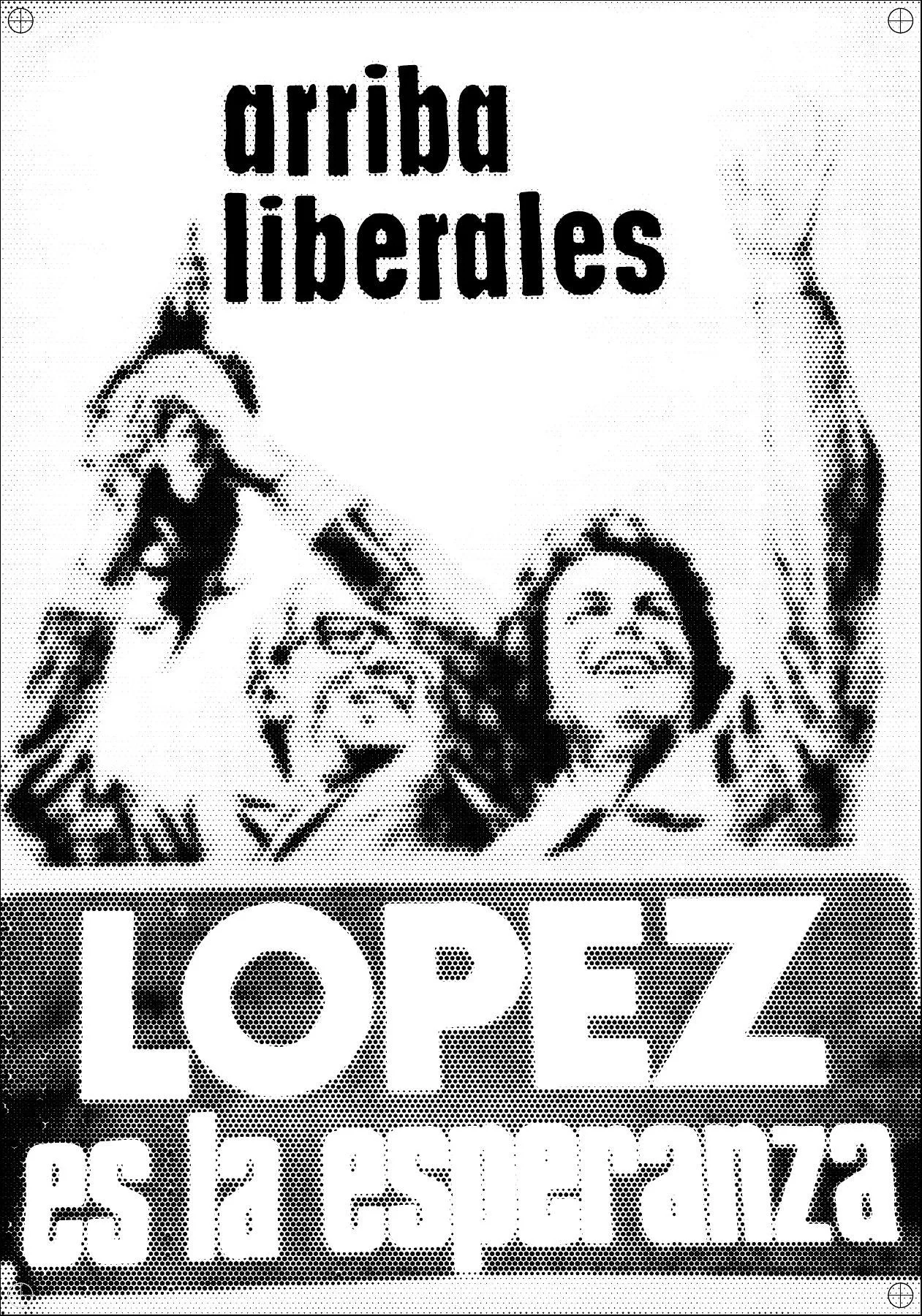
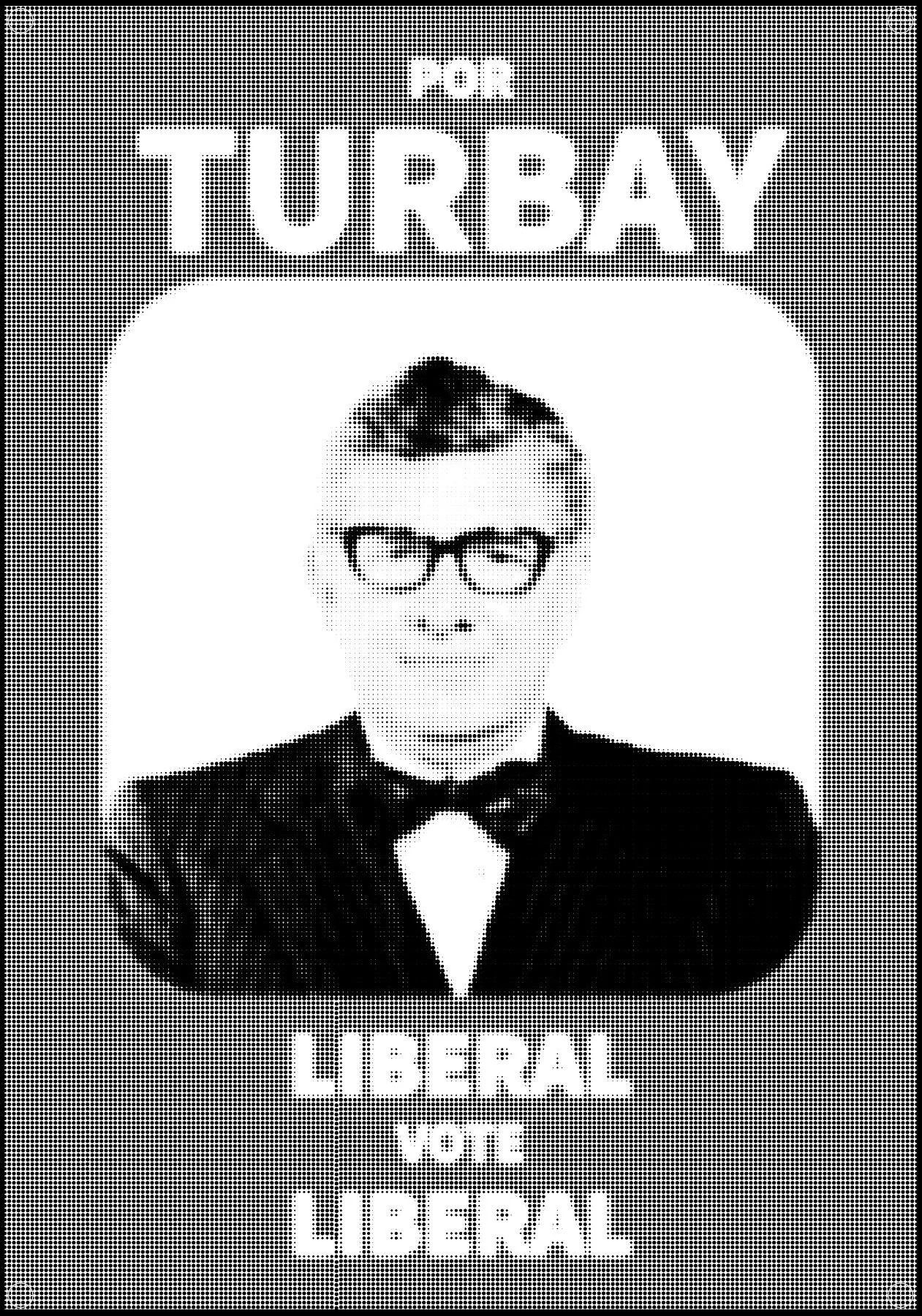
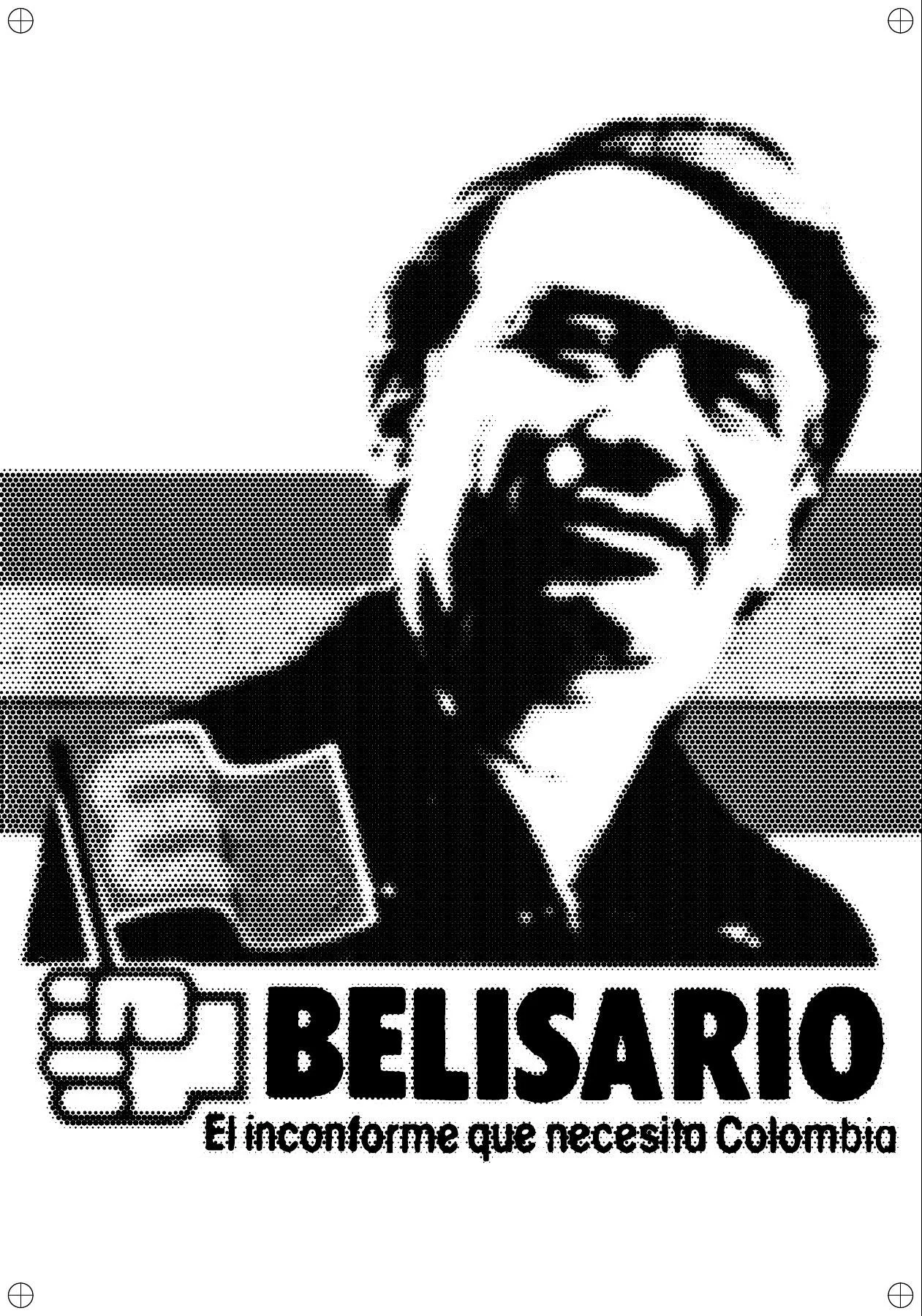
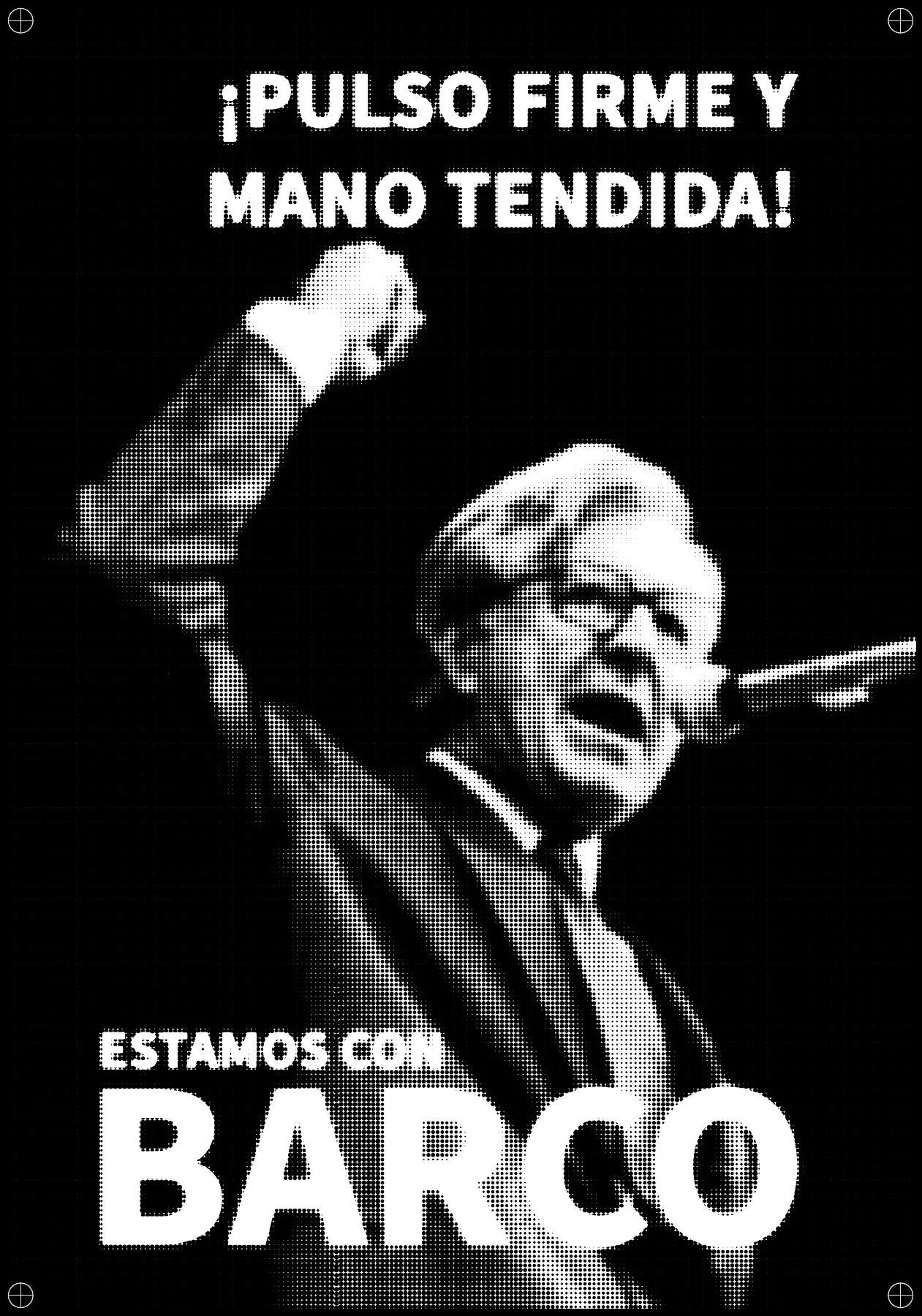
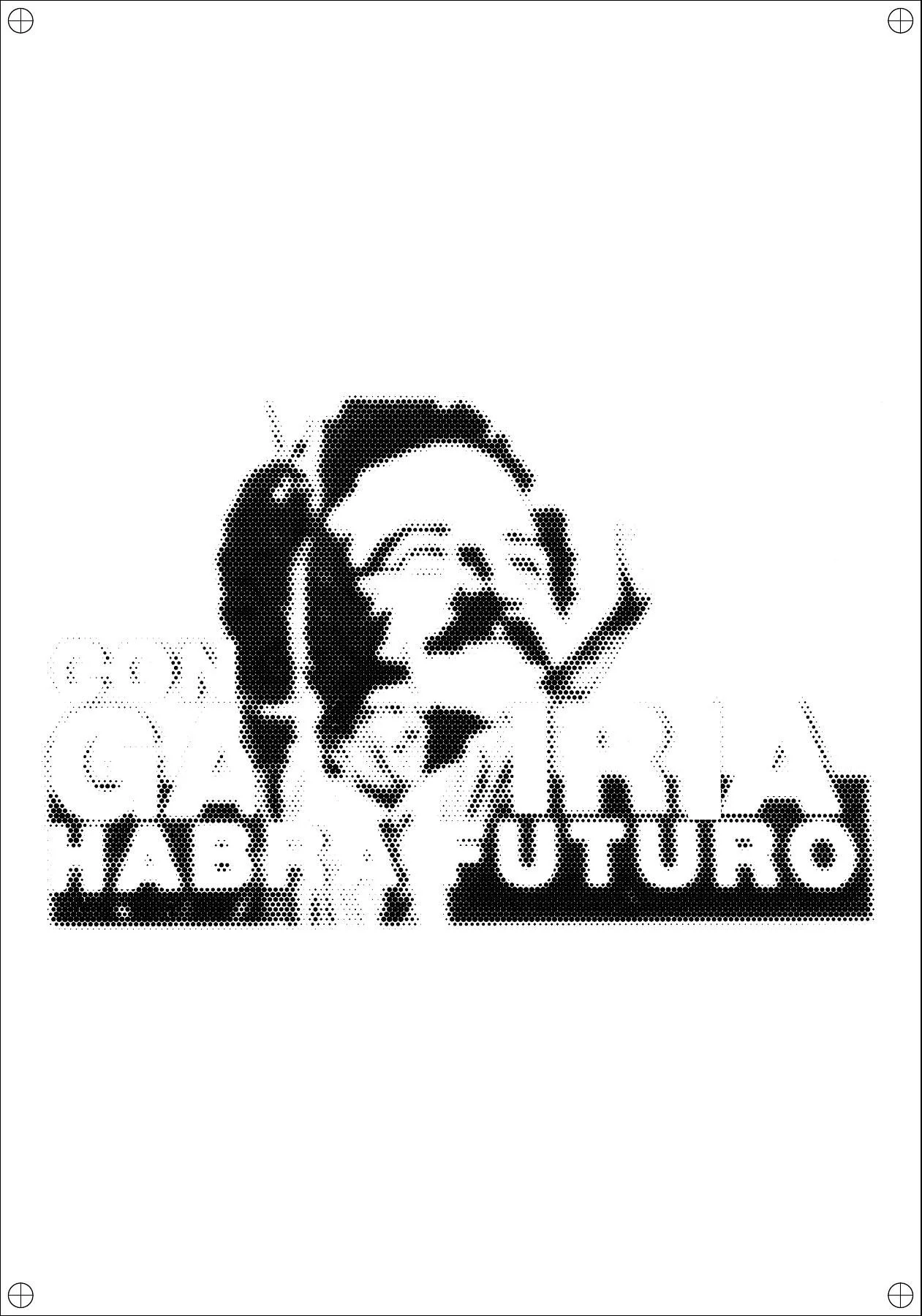
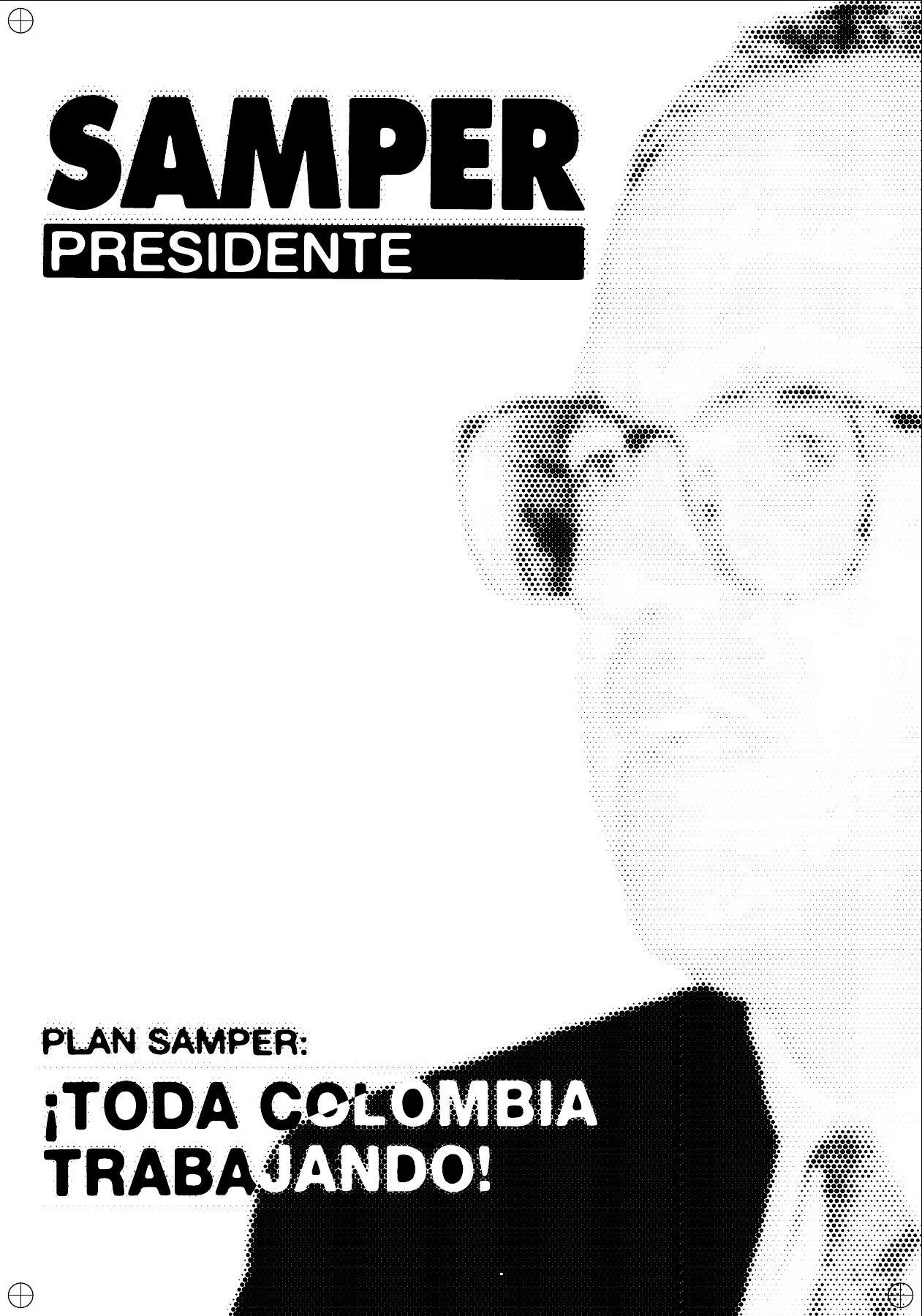
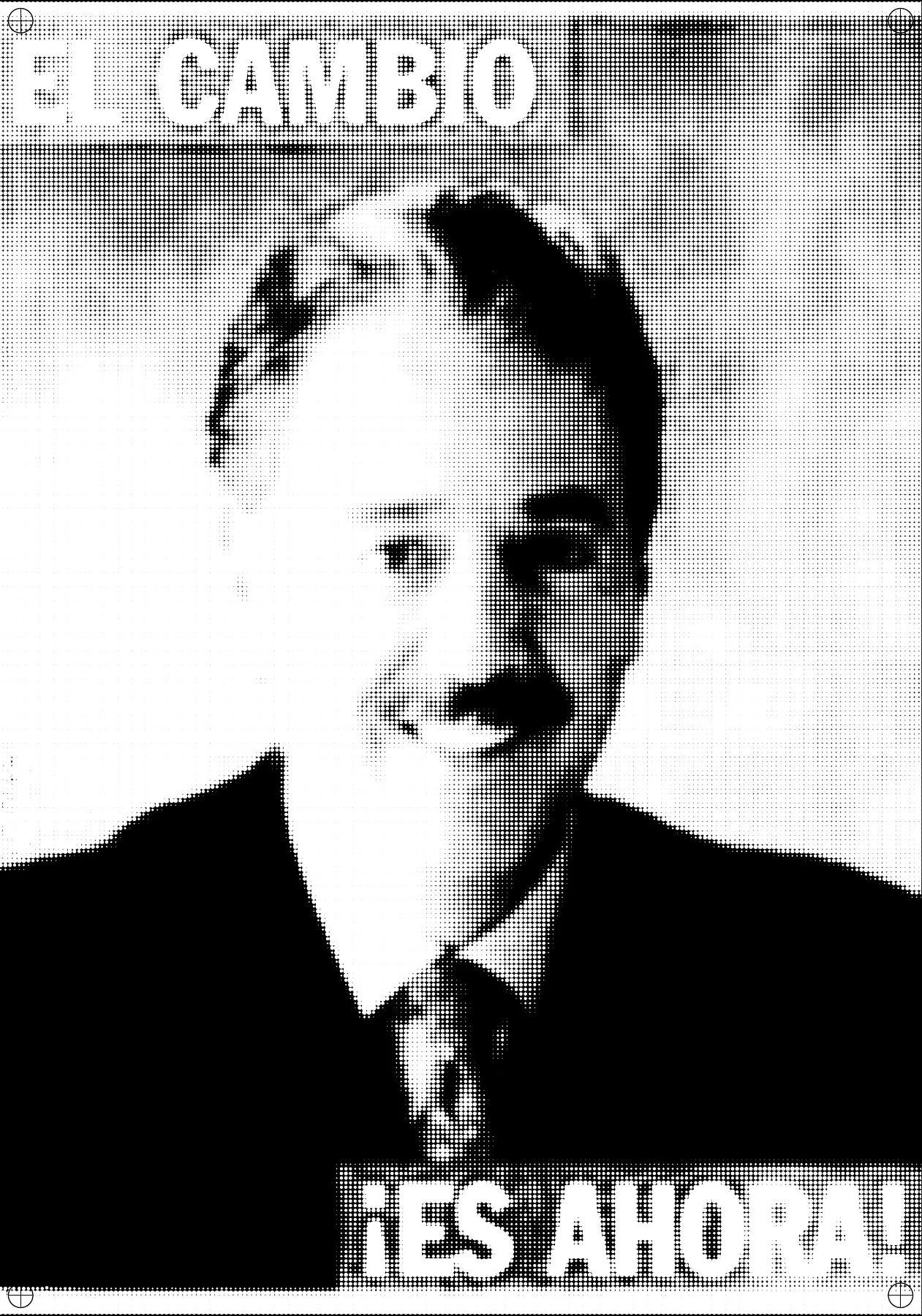
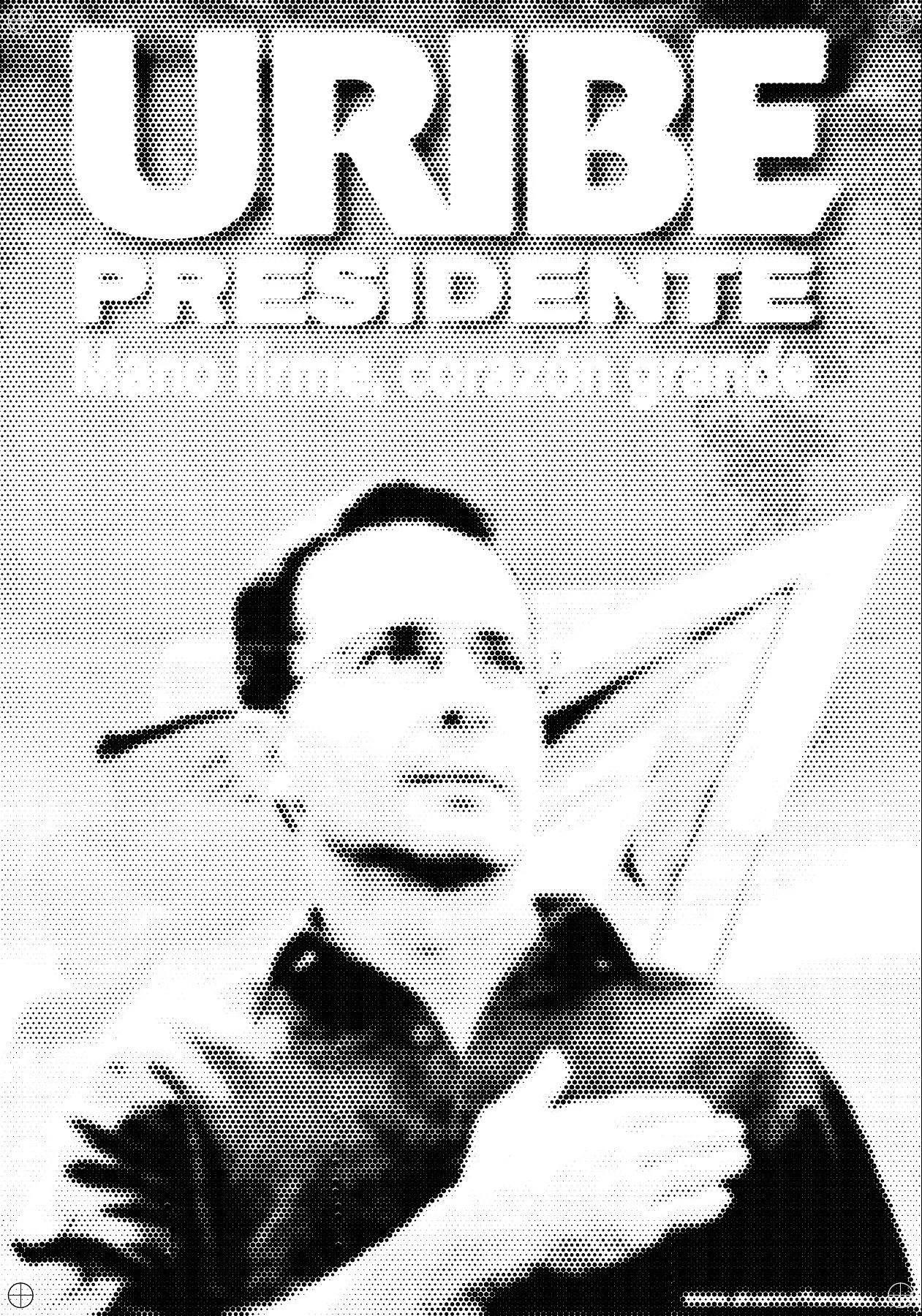
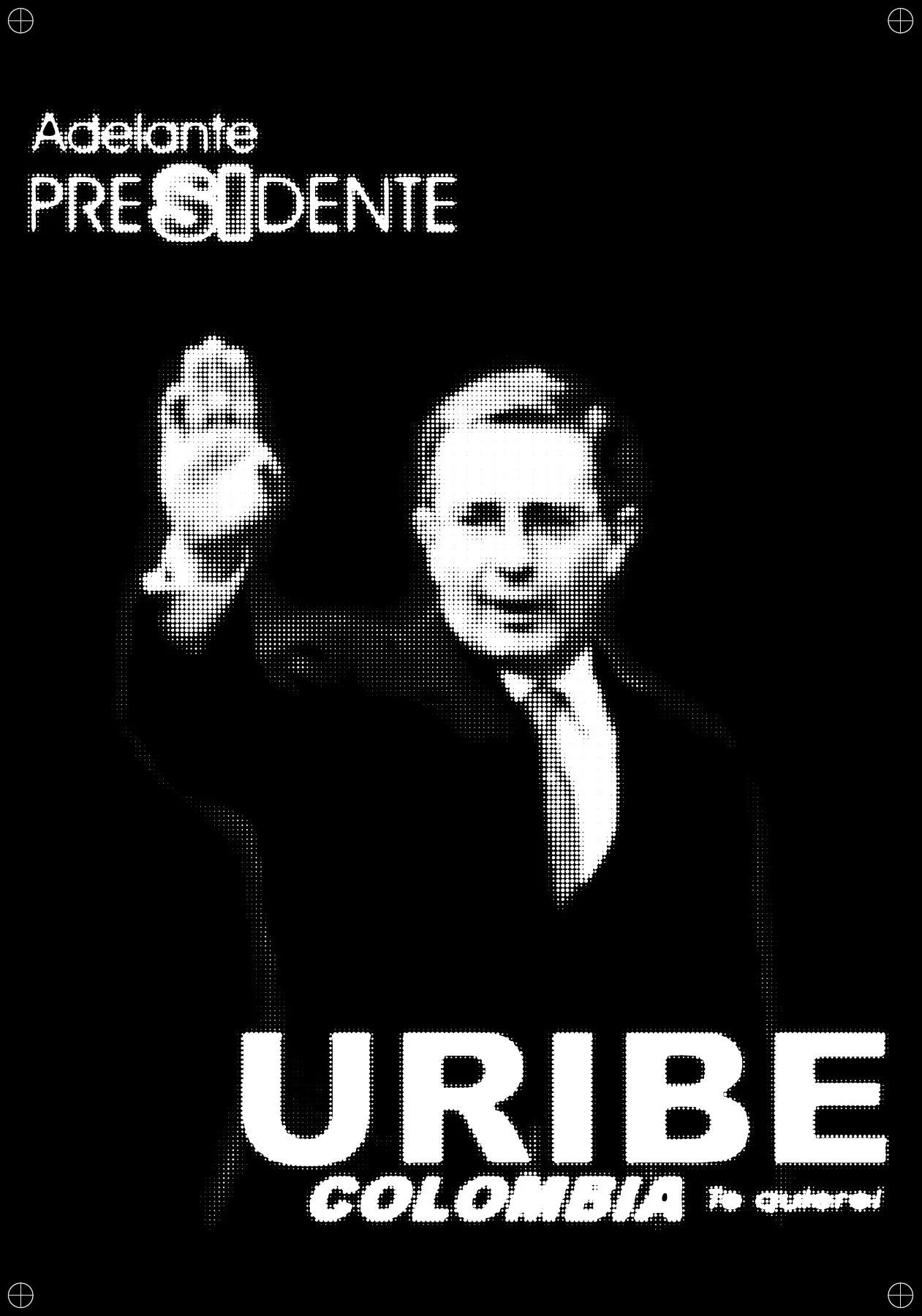
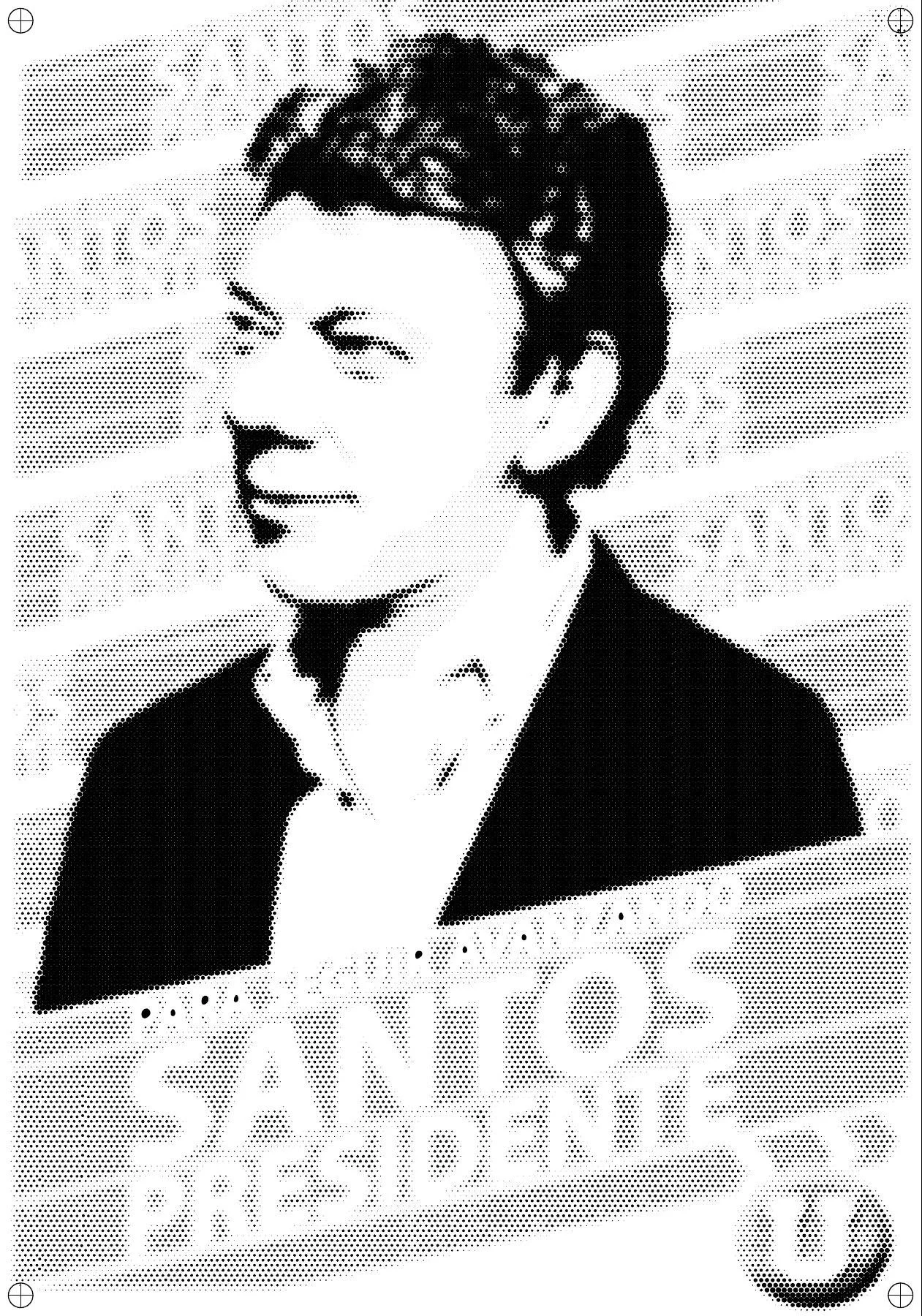
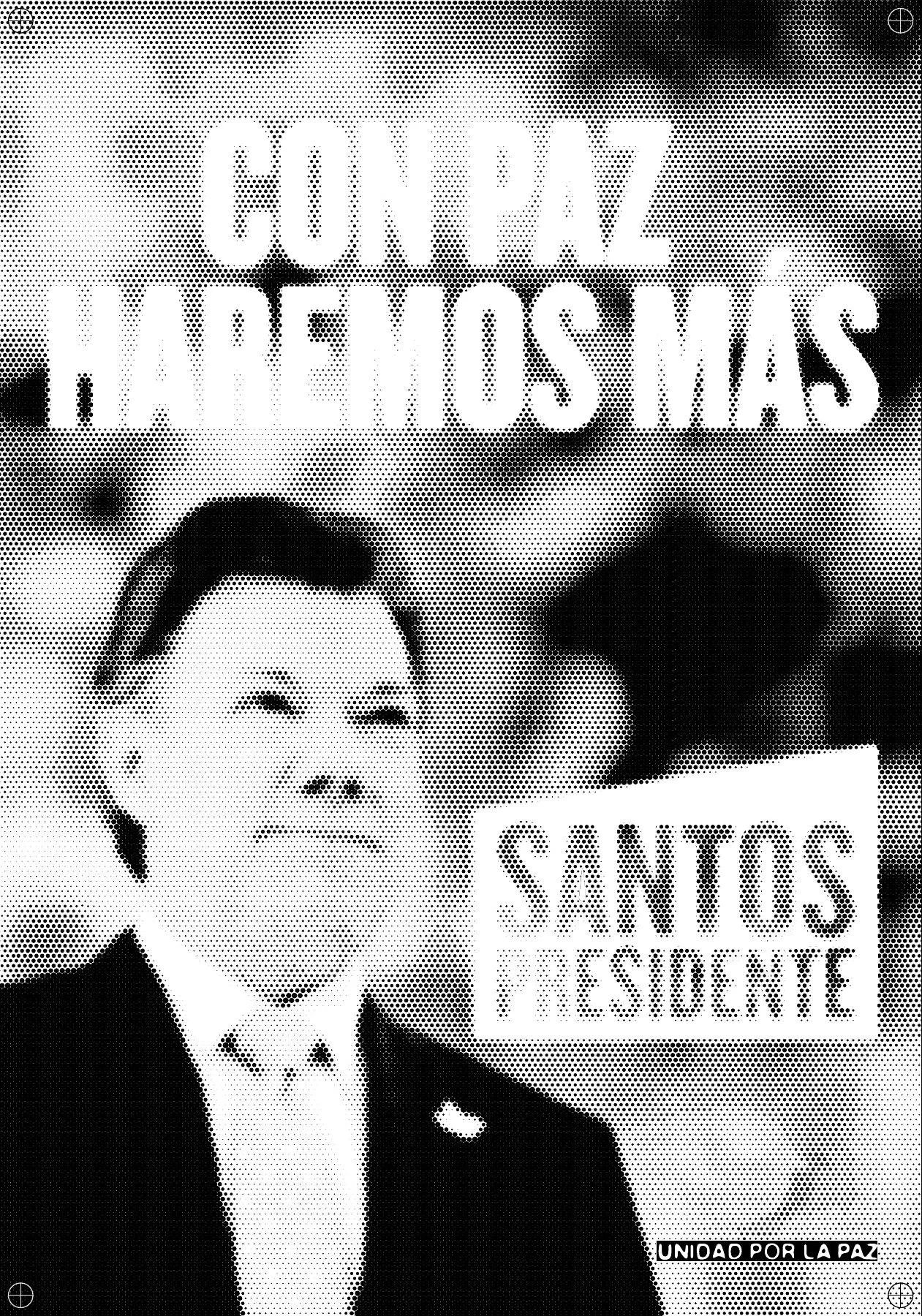
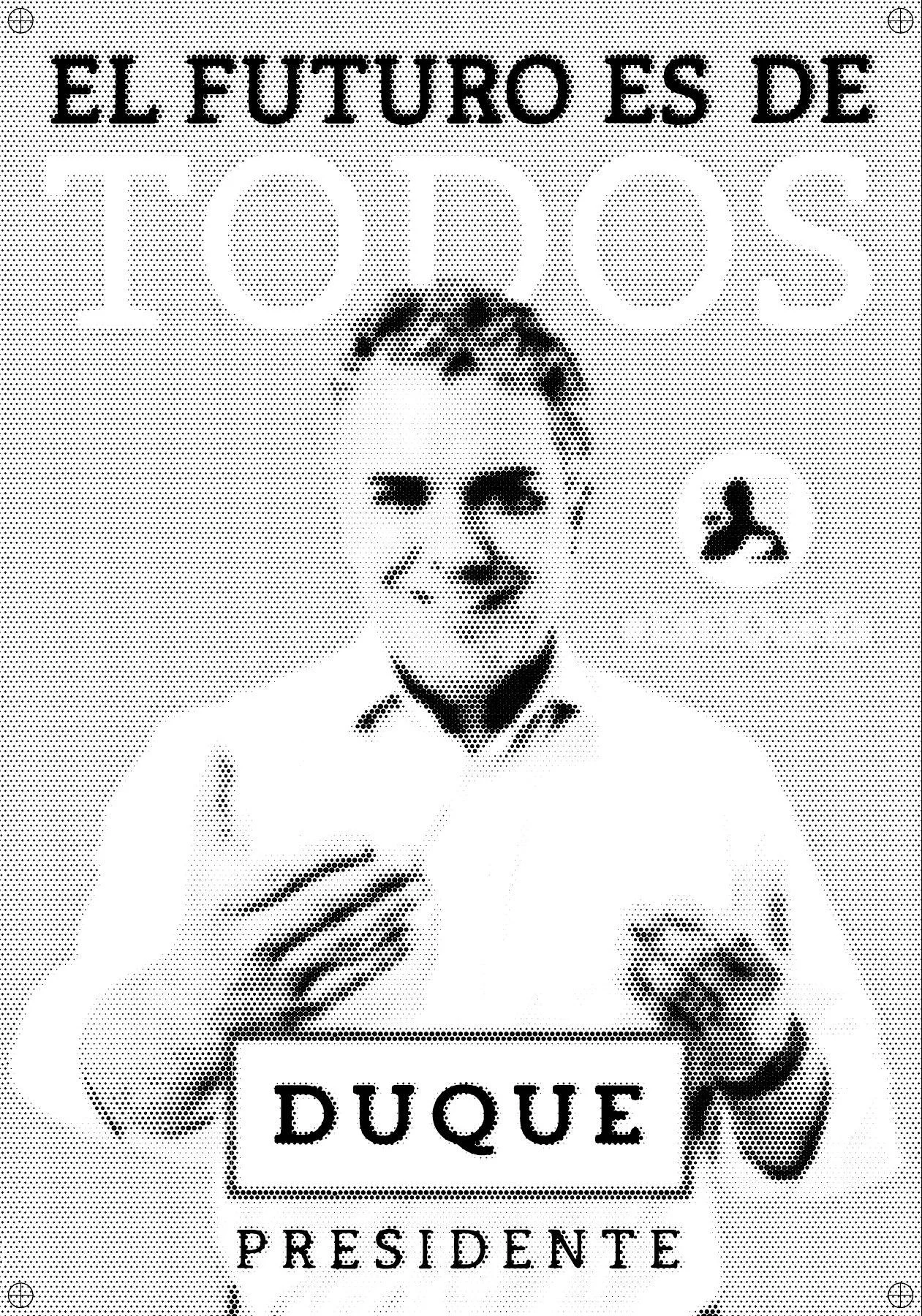
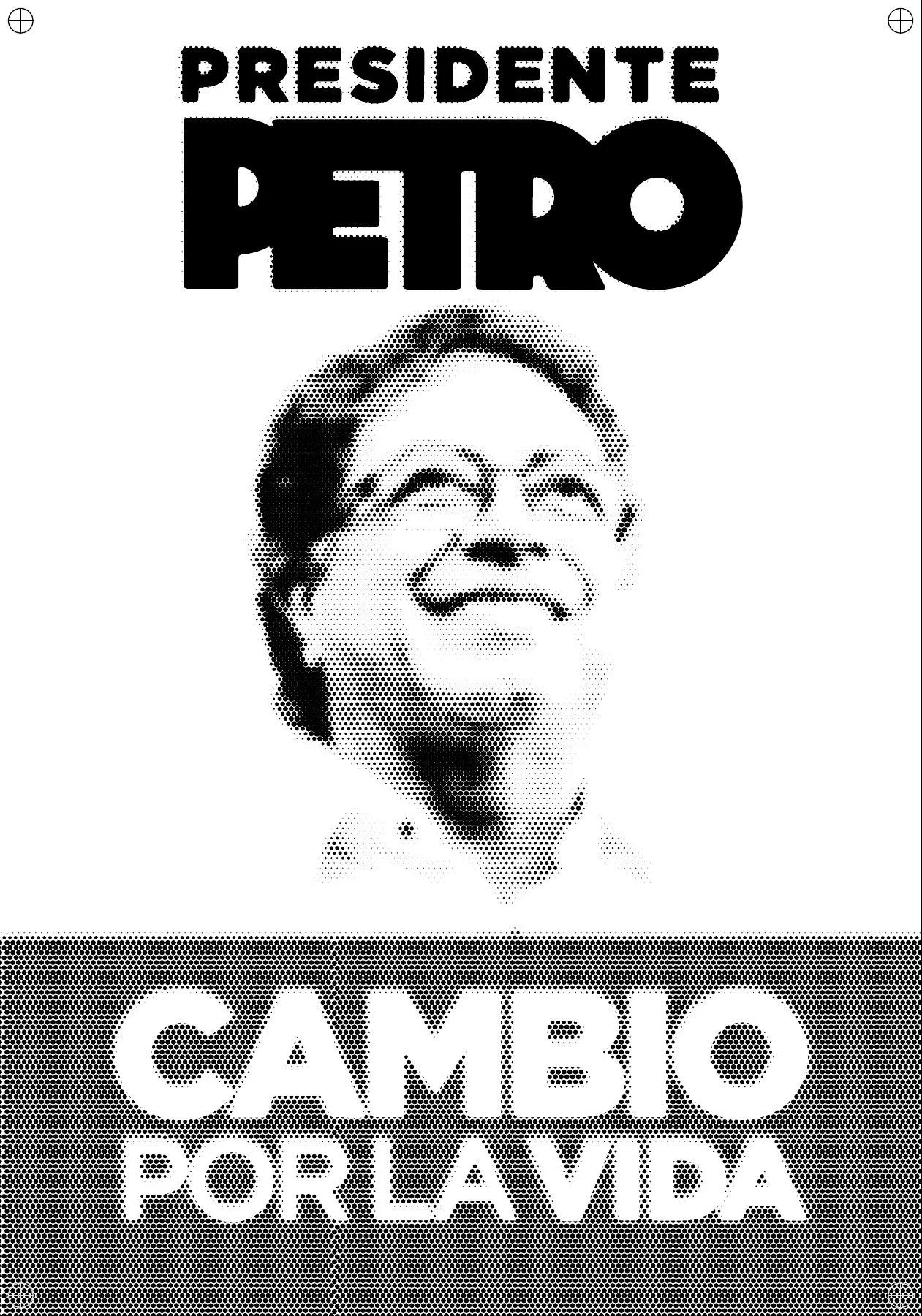
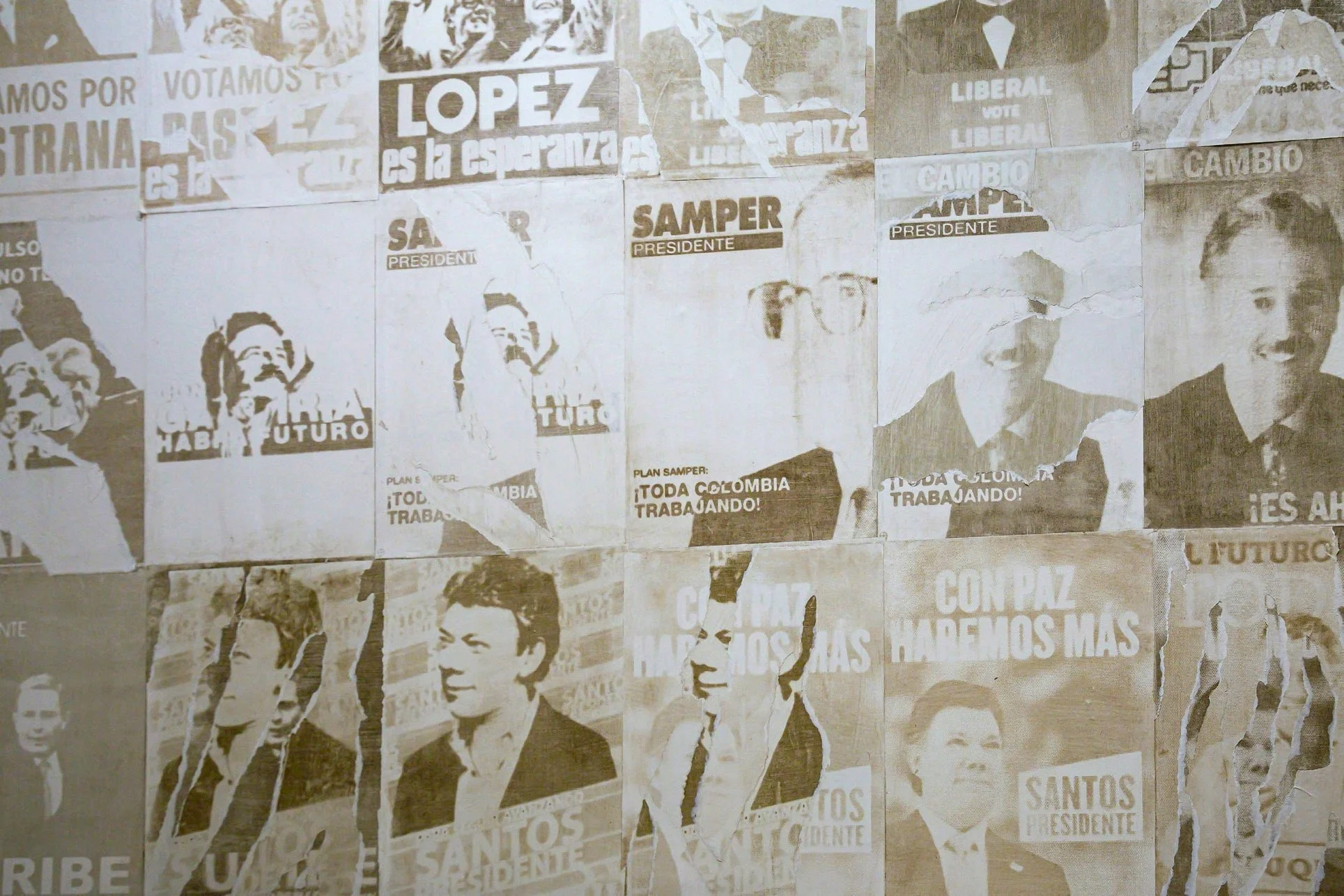
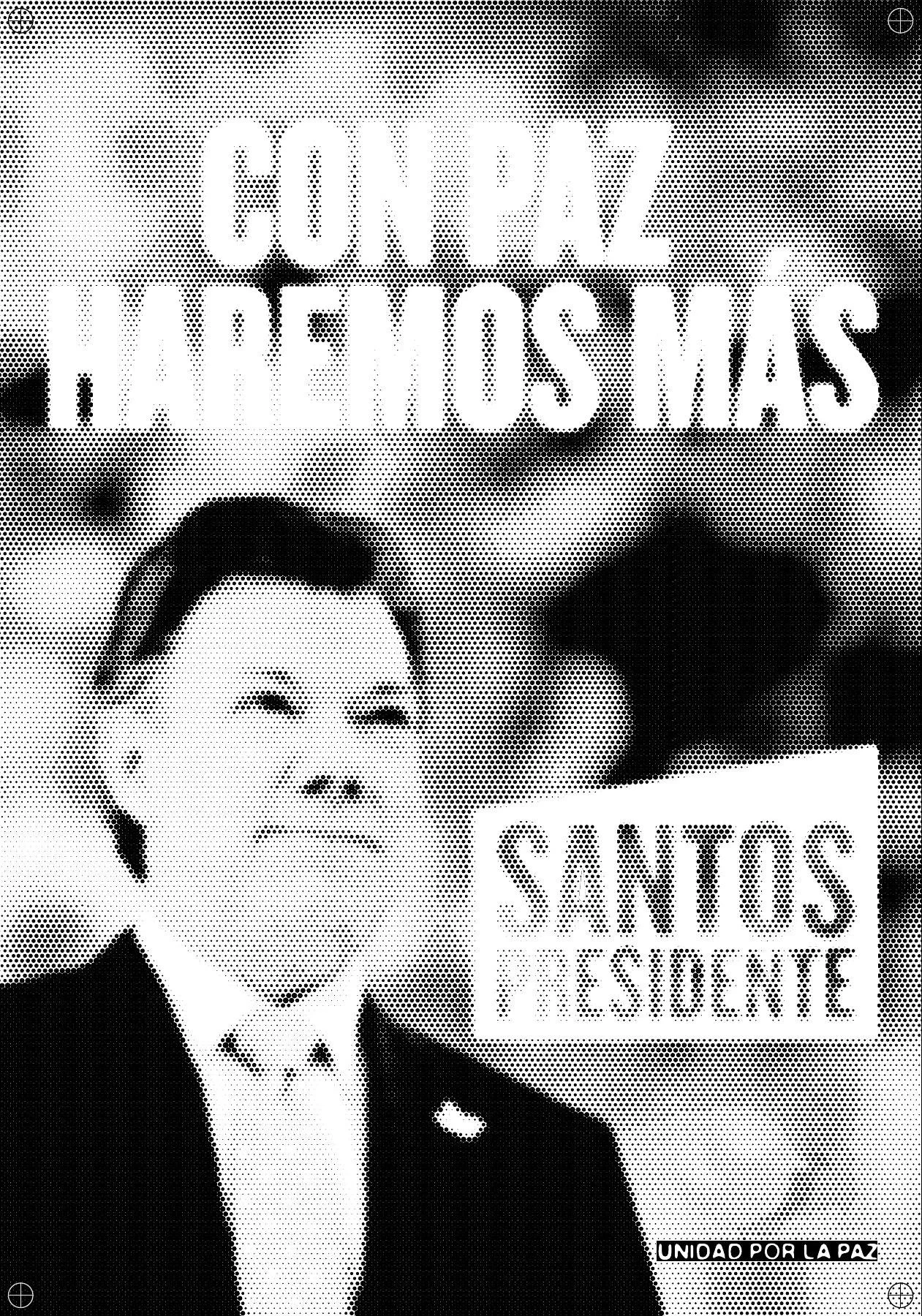
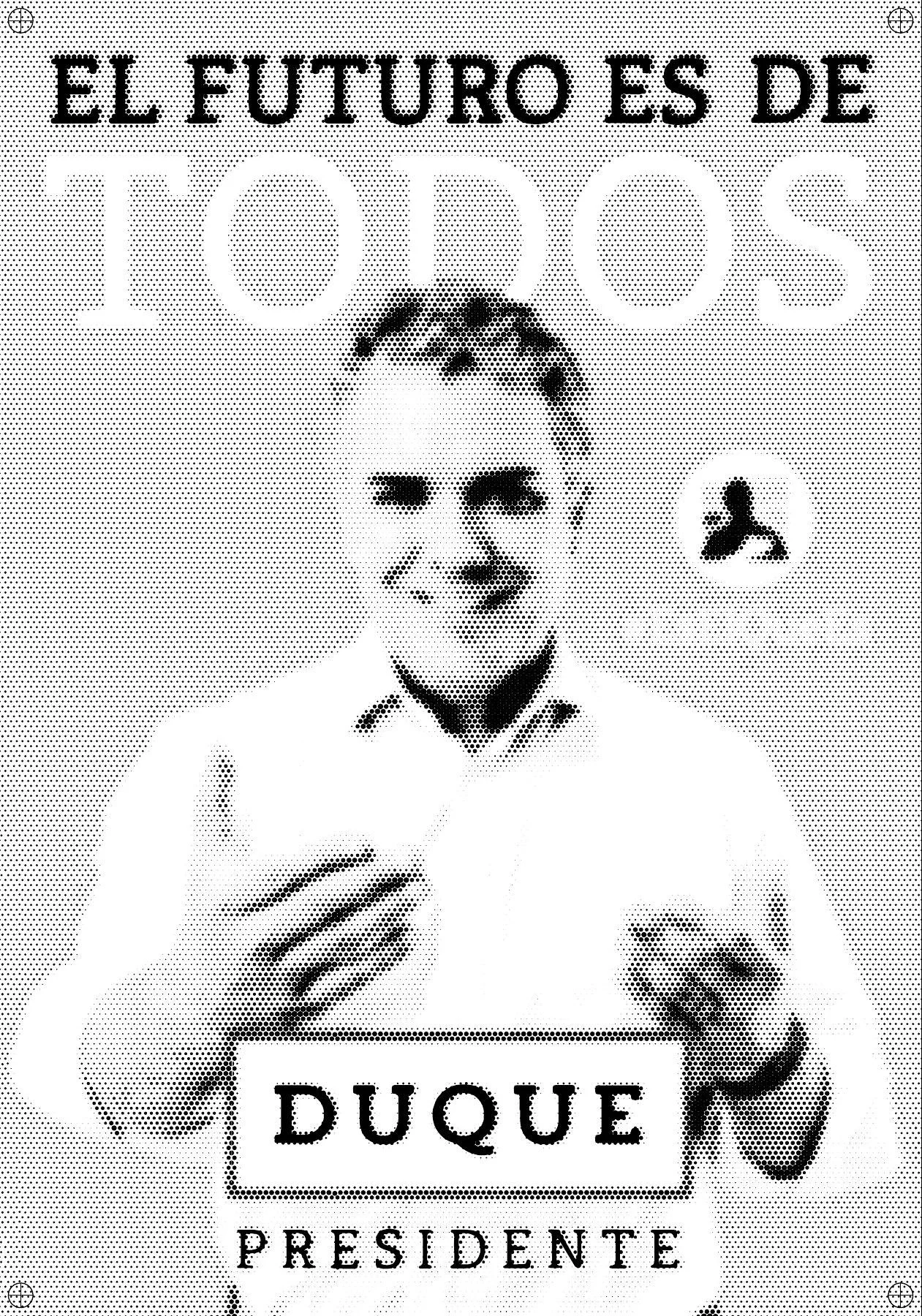
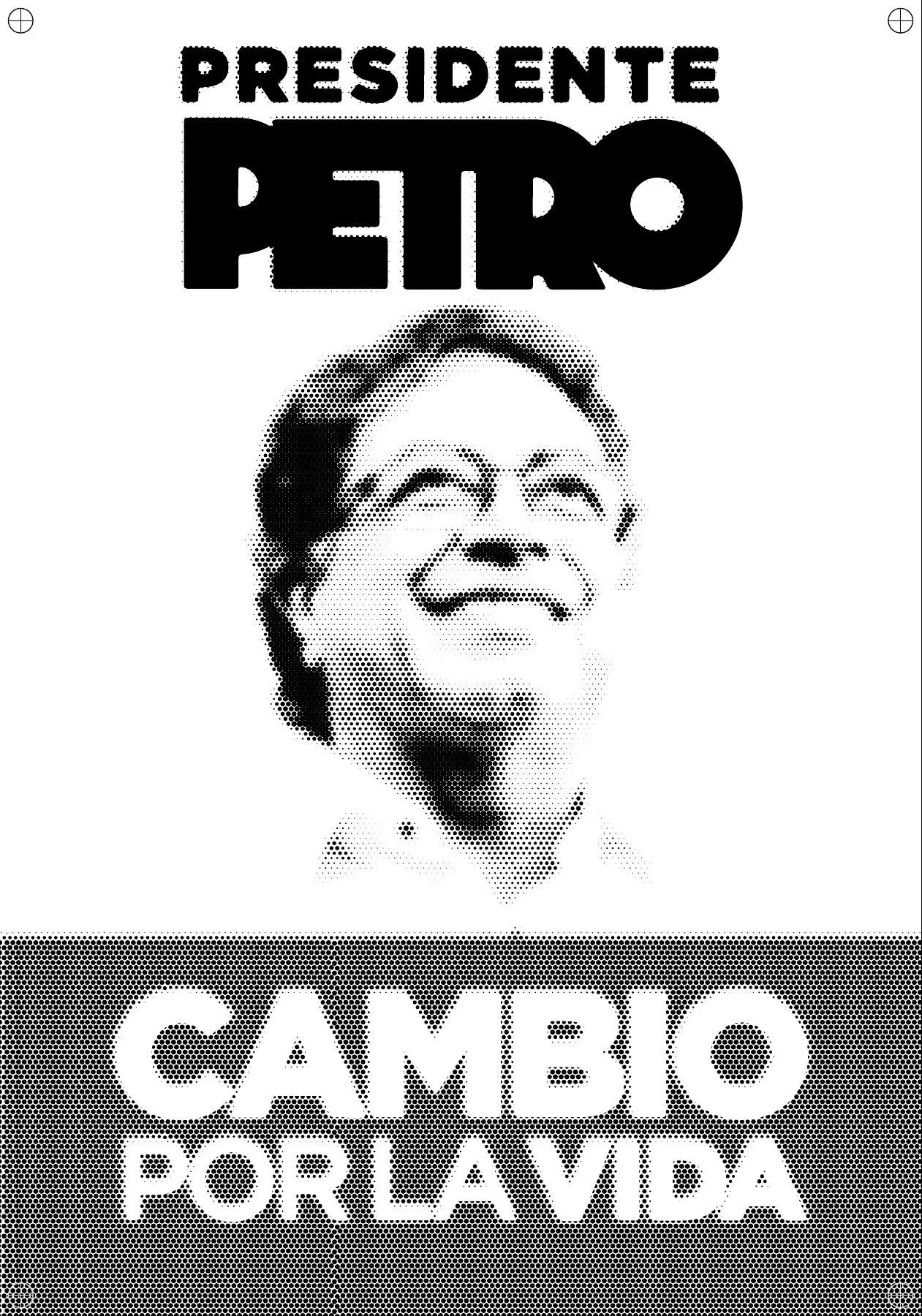
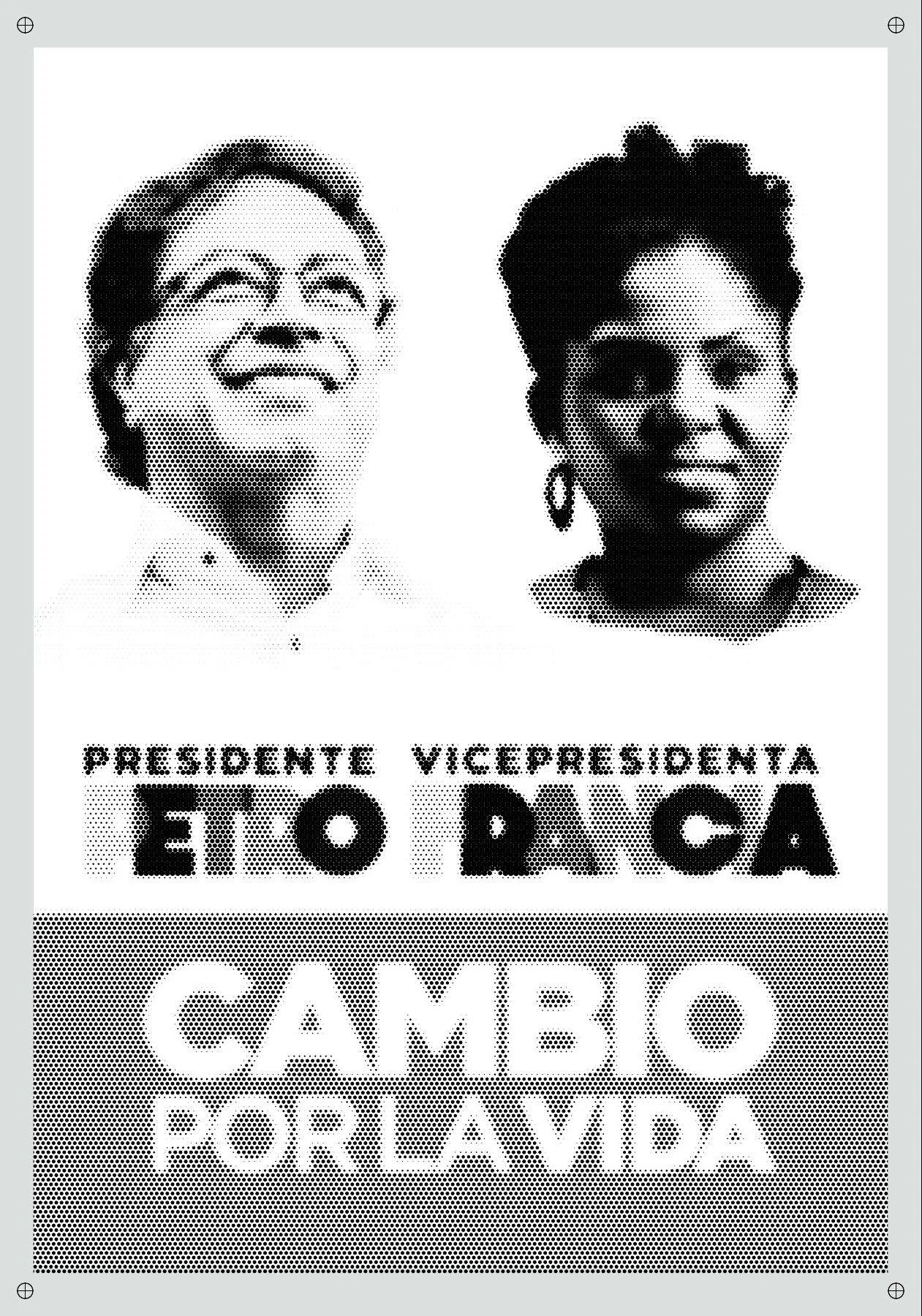
Mordiendo Polvo, 2024 · Presidential campaign posters, detail · Gum bichromate prints with collected dust
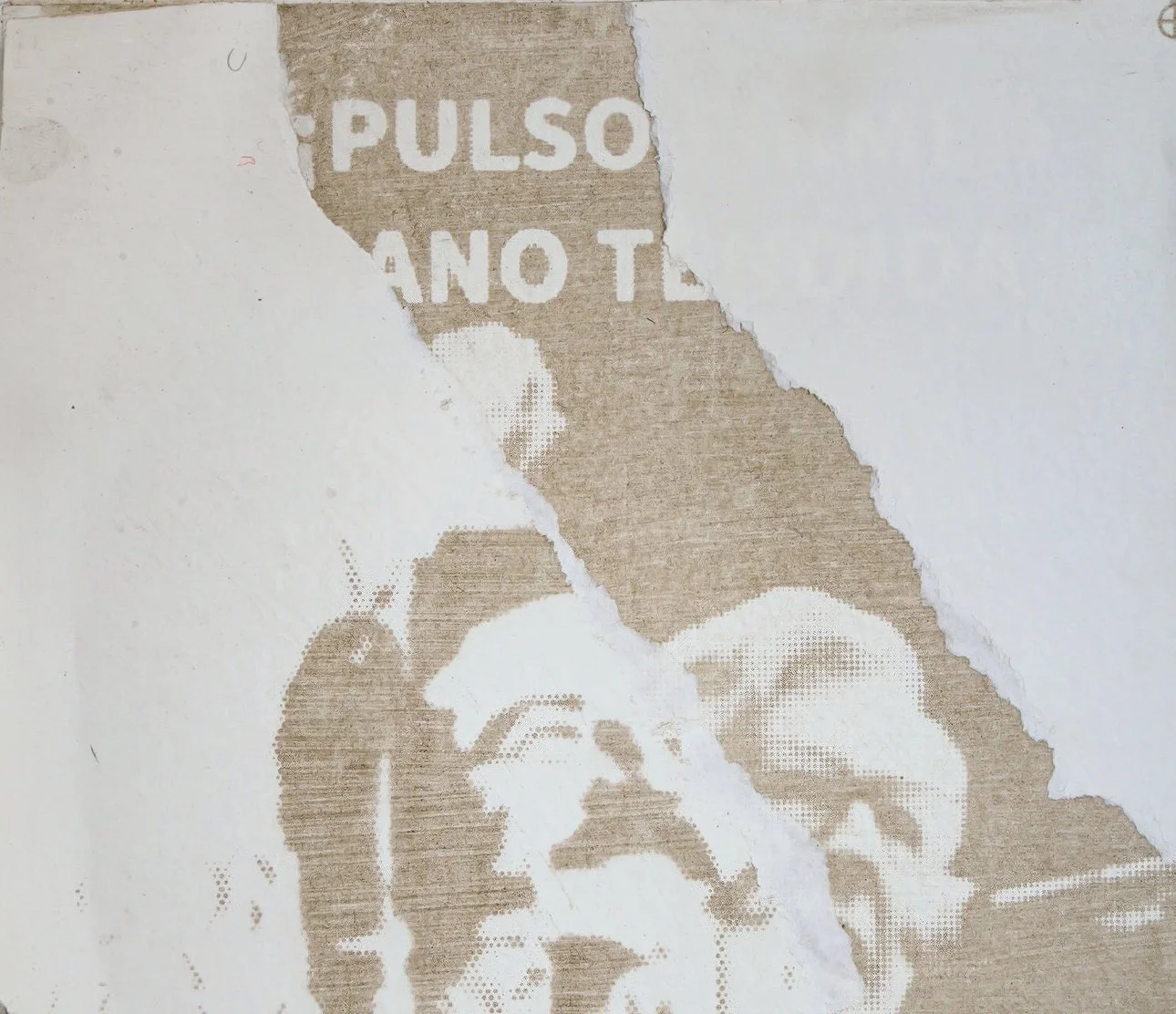
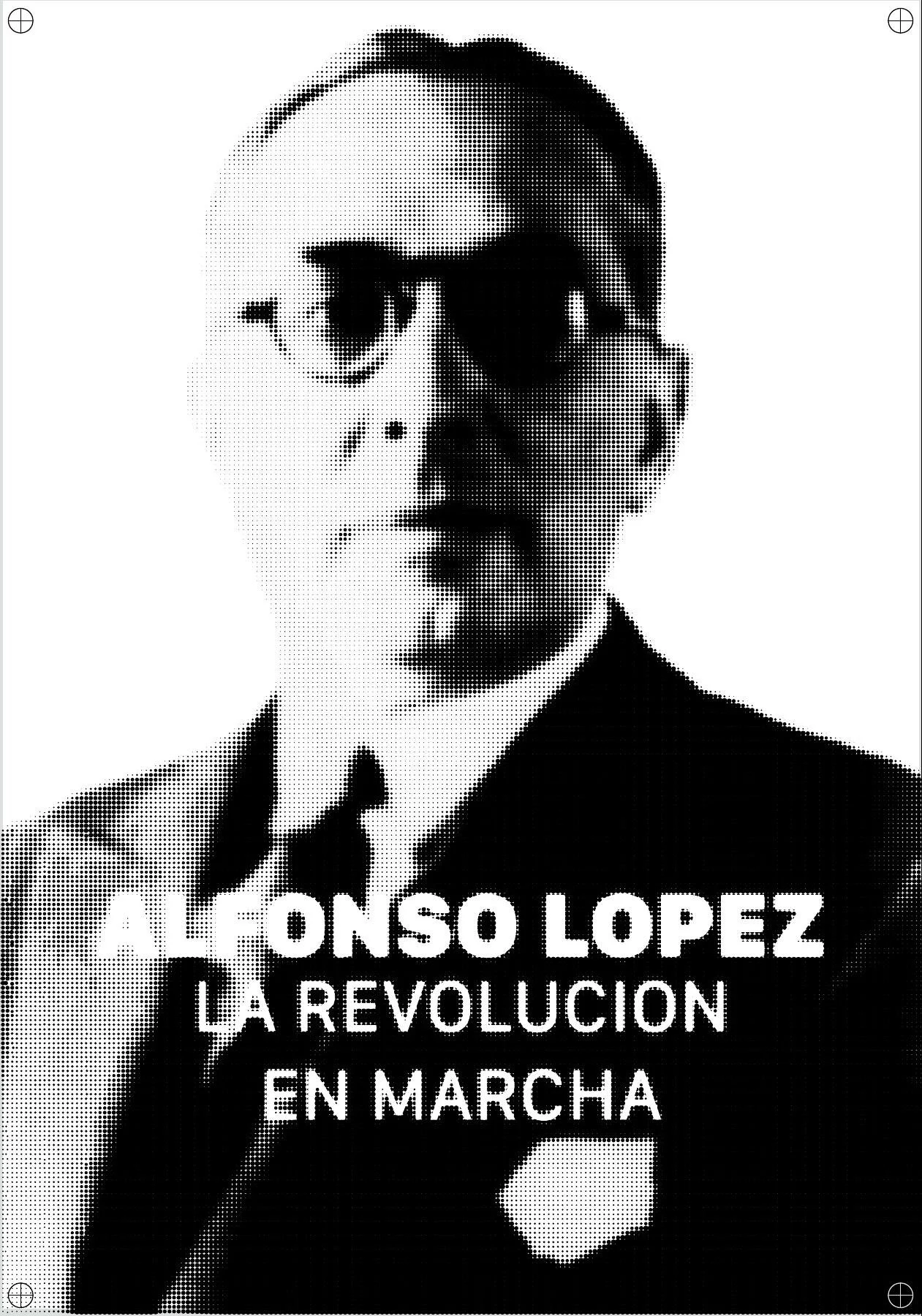
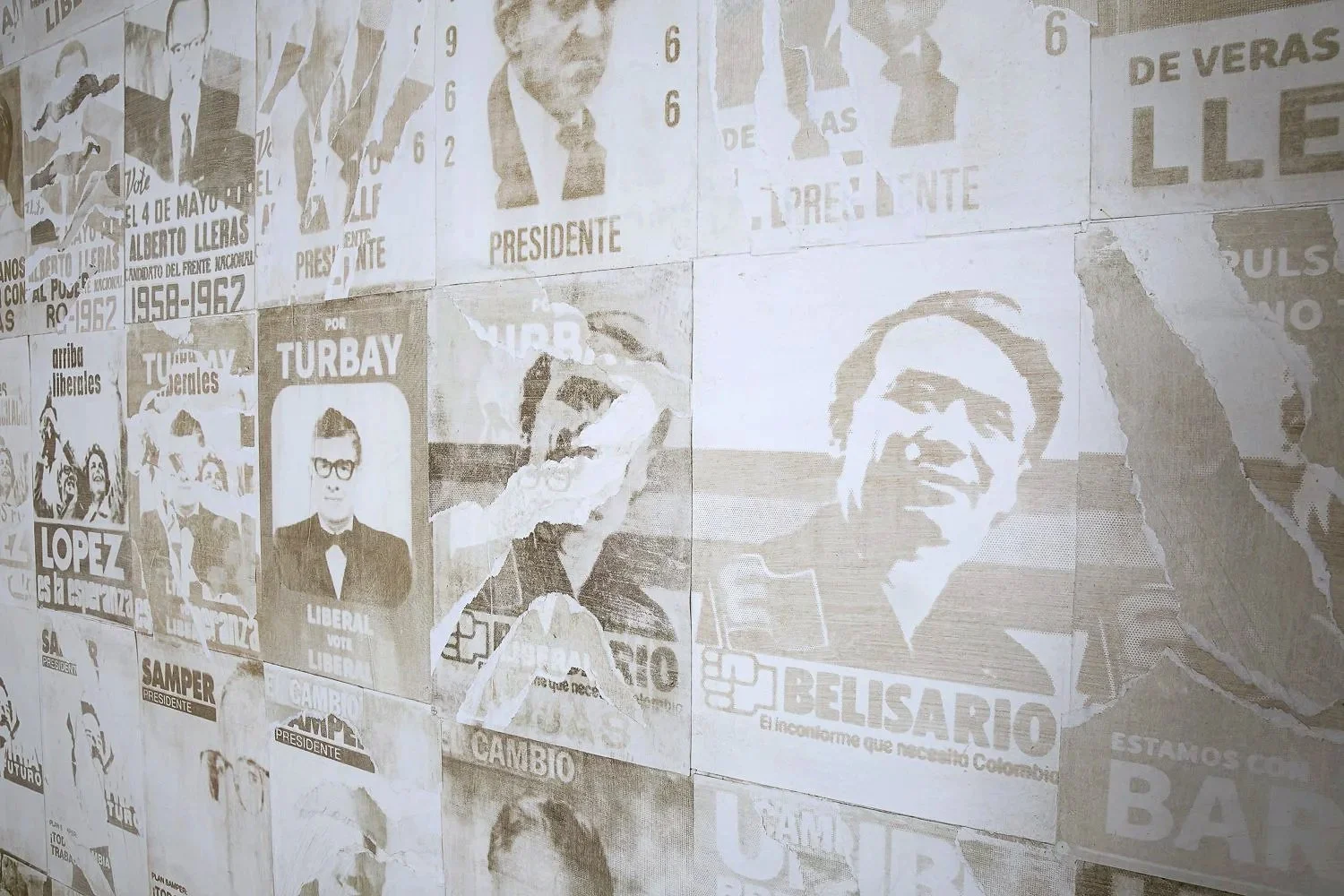
Mordiendo Polvo, 2024 · Virgilio Barco, presidential term 1986–1990 · Campaign slogan: “Pulso firme y mano tendida” · Gum bichromate print with collected dust, detail
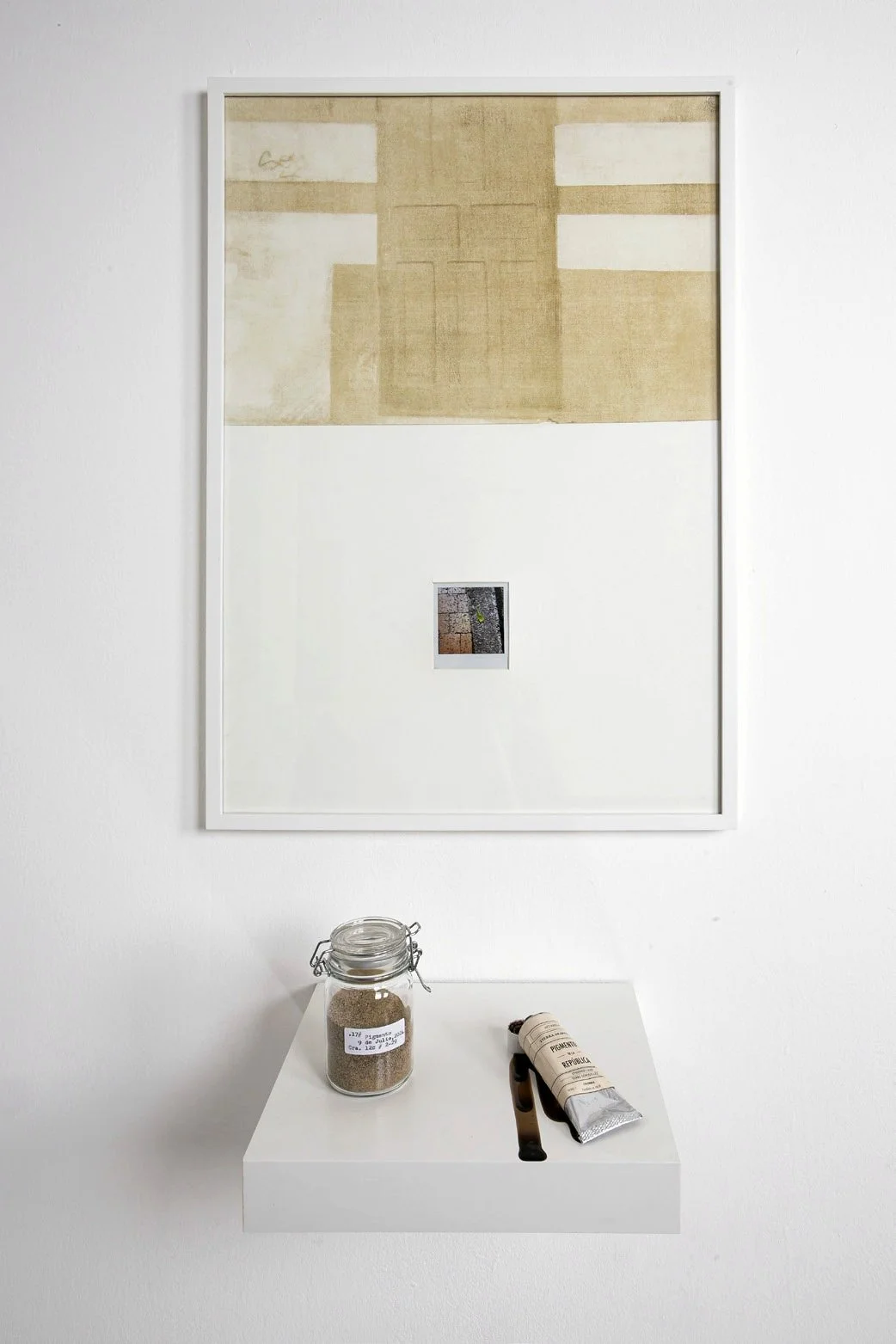
Mordiendo Polvo, 2024 · Gum bichromate print with collected dust · 50 × 70 cm / 19.69 × 27.56 in
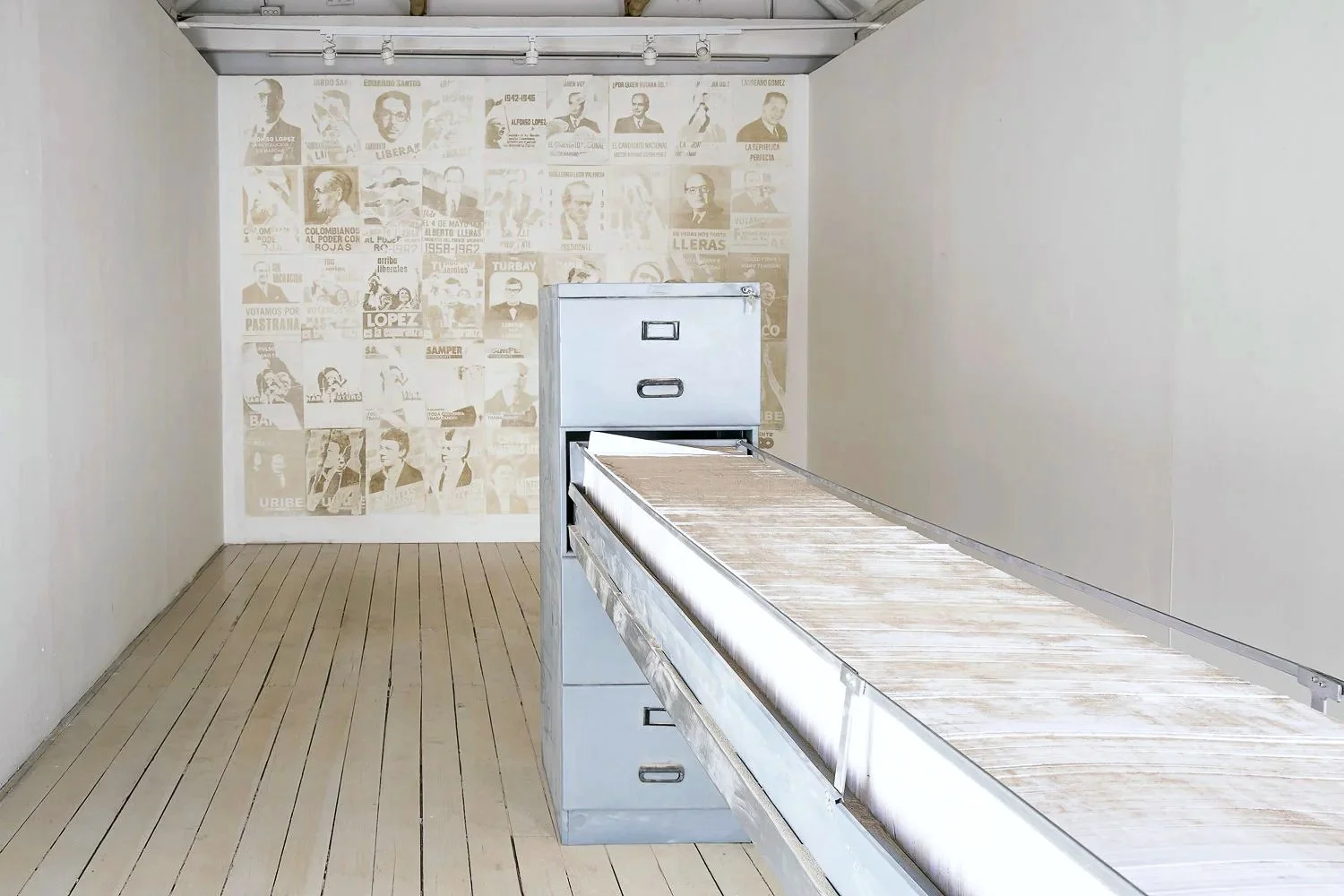
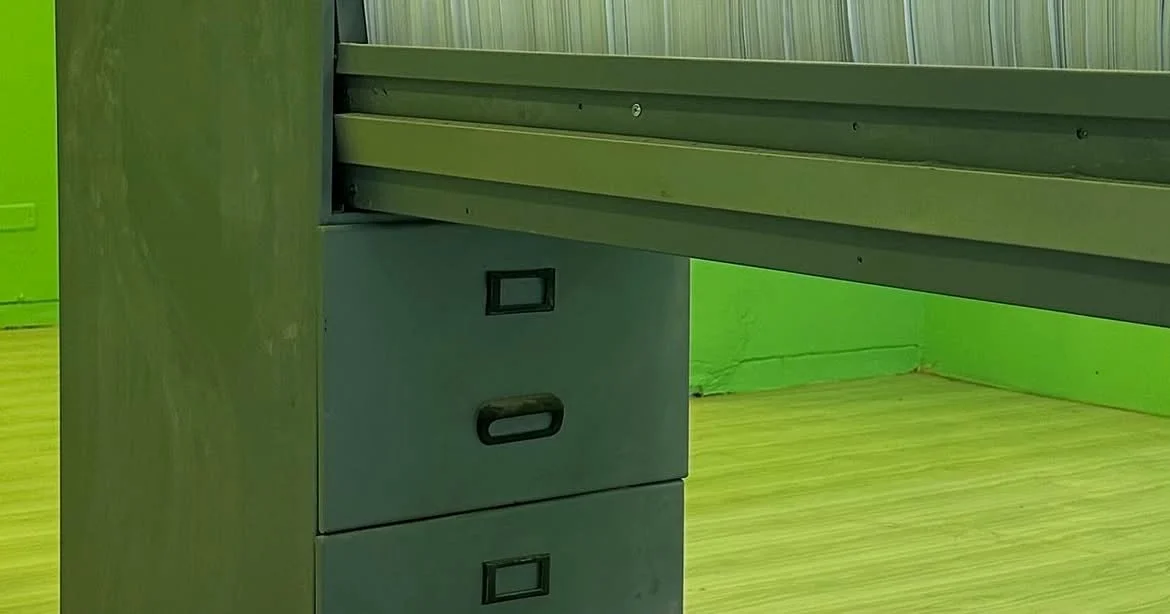
Mordiendo Polvo, 2024 · Filing cabinet installation with dust-based photographic prints and watercolors · 700 × 150 cm / 275.59 × 59.06 in
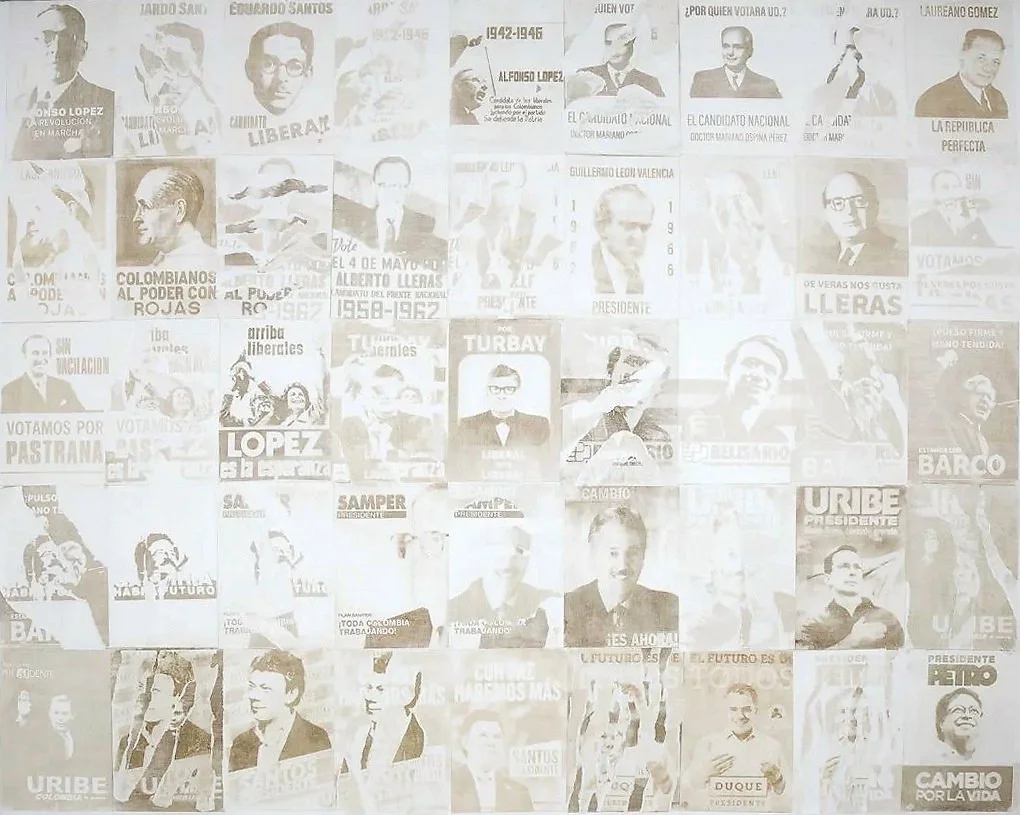
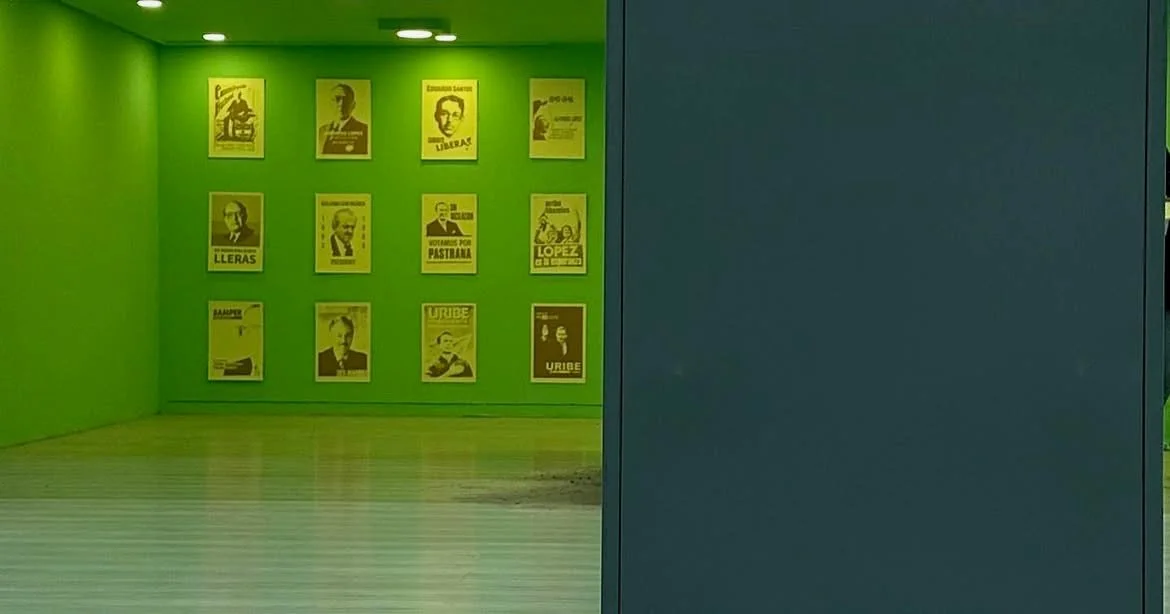
Mordiendo Polvo, 2024 · Presidential campaign posters · Gum bichromate prints with collected dust · Complete wall: 243 × 250 cm / 95.67 × 98.43 in
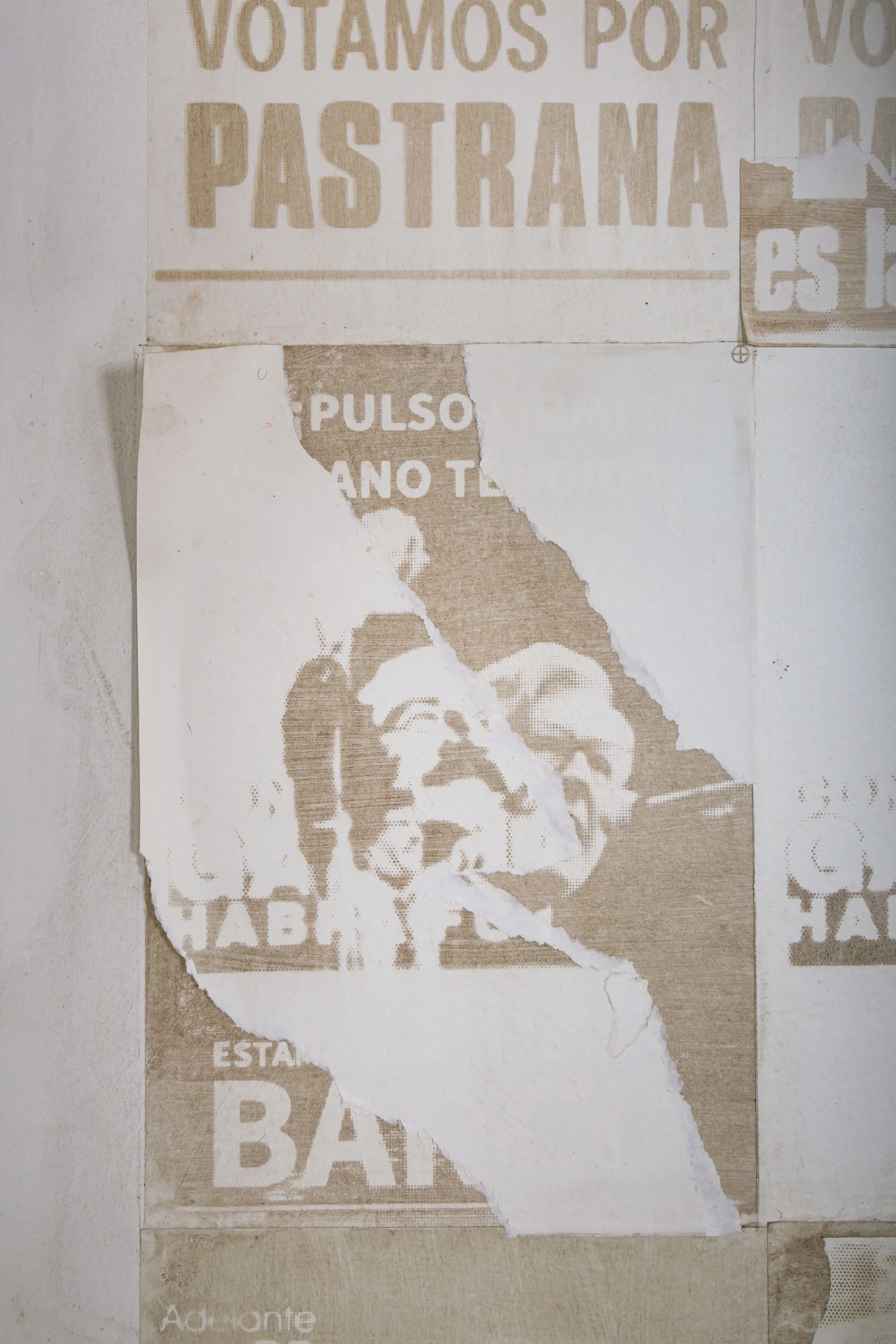
Mordiendo Polvo, 2024 · Virgilio Barco campaign image and adjacent posters · Gum bichromate prints with collected dust · FUGA, Bogotá, Colombia · Detail of the installed wall
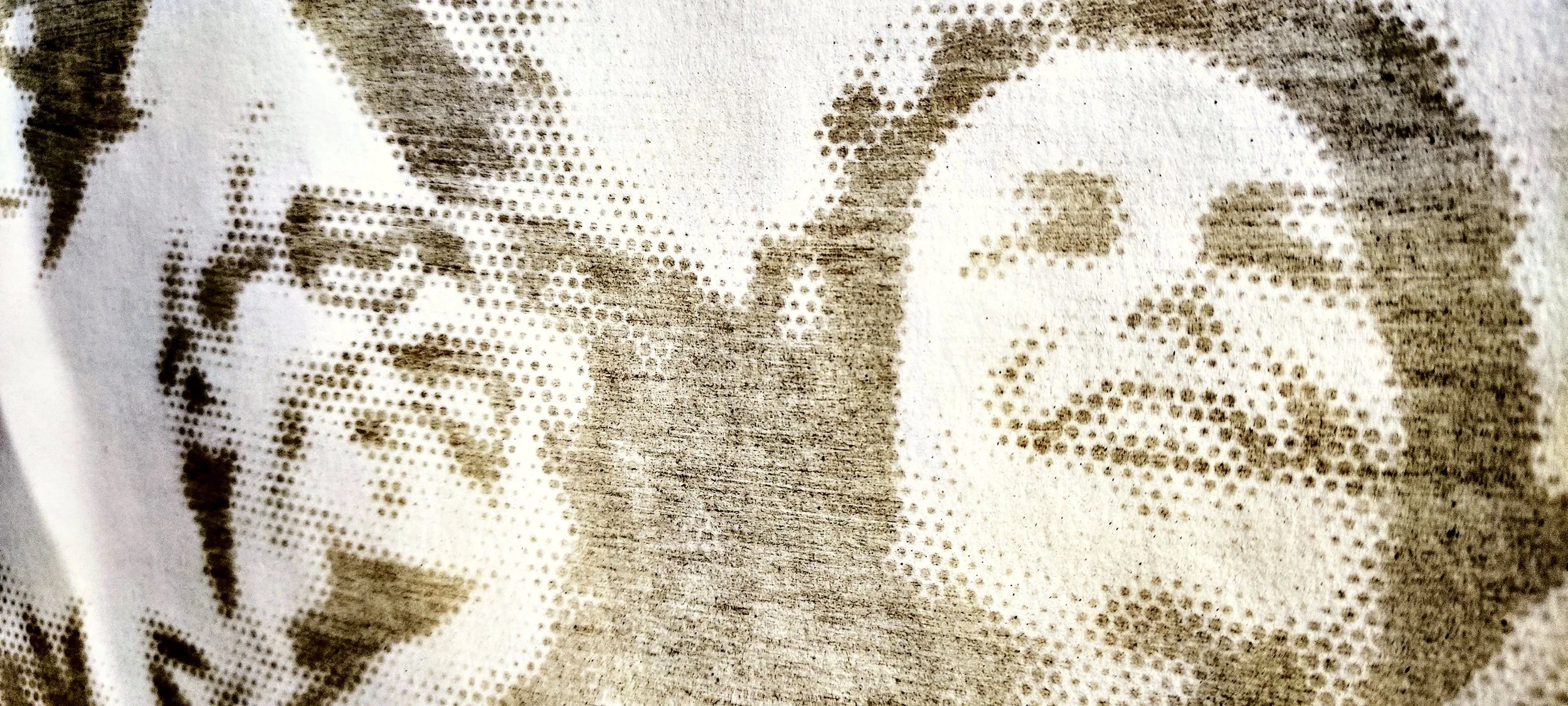
Mordiendo Polvo · Detail of a presidential campaign image made with dust · Bogotá, Colombia, 2024
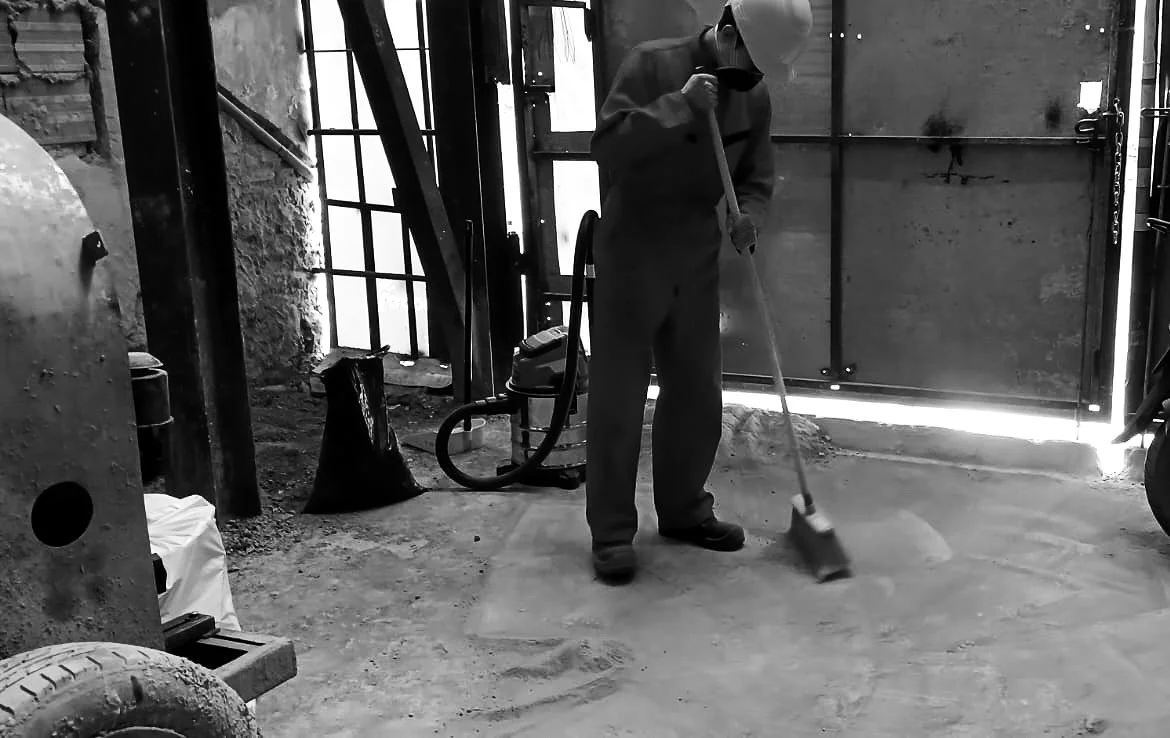
Material process · Collecting dust · Bogotá, Colombia, 2024
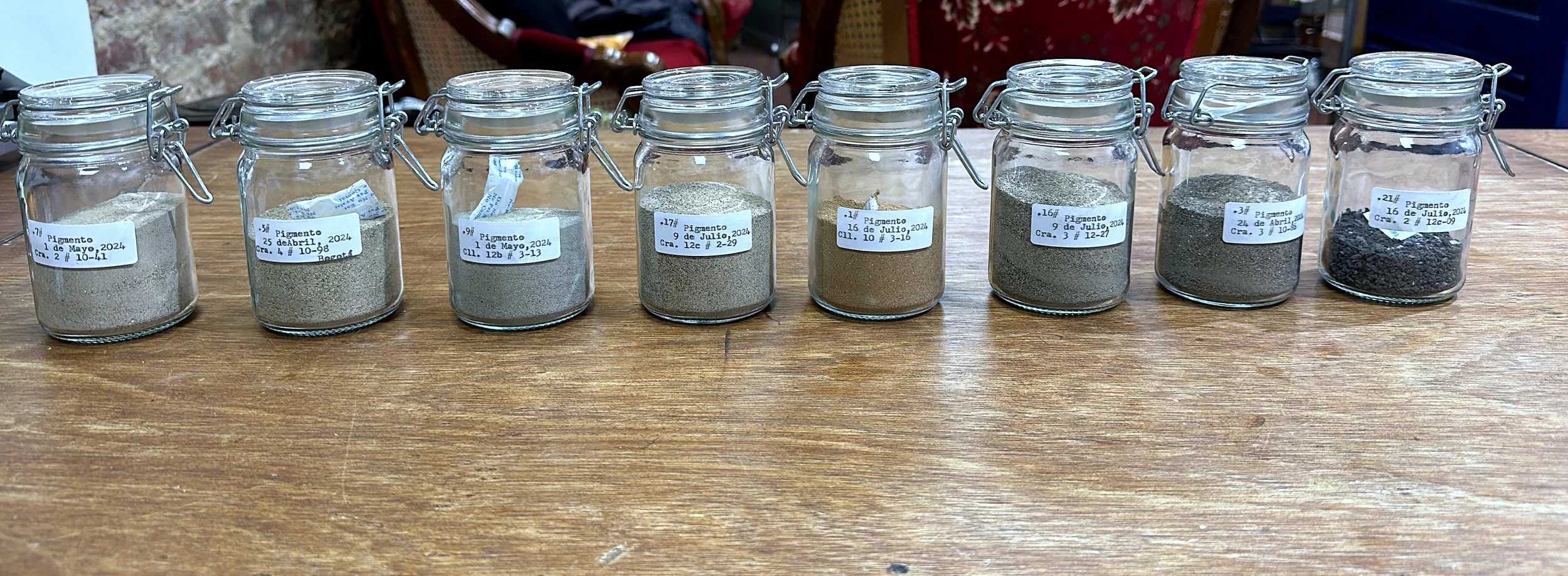
Material process · Dust collected and prepared as pigment · Bogotá, Colombia, 2024
Material process · Experimental photographic prints drying in the studio · Bogotá, Colombia, 2024
Mordiendo Polvo · Spatial overview of the filing cabinet installation · VII Biennial of Visual and Plastic Arts, FUGA · Bogotá, Colombia, 2024
Mordiendo Polvo · Exhibition view · VII Biennial of Visual and Plastic Arts, FUGA · Bogotá, Colombia, 2024
Mordiendo Polvo · Installation view · VII Biennial of Visual and Plastic Arts, FUGA · Bogotá, Colombia, 2024
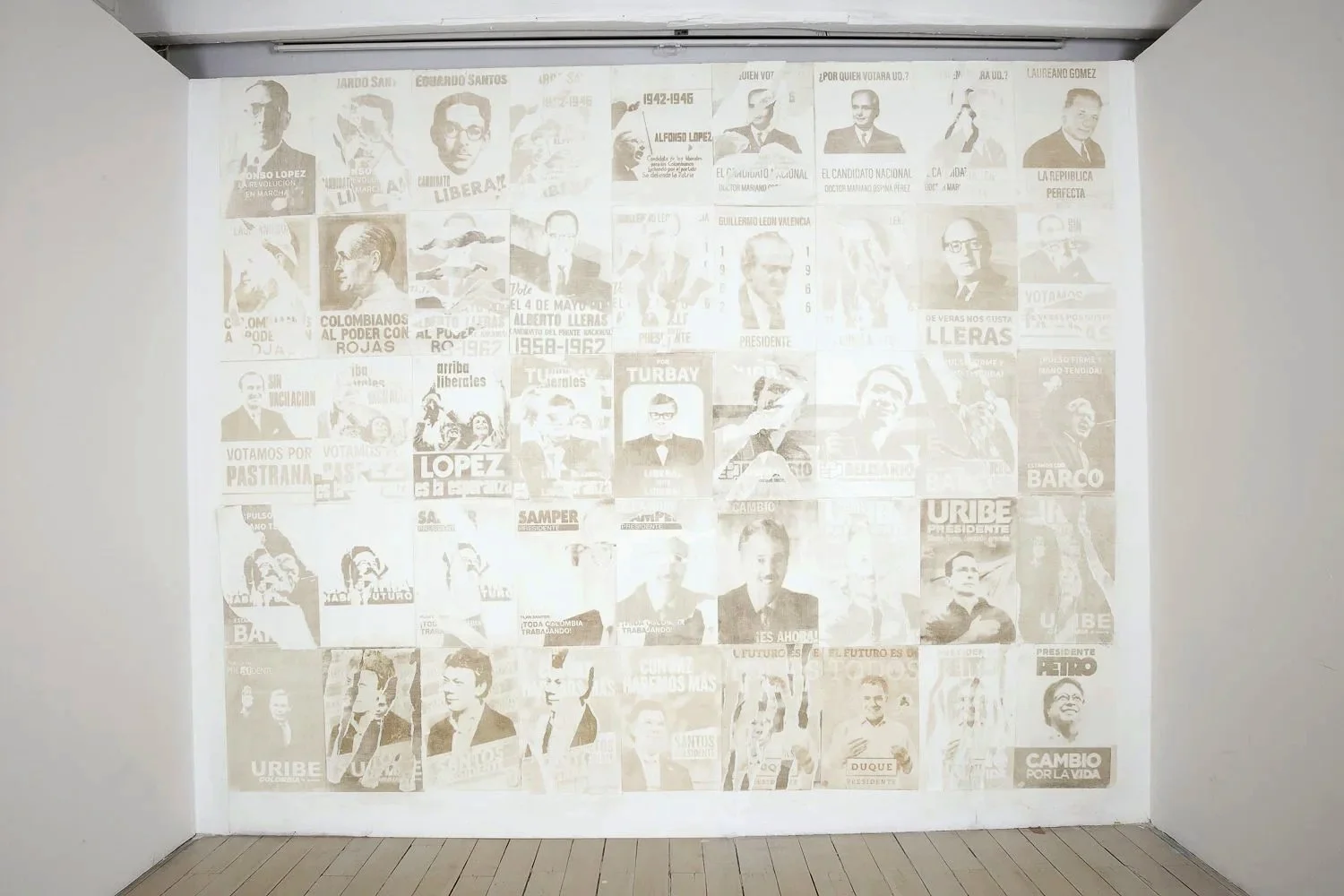
Mordiendo Polvo · Presidential campaign poster wall · VII Biennial of Visual and Plastic Arts, FUGA · Bogotá, Colombia, 2024
Mordiendo Polvo · Work and dust pigment · VII Biennial of Visual and Plastic Arts, FUGA · Bogotá, Colombia, 2024
Mordiendo Polvo · Filing cabinet installation · VII Biennial of Visual and Plastic Arts, FUGA · Bogotá, Colombia, 2024
Mordiendo Polvo · Material detail · VII Biennial of Visual and Plastic Arts, FUGA · Bogotá, Colombia, 2024
Mordiendo Polvo · Filing cabinet and presidential campaign images · UN_FAIR, Centro Tequendama · Bogotá, Colombia, 2025
Mordiendo Polvo · Exhibition view with visitors · UN_FAIR, Centro Tequendama · Bogotá, Colombia, 2025
Mordiendo Polvo · Installing the filing cabinet · UN_FAIR, Centro Tequendama · Bogotá, Colombia, 2025
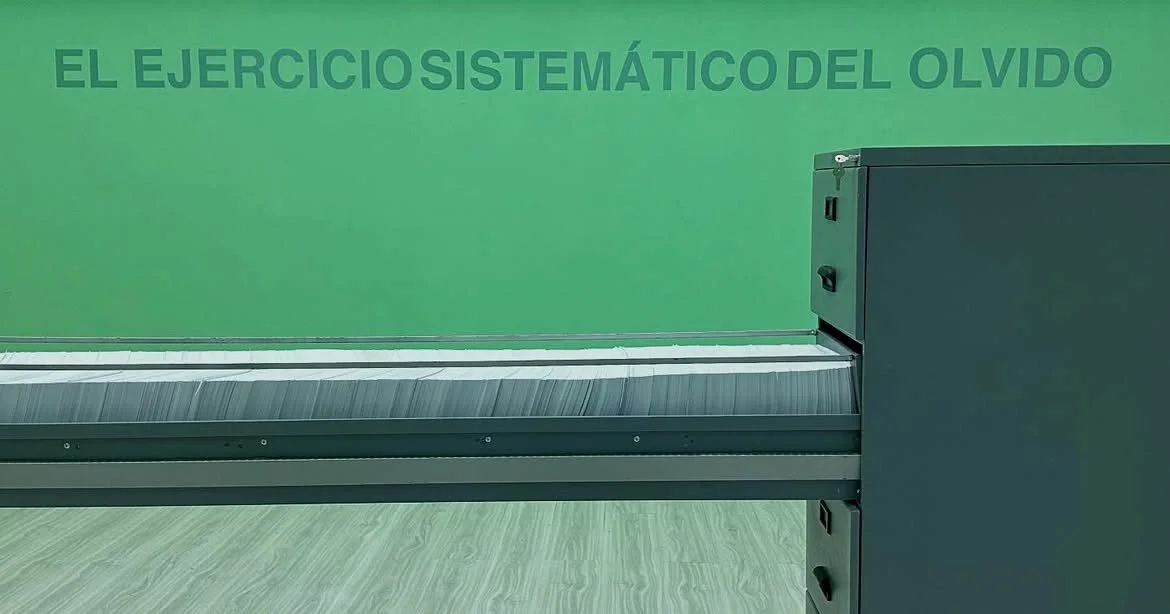
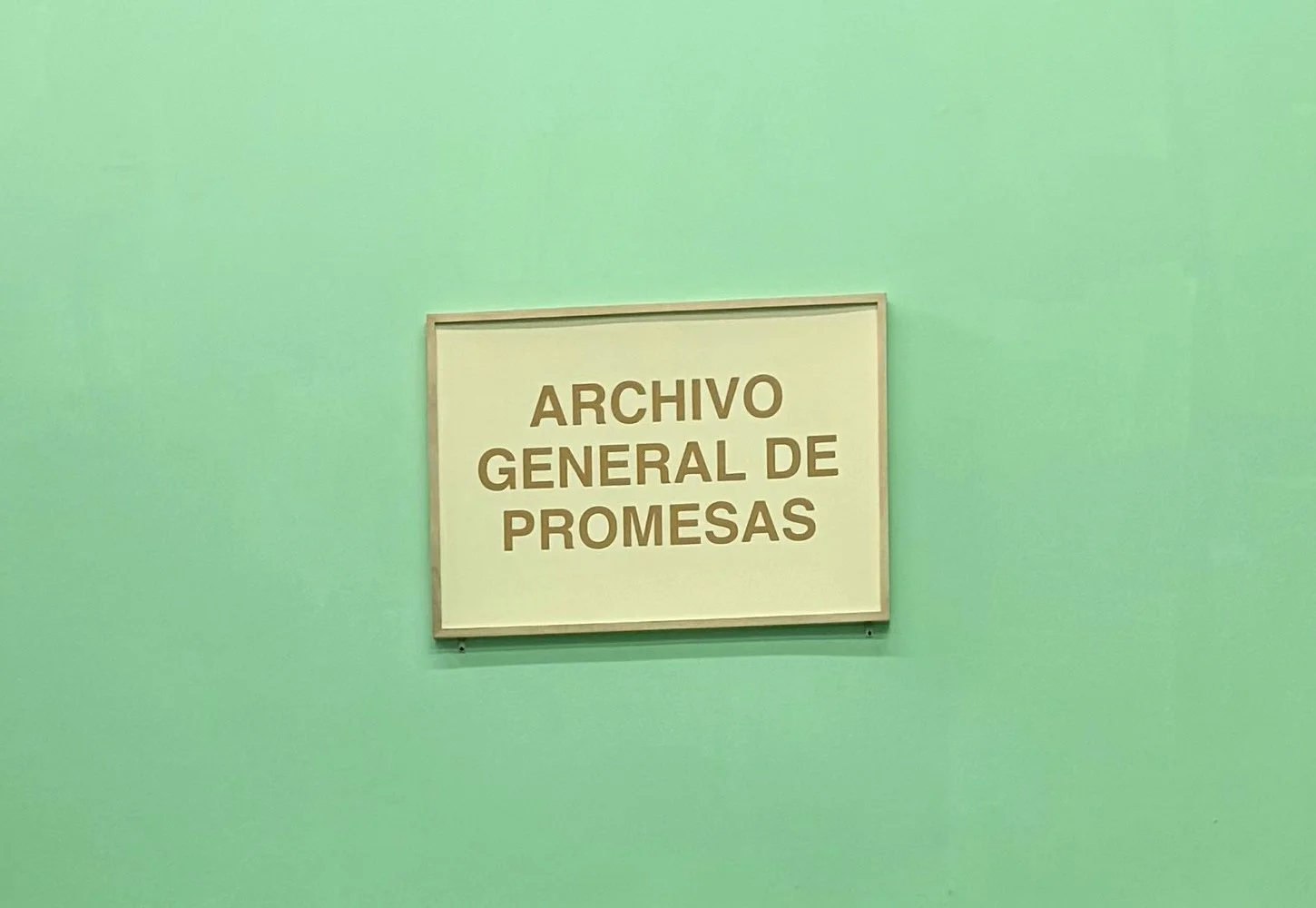
Mordiendo Polvo · Archivo general de promesas, sign and filing cabinet · UN_FAIR, Centro Tequendama · Bogotá, Colombia, 2025
Mordiendo Polvo · Archivo general de promesas, sign detail · UN_FAIR, Centro Tequendama · Bogotá, Colombia, 2025
Mordiendo Polvo · Installation view with visitors · UN_FAIR, Centro Tequendama · Bogotá, Colombia, 2025
Mordiendo Polvo · Filing cabinet, side view · UN_FAIR, Centro Tequendama · Bogotá, Colombia, 2025
Mordiendo Polvo · Presidential campaign poster wall · UN_FAIR, Centro Tequendama · Bogotá, Colombia, 2025
Mordiendo Polvo · Dust and the extended archive · UN_FAIR, Centro Tequendama · Bogotá, Colombia, 2025
Mordiendo Polvo · Filing cabinet, end view · UN_FAIR, Centro Tequendama · Bogotá, Colombia, 2025
Mordiendo Polvo · Filing cabinet, detail · UN_FAIR, Centro Tequendama · Bogotá, Colombia, 2025
Mordiendo Polvo · Wall inscription and filing cabinet · UN_FAIR, Centro Tequendama · Bogotá, Colombia, 2025
Mordiendo Polvo · Panoramic installation view · UN_FAIR, Centro Tequendama · Bogotá, Colombia, 2025
Mordiendo Polvo · Presidential campaign posters and archive · UN_FAIR, Centro Tequendama · Bogotá, Colombia, 2025
UN_FAIR · Centro Tequendama
Bogotá, Colombia · 2025 · 00:41