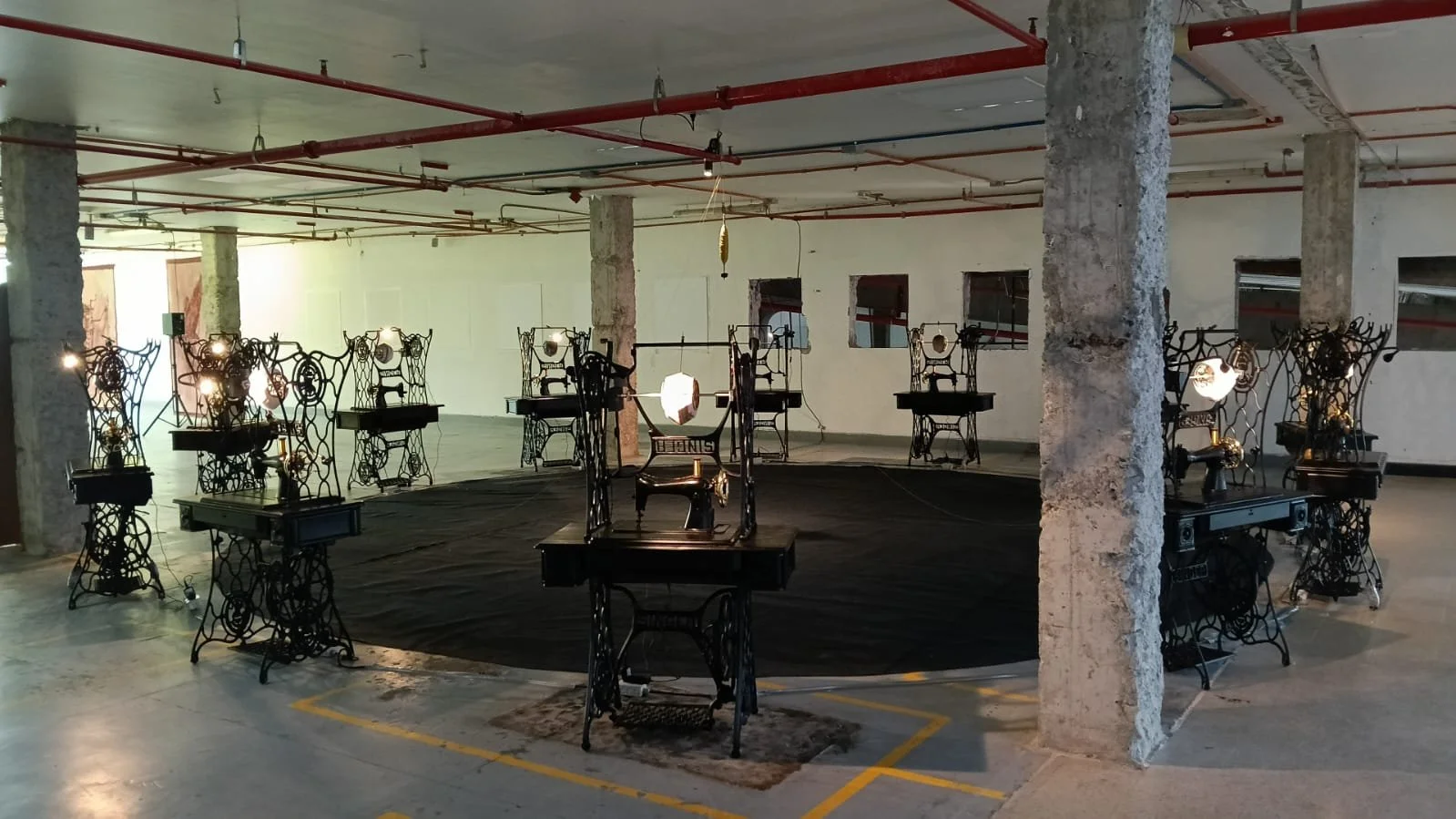
Hilo Vano
2025–Present
Kinetic installation · recovered sewing machines · mechanisms · looping animation · sound
Hilo Vano begins with a question that has appeared throughout my work for years: what can a machine produce after it stops performing the task for which it was made? Through recovered sewing machines, mechanical gestures, sound and looping animations, I explore how technologies that have lost their original utility can become carriers of memory. The machines continue to move, repeat and activate images, but they no longer produce the objects they were designed to make. Their function shifts from production toward remembrance.
-
Hilo Vano begins with a question: what can a machine produce after it stops performing the task for which it was created?
I recover old Singer sewing machines and intervene in them with movement, images, sound, and light. Their mechanisms continue to function, repeating gestures, moving forward, returning, turning. They seem to be working.
But they no longer sew.
The action remains while the result disappears.
I am interested in that moment when a technology loses its original function and, precisely because of this, begins to become visible in another way. A sewing machine then ceases to be merely a tool. The hands that learned to use it emerge, along with the hours of labor, the bodies that adjusted to its rhythm, and the domestic histories that accumulated around it.
One of these machines belonged to my paternal grandmother, Leonor. She worked as a dressmaker, and sewing enabled her to support herself, produce for others, and accumulate capital that later allowed her to move into less exhausting and more profitable work.
That history coexists with another, very different one.
My maternal grandmother, Arinda, spends years performing physically demanding domestic work, particularly washing clothes, without access to the same kind of mechanization.
Between the two emerges a question that particularly interests me: a technology can transform labor, reduce effort, and open possibilities for autonomy, but those possibilities are never distributed equally.
That is why I do not think of these machines solely through nostalgia.
They are domestic technologies that participate in histories of labor, care, learning, economics, and inequality.
To baste is to join provisionally with long stitches. Basting holds separate parts together without closing them definitively. It allows something to take shape while it can still change.
I think of the installation in that way.
As a basting stitch between machines, memories, bodies, images, and voices.
In some pieces, the thread is absent. The machine retains the gesture of a task it can no longer complete. That absence makes repetition cease to be efficient and brings it closer to ritual.
The machine works, but it does not produce.
Then we stop looking at the result and begin to look at the movement.
I am also interested in how certain forms of knowledge survive in this way. Many tasks are learned by watching hands, listening to an instruction, and repeating a gesture. The body remembers even when it can no longer fully explain what it knows.
The voices, the sounds of the mechanisms, and the looping animations bring that transmission into the installation. Something continues to be taught, even though the conditions that produced that knowledge have changed.
Each machine repeats an action.
Not to finish a garment.
Not to be faster.
Not to produce more.
It continues because the gesture remains.
And when a machine stops sewing, the question changes.
It is no longer what it is making.
It is what it is trying to hold together.
Perhaps memory resembles a basting stitch: it does not reconstruct the past perfectly or fix it forever. It simply holds certain parts together long enough for us to look at them again.
A machine can cease to fulfill its function without ceasing to act.
It can stop producing objects and begin to produce something else:
memory.
Installation Views
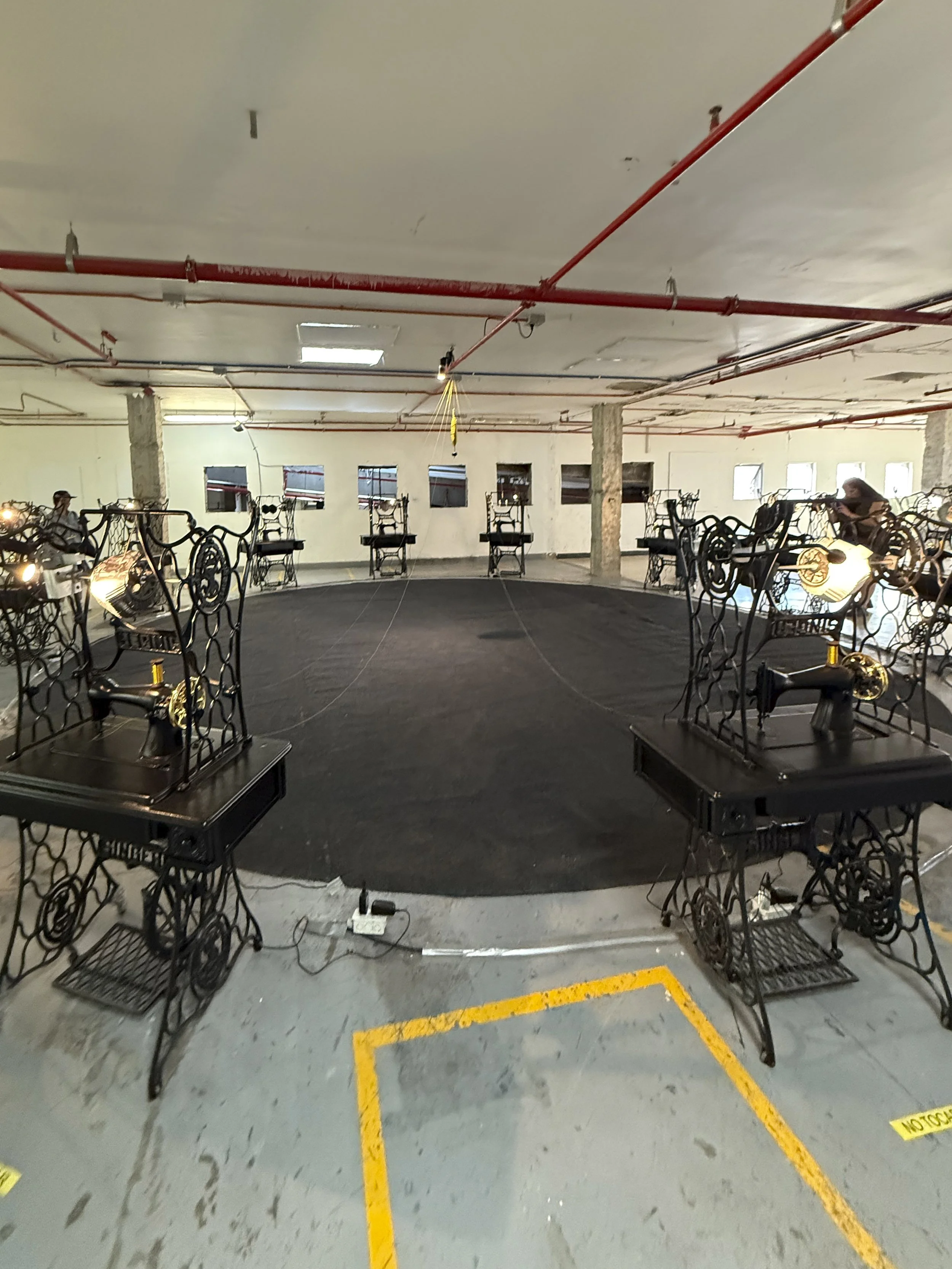
Hilo Vano, 2025 BIAM · Antiguo Edificio Coltabaco Medellín, Colombia Recovered sewing machines, thread, and looping animation.
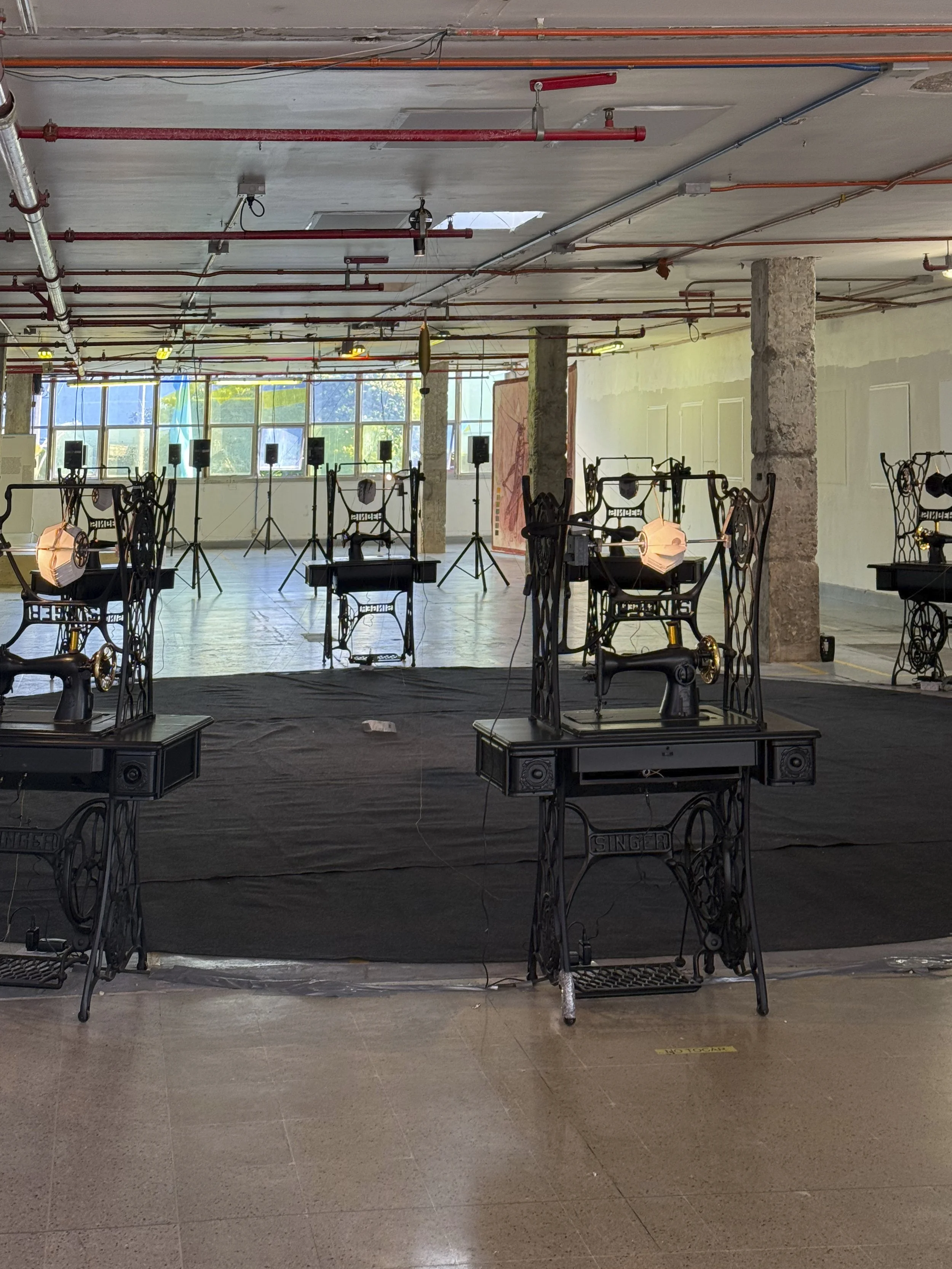
Hilo Vano, 2025 BIAM · Antiguo Edificio Coltabaco Medellín, Colombia Recovered sewing machines, thread, and looping animation.
Hilo Vano, 2025 BIAM · Antiguo Edificio Coltabaco Medellín, Colombia Recovered sewing machines, thread, and looping animation.
Why Hilo Vano?
A hilván is a long, loose, provisional stitch used to hold pieces of fabric together before the final seam is made. It joins without fixing permanently.
-
The title Hilo Vano begins with a Spanish word that does not translate completely into English: hilván. A hilván is a long, loose, provisional stitch used to hold pieces of fabric together before the final seam is made. It joins without fixing permanently. Once the definitive seam exists, the basting thread can be removed.
The verb hilvanar also moves beyond sewing. In Spanish, we can hilvanar ideas, words or fragments of a story—to connect things provisionally until a larger structure begins to appear.
That double meaning is central to my work. I bring together machines, images, voices, gestures and memories that do not resolve into a single narrative. They are held together, like a basting stitch, through provisional connections.
The Spanish dictionary derives hilván from hilo, thread, and vano. I keep that resonance open: temporary, fragile, apparently futile. The machines continue working even as their original productive purpose has been displaced.
I leave the title in Spanish because no single translation preserves its movement between sewing and thought. A provisional stitch joins separate pieces while allowing them to be rearranged. That is also how I work: I connect an inherited object with an image, a voice with a gesture, and an old mechanism with a new task.
“Vano” does not make those connections meaningless. What appears temporary or unproductive can still sustain a memory. I am interested in the interval before a final seam, when a form is held together but remains open to change.
Linguistic reference: hilván and hilvanar, Diccionario de la lengua española, RAE–ASALE. The dictionary records the derivation from hilo and vano and the figurative use of hilvanar for joining ideas, phrases and words.
Thread / Space / Fate
The machines in Hilo Vano do not operate as isolated objects. I arrange them as parts of a larger spatial system.
The thread in Hilo Vano can therefore hold two apparently contradictory ideas: destiny and agency—what we inherit and what we attempt to rework.
-
A Thread Between Things
the installation as a spatial system
The machines in Hilo Vano do not operate as isolated objects. I arrange them as parts of a larger spatial system. Golden threads extend from the machines toward a central meeting point, turning a material normally associated with production into a network of lines, relationships and trajectories. Each machine performs an individual action while remaining physically and conceptually connected to the others.
I use thread as a line that occupies the room. It has been displaced from its ordinary productive function: instead of joining a garment, it connects bodies, mechanisms and distances. The installation takes shape through these relationships, and changes as I reconfigure it within each space.
I develop Hilo Vano through models, prototypes and exhibition configurations rather than a fixed arrangement. The twelve-machine model belongs to the planning archive. It records a proposed spatial relationship and should not be read as a photograph of an installation already built.
The later presentations in Medellín, Ibagué and Honda bring the work into different rooms. I retain the relationship between the machines, their individual actions and the threads that connect them, while allowing distances, sightlines and the architecture to change. The exhibition photographs document those configurations; the model and mechanism tests show how I arrived at them.
To Spin, To Measure, To Cut
thread, fate and agency
Thread also carries an older symbolic history. In Greek mythology, the Moirai—or Fates—determine the course of human life through thread: Clotho spins it, Lachesis measures it and Atropos cuts it.
What interests me here is not only fate as something imposed, but the tension between what is given to us and what we are able to transform. Many women lived and worked within restrictive social and economic conditions, yet the sewing machine could also become a means of income and autonomy. Through these machines they could alter not only their own circumstances but those of their families.
The thread in Hilo Vano can therefore hold two apparently contradictory ideas: destiny and agency—what we inherit and what we attempt to rework.
I return to the thread because it brings an abstract duration into a material gesture. Spinning begins a line; measuring gives it an extent; cutting interrupts it. Clotho, Lachesis and Atropos make these actions legible as a beginning, a duration and an ending.
I bring that symbolic tradition into contact with the histories carried by sewing machines. An inherited condition is not the same as an unchangeable destiny. Work can reproduce a restrictive arrangement, but it can also provide the means to alter it. I keep both possibilities in view rather than presenting the machine as an uncomplicated emblem of liberation.
The historical image of The Three Fates is presented as a reference to this tradition of thread. It is not a claim that this particular engraving directly inspired the installation.
A Machine in the House
My own relationship with these machines is also familial. My paternal grandmother, Leonor, worked for a period as a seamstress. Years later, her Singer remained in the house after it had lost its productive role.
-
My own relationship with these machines is also familial. My paternal grandmother, Leonor, worked for a period as a seamstress. Years later, her Singer remained in the house after it had lost its productive role. I became interested in that transition: the moment when a technological object stops being indispensable without ceasing to carry meaning.
I remember the machine as part of the home, but its presence also points beyond the household. Sewing could sustain a family and provide income, even as it demanded long, exhausting hours. For Leonor, it helped make a different kind of working life possible. I approach the machine through that tension between care, obligation and the capacity to change one’s circumstances.
I draw on the domestic workshop as a place where knowledge and memory are made through everyday work. Instructions, habits and small rituals can pass between women across generations, together with tools and the responsibility of earning or caring for others. These histories often remain attached to an object rather than entering an institutional account of the past.
Leonor told me that sewing had helped her accumulate enough capital to move into more profitable and less exhausting work. I do not treat that experience as a universal history of emancipation. The machine could open possibilities, but access to it was unequal, and the work itself could be demanding.
In my research, the promises made by sewing-machine advertising sit beside these lived conditions. I am interested in the difference between an idealized domestic image and the time, effort and skill that made a household economy possible.
My earlier research also drew on Donna Haraway’s attention to the social relations embedded in technologies, and on Jussi Parikka and Garnet Hertz’s work on media archaeology. I approach an obsolete machine as something that can be reassembled and interpreted, rather than as a technological history that has simply ended.
-
In sewing, the workshop—or the room in the house set aside for it—is a space occupied predominantly by women. In the workshops examined in this research, the division of work was usually established by the eldest woman in the household, or by the pace set by the employer. The space was filled with small objects characteristic of women’s production in the domestic sphere: scissors, thread and needles, fragile objects that must be handled carefully to prevent them from breaking or being lost.
Silvia Vega argues that we should identify the domestic workshop as such and recognize it as an important part of the construction of history. It was a place of shared experiences through which these women defined their bodies and their bonds.
Although the artisan’s workshop is not usually thought of as a setting for great historical events, celebrated protagonists or extraordinary occurrences, it is a place where memory is made. Sewing workshops generated forms of solidarity through which, alongside the materials, new female forms of embodiment and subjectivity emerged.
As Richard Sennett writes in The Craftsman, workshops have been a source of social cohesion through rituals of work, mentoring and the face-to-face sharing of information. The sewing workshop was also a space of women’s resistance: an opening in which women quietly claimed a place in the social sphere as protagonists of their own economies, sometimes supporting a family as its head.
Women’s work has historically been rendered invisible and used to define gender roles and stereotypes. Sewing provides use values within the domestic and family sphere, alongside a family’s basic livelihood, yet it has been overshadowed socially by work outside the home dominated by men and institutions. It is a practice filled with everyday rituals through which the body, memory and material objects that form part of seamstresses’ cultural identity are situated. Around the craft and each woman’s life, stories are stitched together: a memory woven at the margins of history with a provisional thread.
Research archive: Hilo Vano — máquina 5 — conceptual. References: Silvia Vega; Richard Sennett, The Craftsman.
-
Leonor, my paternal grandmother, had a Singer sewing machine with a treadle, which, like any child, I included in my games. I rarely saw my grandmother work on it. She explained that she was no longer a seamstress—a trade she had practised for several years until she accumulated enough capital to turn to other activities that were more profitable and less exhausting. Sewing involves countless hours of work.
Arinda, my maternal grandmother, was a laundress. Although a sewing machine at the beginning of the twentieth century could make a substantial difference to a family’s quality of life, it was also expensive, and not everyone could acquire one, even with a flexible payment system.
It is common to see, in some homes, a sewing machine that once belonged to a grandmother or an aunt: part of the family’s heritage, no longer in use, now another decorative object.
From the artist’s research archive: Hilo Vano — máquina 5 — conceptual.
Hermanitas Singer · Animation detail in operation.
BIAM, Medellín, 2025. Video excerpt.
Hermanitas Singer
Ángela and Consuelo Talero were a Colombian singing duo sponsored by Singer in the 1970s. Known as the Hermanitas Singer, they blended songs with radio and television advertising; their records included commercials between tracks promoting sewing machines and instalment payments.
-
The importance of the sewing machine during the twentieth century, and its close relationship with women, is reflected in literary works such as Crónica de una muerte anunciada and in television and musical phenomena of the 1970s, such as the Hermanitas Singer duo and the soap opera Simplemente María. The latter became a commercial success: the rural woman who rose socially in the story did so through her work with a Singer sewing machine. Sales of the machine increased considerably across Latin America, while the sisters’ records became musical hits and promoted Singer’s successful instalment payment system.
Singer machines stood out for their direct relationship with the end user. Beyond their function, they appealed to the visual imagination of the Victorian era: black surfaces, gold appliqués and intricate natural patterns in wrought iron made them more attractive as domestic objects.
Historical research excerpt from Hilo Vano — máquina 5 — conceptual, Gonzalo García Gaitán. Translated from the Spanish original.
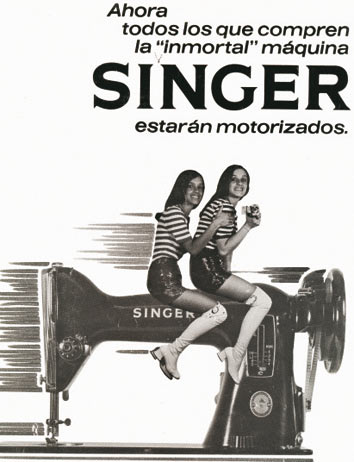
Hermanitas Singer · Historical advertising reference from the artist’s research archive.
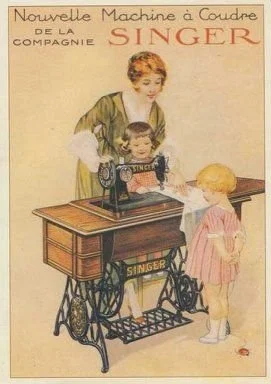
Singer · Historical advertising reference: sewing, domestic work and family life. Artist’s research archive.
Transmission
Not all knowledge is transmitted through objects or images. Some of it survives through voices, instructions and gestures repeated from one person to another. I think of learning as a movement from voice to ear, from hand to hand and from one generation to another.
Hands / Threading
Drawn hands repeat the precise gesture of threading a needle. I approach the hand as an embodied archive: it remembers through action, learns through repetition and passes knowledge to another body. Within the machine, this small gesture keeps returning, joining an inherited skill to a new mechanical rhythm.
-
Not all knowledge is transmitted through objects or images. Some of it survives through voices, instructions and gestures repeated from one person to another. I think of learning as a movement from voice to ear, from hand to hand and from one generation to another.
In the animation of hands, I treat the body as an archive. A hand remembers by doing: it learns a sequence, adjusts to resistance and repeats a gesture until that gesture can be taught. The machine gives this action another rhythm, but the knowledge it carries remains inseparable from the bodies that practiced it.
I am interested in the difference between knowing an instruction and knowing how to carry it out. A spoken direction can name an action, but the hand learns its pressure, timing and limits through repetition. This is a form of knowledge that may leave no written record.
I connect that transmission to the domestic workshop: the place where working, listening, observing and teaching can happen together. In Hilo Vano, I approach the mechanical rhythm, the image and the idea of a voice as different ways of sustaining a gesture beyond its first use.
The animation of threading does not stand for manual labor in general. Its precise, repeated movement lets me attend to a small action through which knowledge can pass from one body to another.
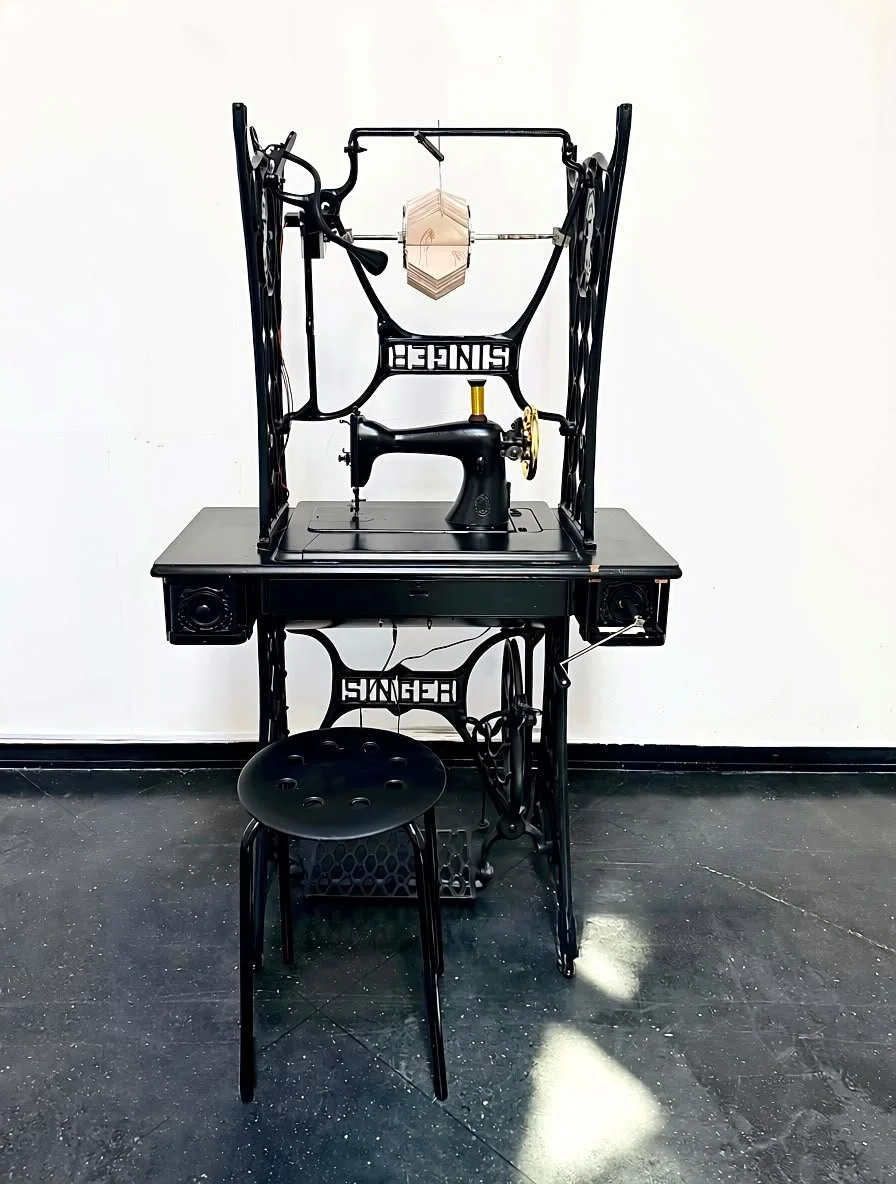
Hilo Vano · Hands / Threading. Sewing machine and animation mechanism.
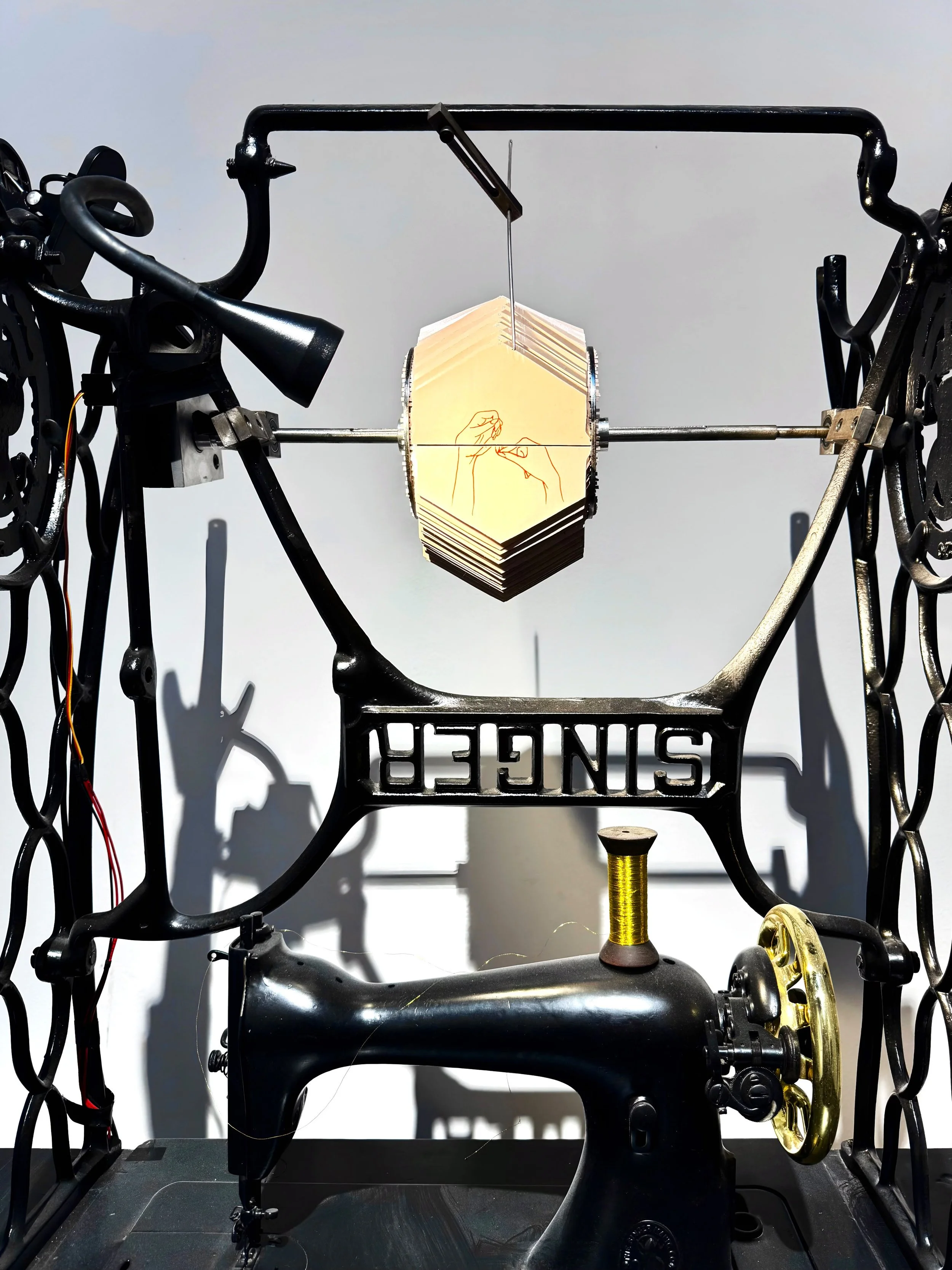
Hilo Vano · Hands / Threading. Detail of the drawn hands, needle and animation mechanism.
Again, and Again
A loop advances through individual frames and comes back to its beginning. I am interested in the difference between that mechanical return and the experience it produces: an action may begin again without reaching a conclusion, while the person watching continues to move through time.
-
Looping animation has appeared in my work for more than a decade. Earlier, I used modified flip clocks to replace numerical time with repeated images. In Hilo Vano that temporal structure moves into another machine. Repetition is no longer only about measuring or experiencing time; it becomes connected to labor, ritual, care and gestures that return from one generation to another.
A loop advances through individual frames and comes back to its beginning. I am interested in the difference between that mechanical return and the experience it produces: an action may begin again without reaching a conclusion, while the person watching continues to move through time.
In Time Keeps My Secrets Aloud, I replace the numbers of modified flip clocks with sequences of images. An object designed to report chronological time becomes a container for a repeated action. The mechanism keeps advancing, yet the event it carries can return to the same beginning.
I developed that investigation through ordinary routines and paradoxes of movement. Perpetual Waking and the sequence of Achilles and the tortoise belong to this longer temporal vocabulary. When I reactivate an earlier animation within Hilo Vano, I give it a different material setting: the domestic machine brings repetition into contact with work, inherited gestures and care.
Memories Are Stitched With Love, documented in 2018 as frame-by-frame animation on assembled sewing machines, is an important bridge in this development. I keep it here as an antecedent rather than presenting it as a newly produced component of Hilo Vano. The broader Time Keeps archive remains a distinct project.
The Work in Space
Behind Every Singer
Hilo Vano · Singer advertising animation and sewing-machine mechanism.
BIAM, Medellín, 2025.
Museo de Arte del Tolima
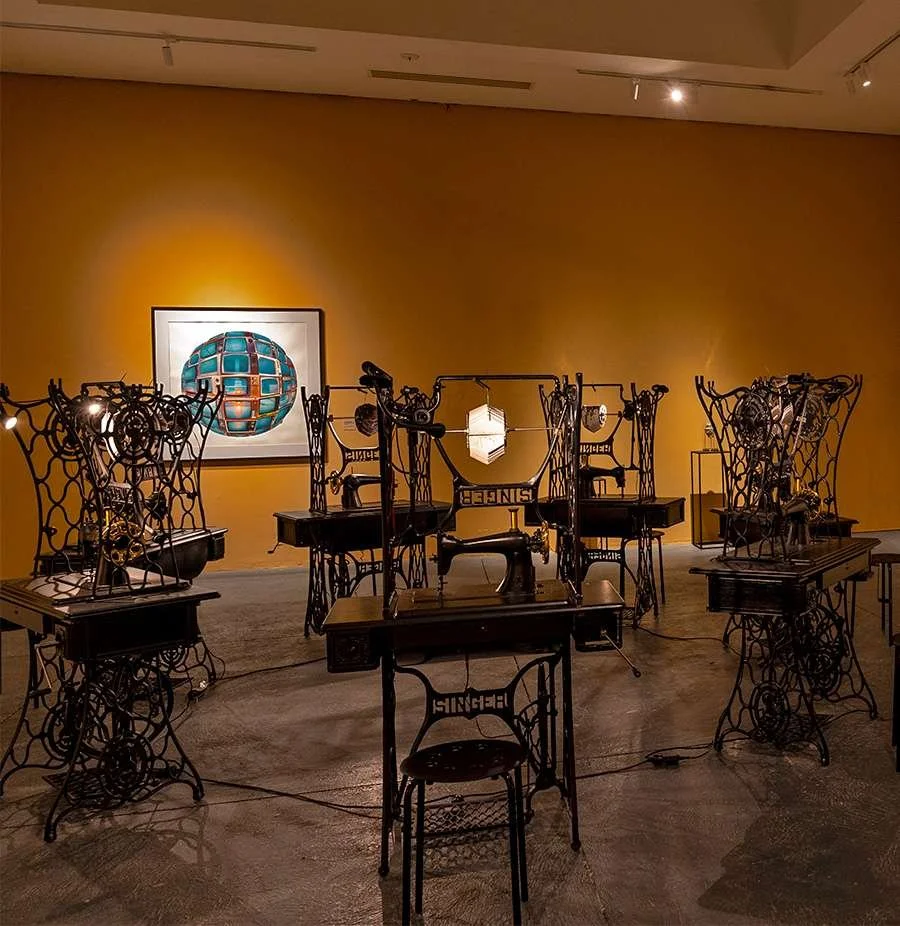
Hilo Vano, 2026 · Museo de Arte del Tolima, Ibagué, Colombia. Installation view. Photo: Museo de Arte del Tolima. 9 July–13 August 2026 Curated by Darío Ortiz. Exhibition design by Adrián Preciado. Recovered sewing machines, thread, and looping animation.
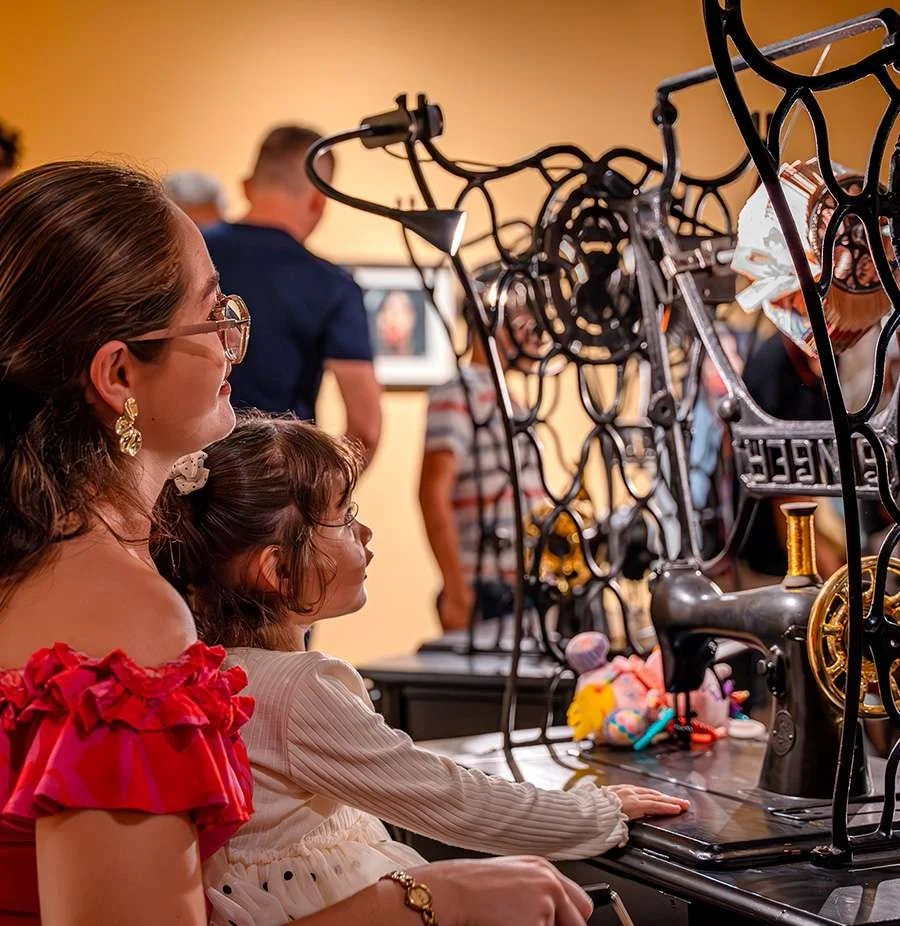
Hilo Vano, 2026 · Museo de Arte del Tolima, Ibagué, Colombia. Visitor interaction. Photo: Museo de Arte del Tolima. 9 July–13 August 2026 Curated by Darío Ortiz. Exhibition design by Adrián Preciado. Recovered sewing machines, thread, and looping animation.
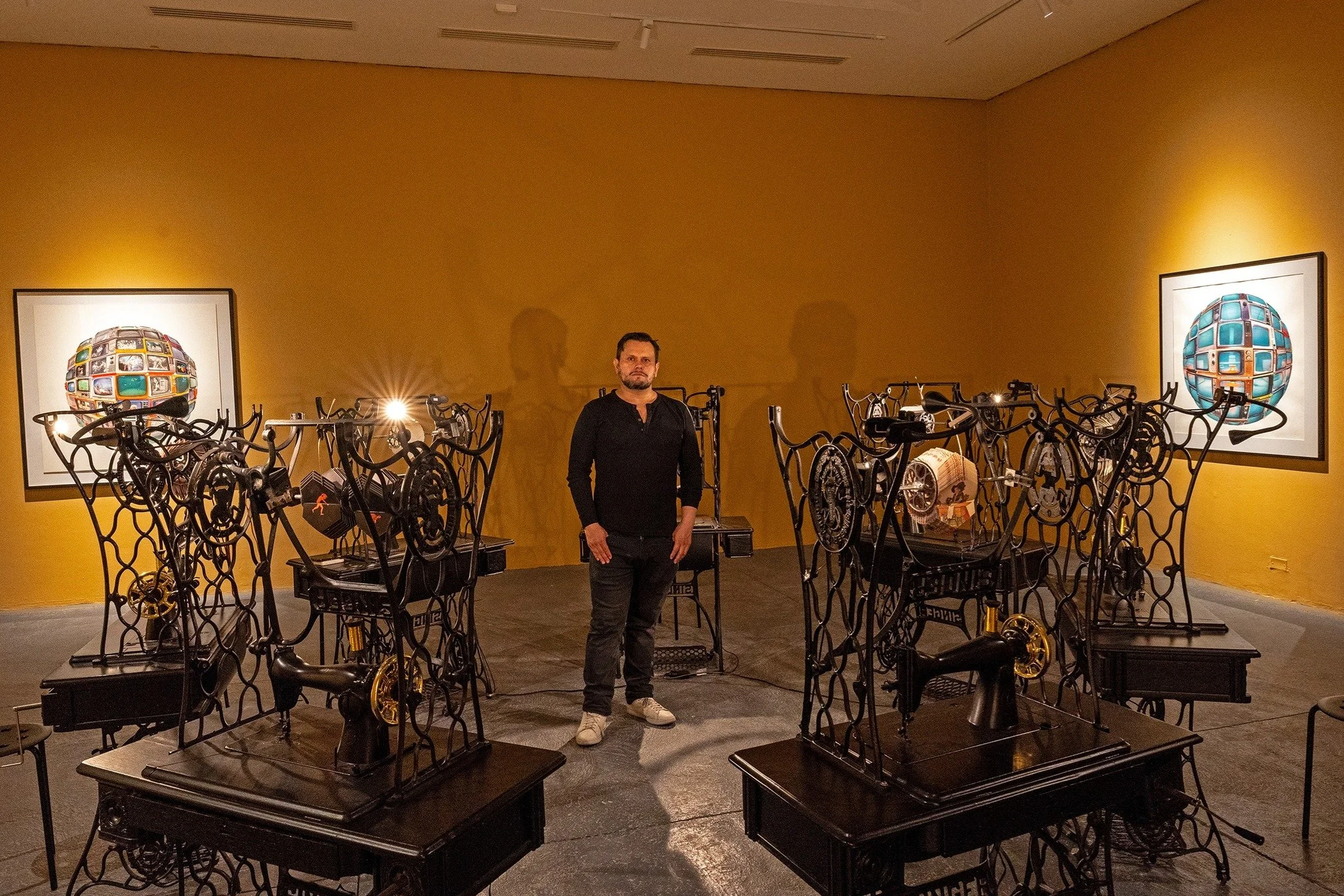
Hilo Vano, 2026 · Gonzalo García Gaitán with the installation. Museo de Arte del Tolima, Ibagué, Colombia. Photo: Museo de Arte del Tolima. 9 July–13 August 2026 Curated by Darío Ortiz. Exhibition design by Adrián Preciado. Recovered sewing machines, thread, and looping animation.
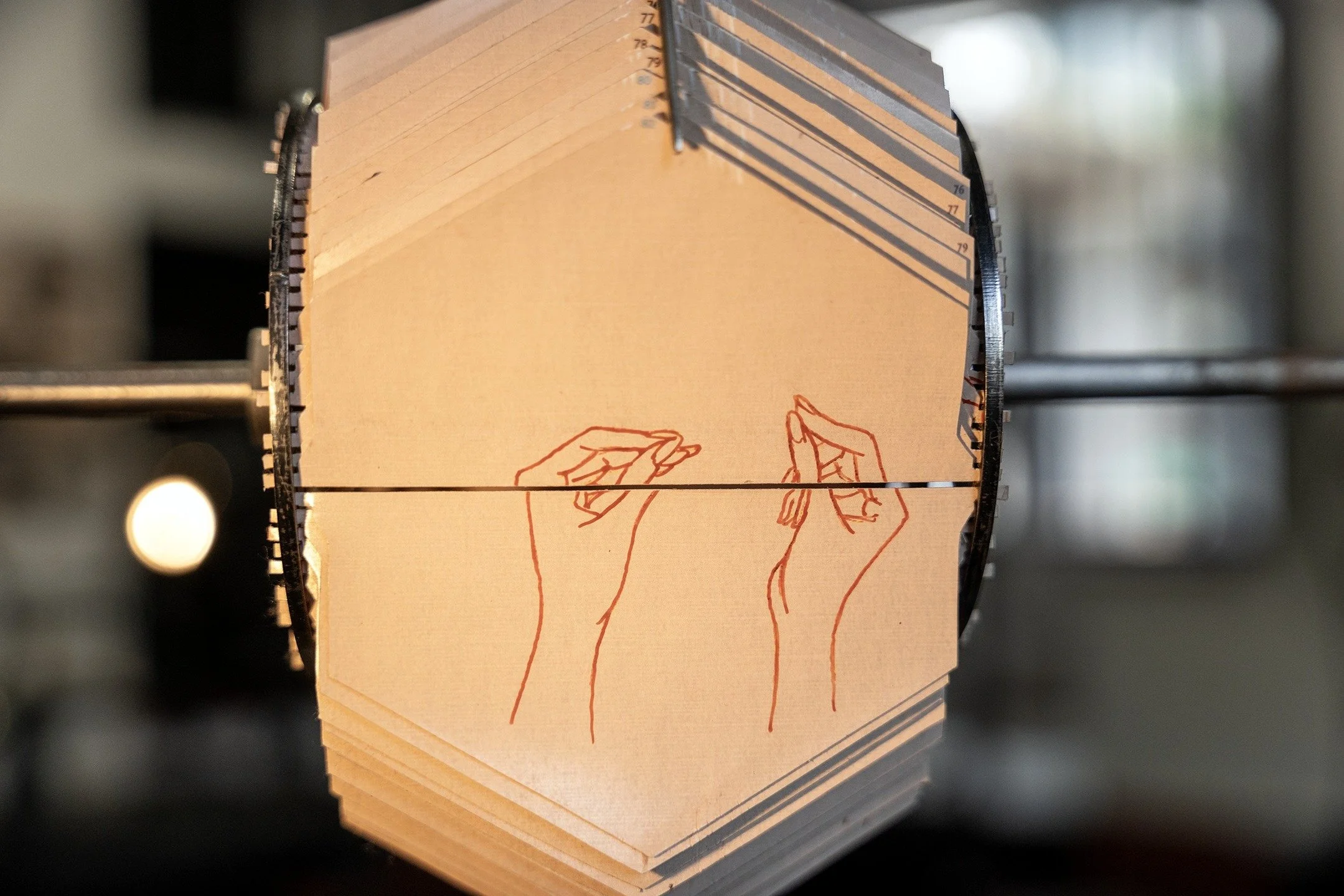
Hilo Vano, 2026 · Animation mechanism, detail. Museo de Arte del Tolima, Ibagué, Colombia. Photo: Museo de Arte del Tolima. 9 July–13 August 2026 Curated by Darío Ortiz. Exhibition design by Adrián Preciado. Recovered sewing machines, thread, and looping animation.
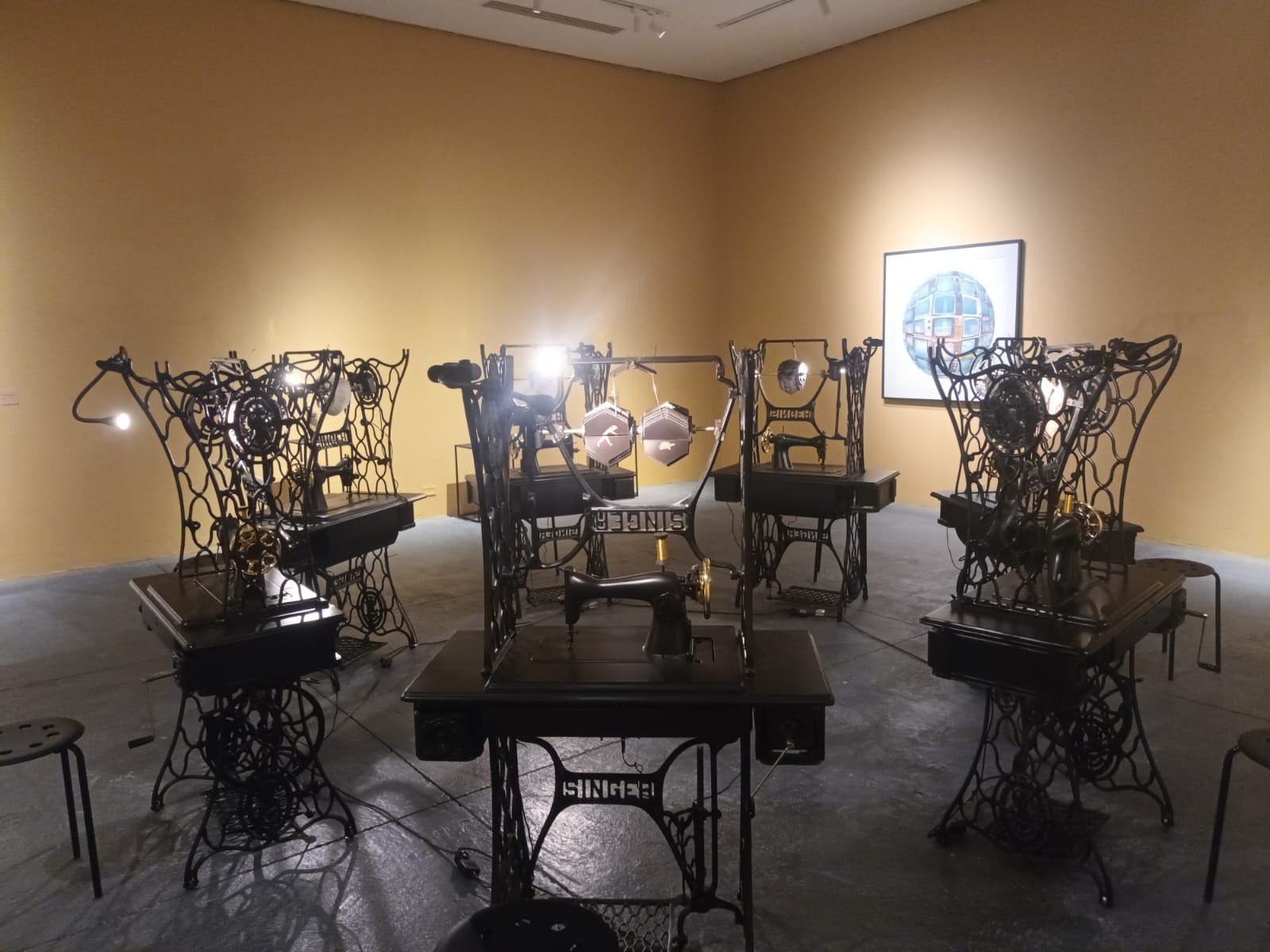
Hilo Vano, 2026 · Installation view. Museo de Arte del Tolima, Ibagué, Colombia. 9 July–13 August 2026 Curated by Darío Ortiz. Exhibition design by Adrián Preciado. Recovered sewing machines, thread, and looping animation.
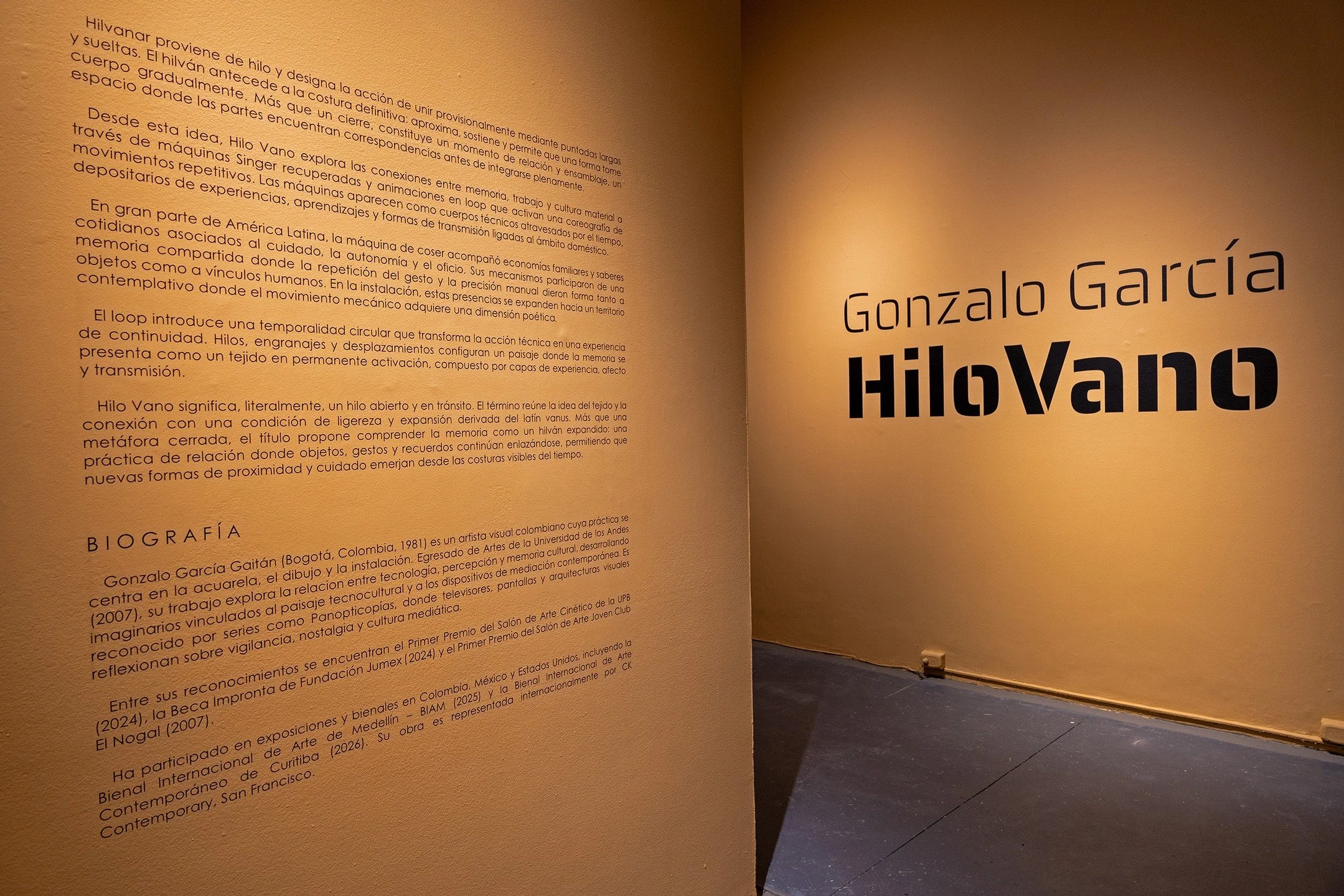
Hilo Vano, 2026 · Exhibition title and wall text. Museo de Arte del Tolima, Ibagué, Colombia. Photo: Museo de Arte del Tolima. 9 July–13 August 2026 Curated by Darío Ortiz. Exhibition design by Adrián Preciado. Recovered sewing machines, thread, and looping animation.
Casa Museo Alfonso López Pumarejo
I reconfigure the installation in relation to each room. The machines, threads and central meeting point make the architecture part of the work.
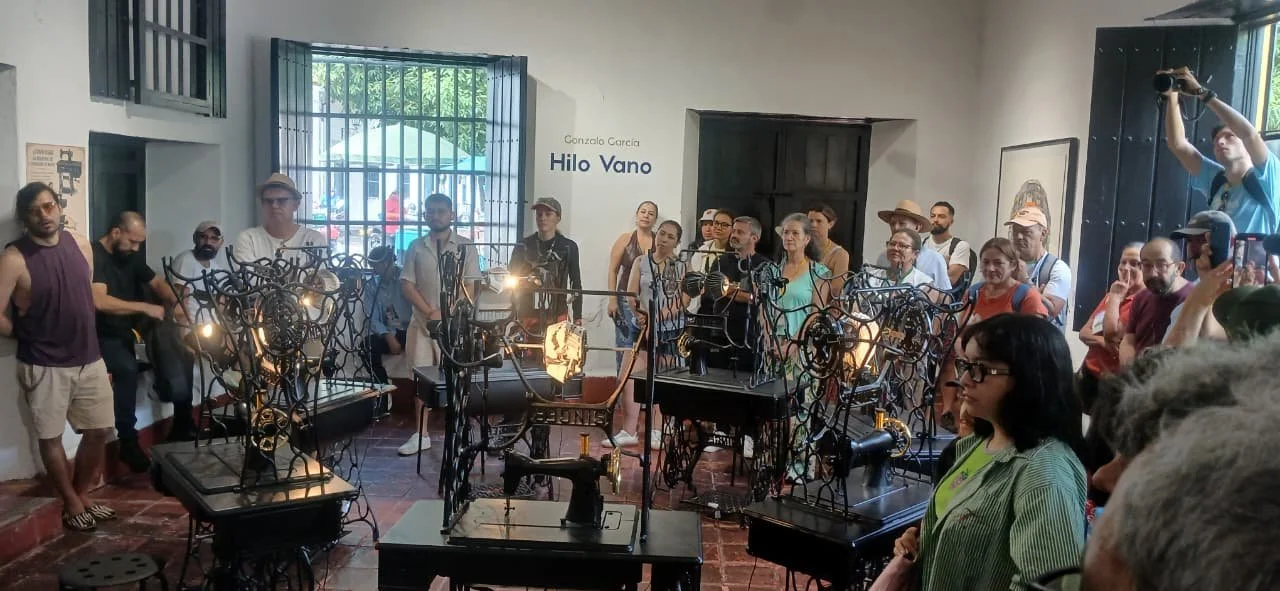
Hilo Vano, 2026 · Public presentation. Casa Museo Alfonso López Pumarejo, Honda, Colombia.
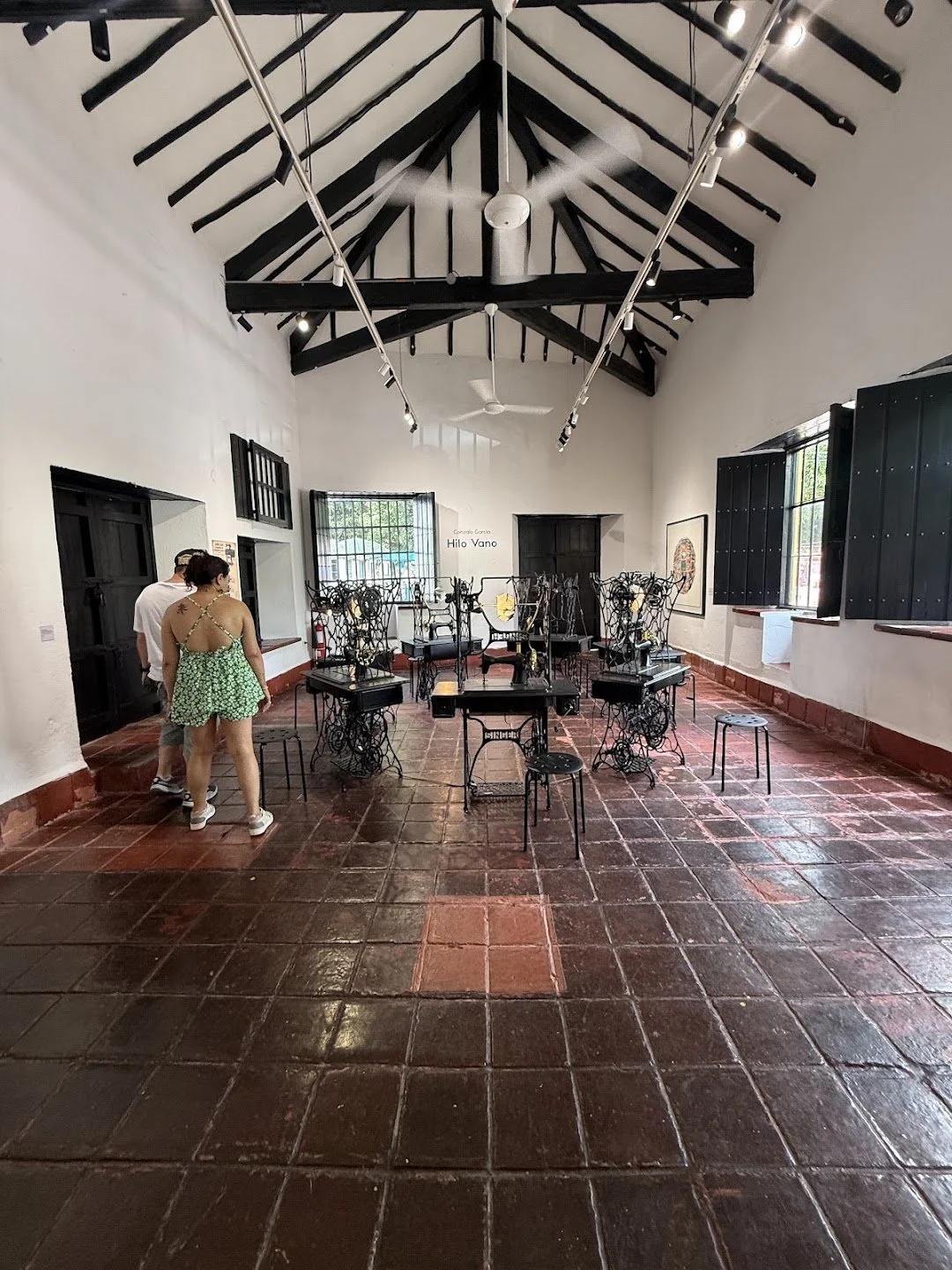
Hilo Vano, 2026 · Installation view. Casa Museo Alfonso López Pumarejo, Honda, Colombia.
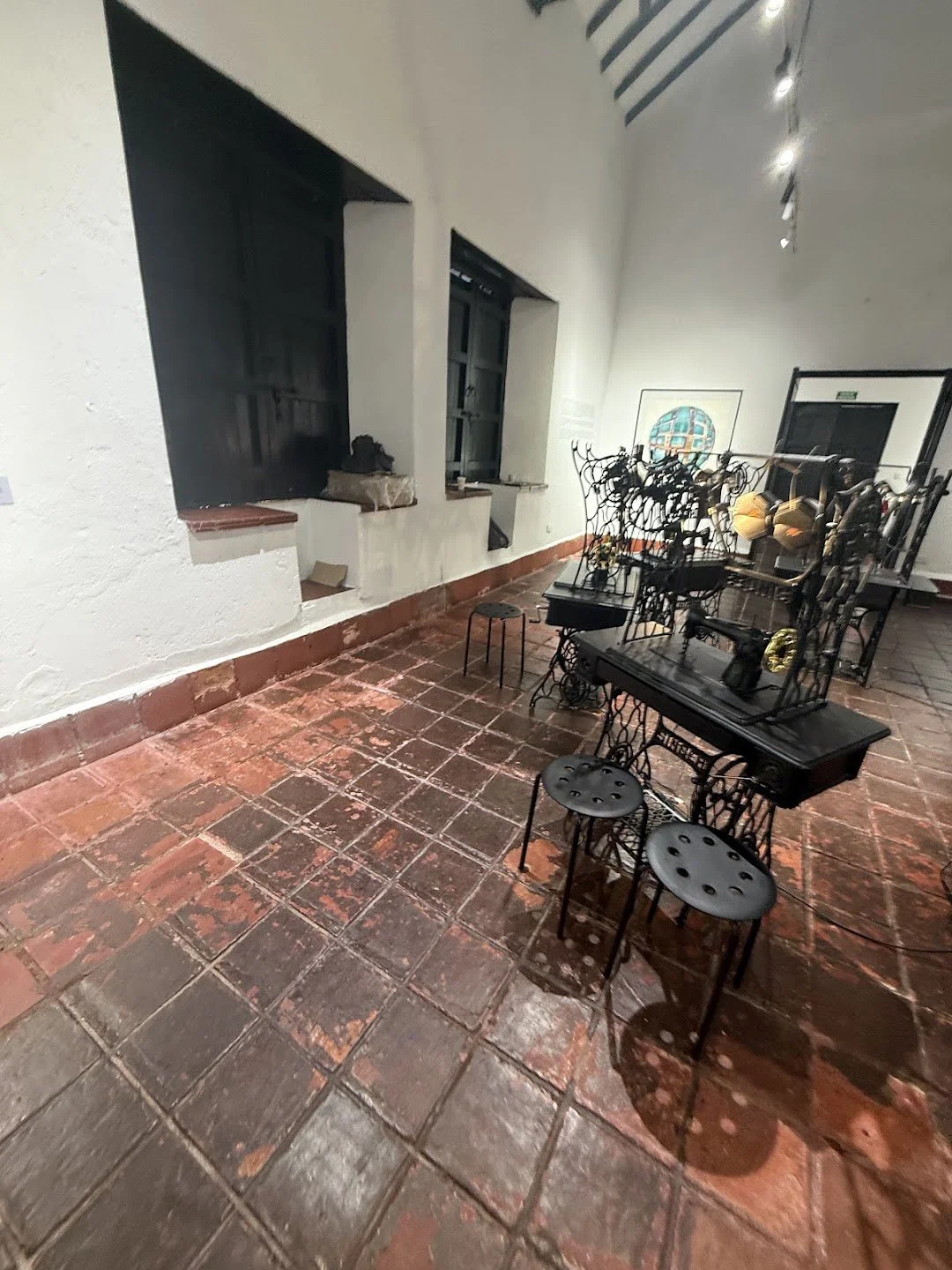
Hilo Vano, 2026 · Lateral installation view. Casa Museo Alfonso López Pumarejo, Honda, Colombia.
Early Studies
2022
Unrealized proposal / early configuration
-
An early 2022 proposal in the development of Hilo Vano envisaged twelve recovered Singer sewing machines arranged around a central convergence of threads. These images document an unrealized configuration, not an exhibition.
The early prototype used images printed on pages of the Political Constitution of Colombia as the mechanism’s moving leaves. The proposal also considered court rulings and labour codes as archival materials through which to make women’s work visible.
Gold leaf on iron and wood, gold thread, lighting and connections between the pedal, needle and animation mechanism were proposed interventions. The renderings are spatial studies; they do not establish that every intervention was carried out.
Source: Gonzalo García Gaitán, research archive, 2022.
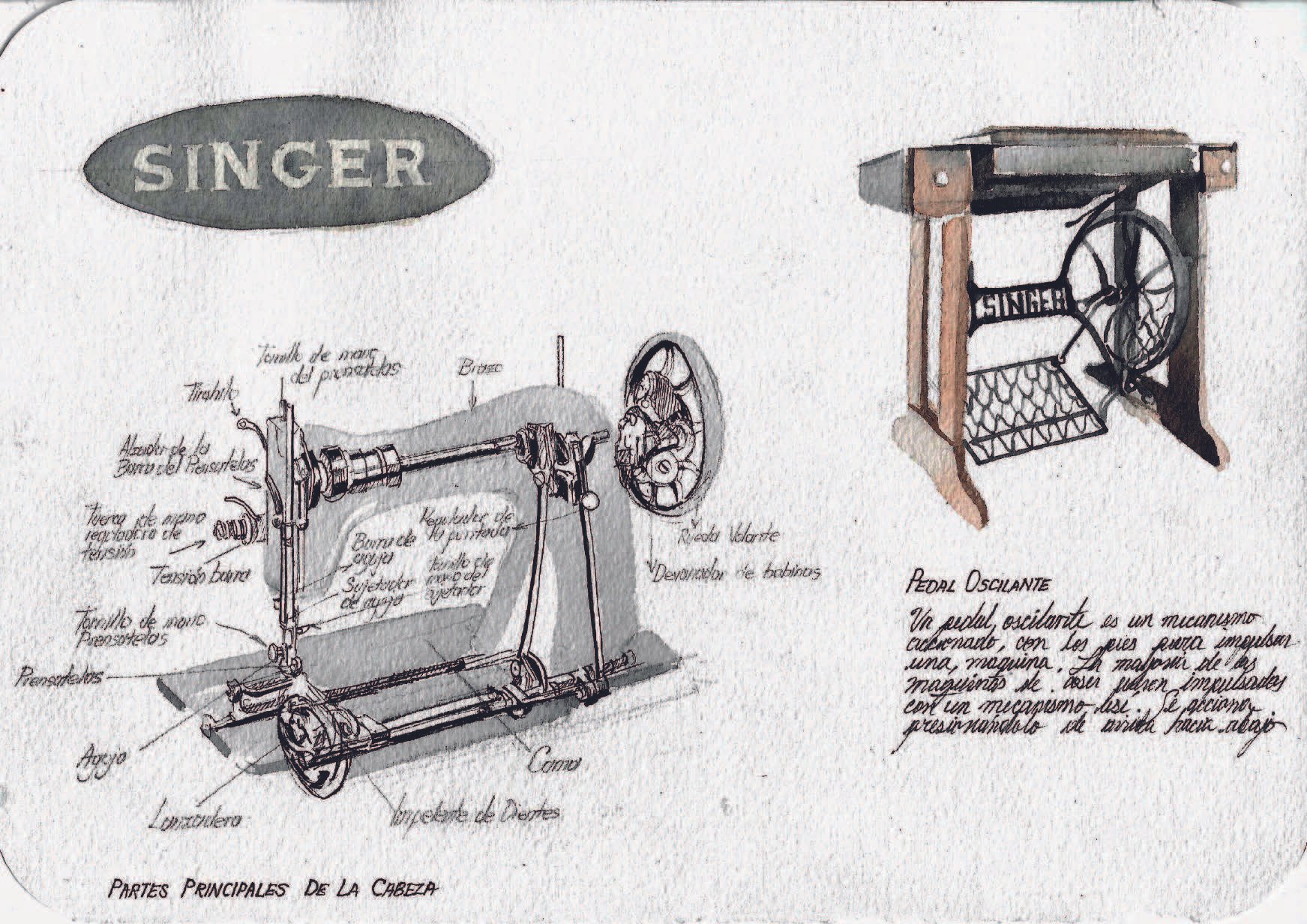
Hilo Vano · Preparatory drawing, 2022.
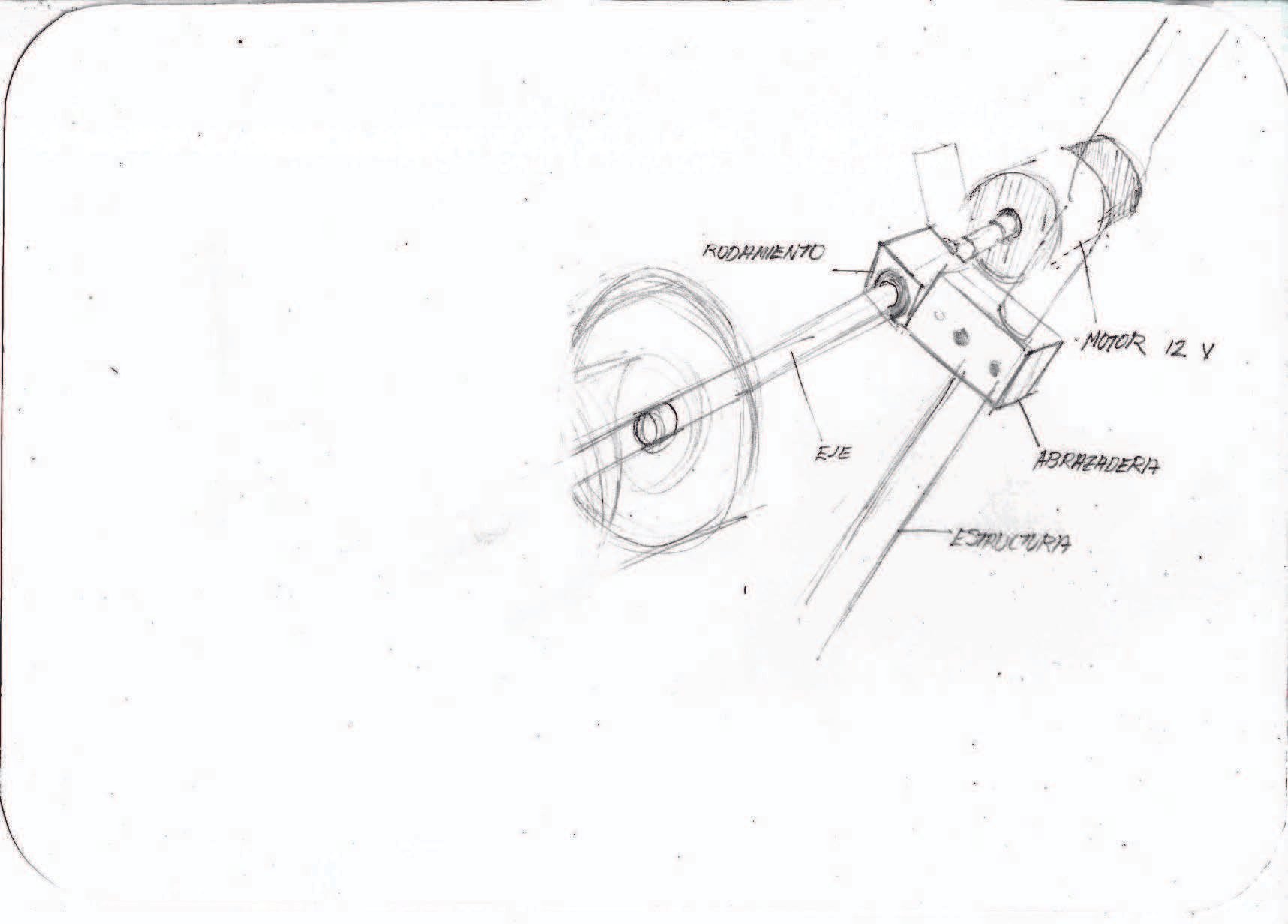
Hilo Vano · Animation mechanism study, 2022.
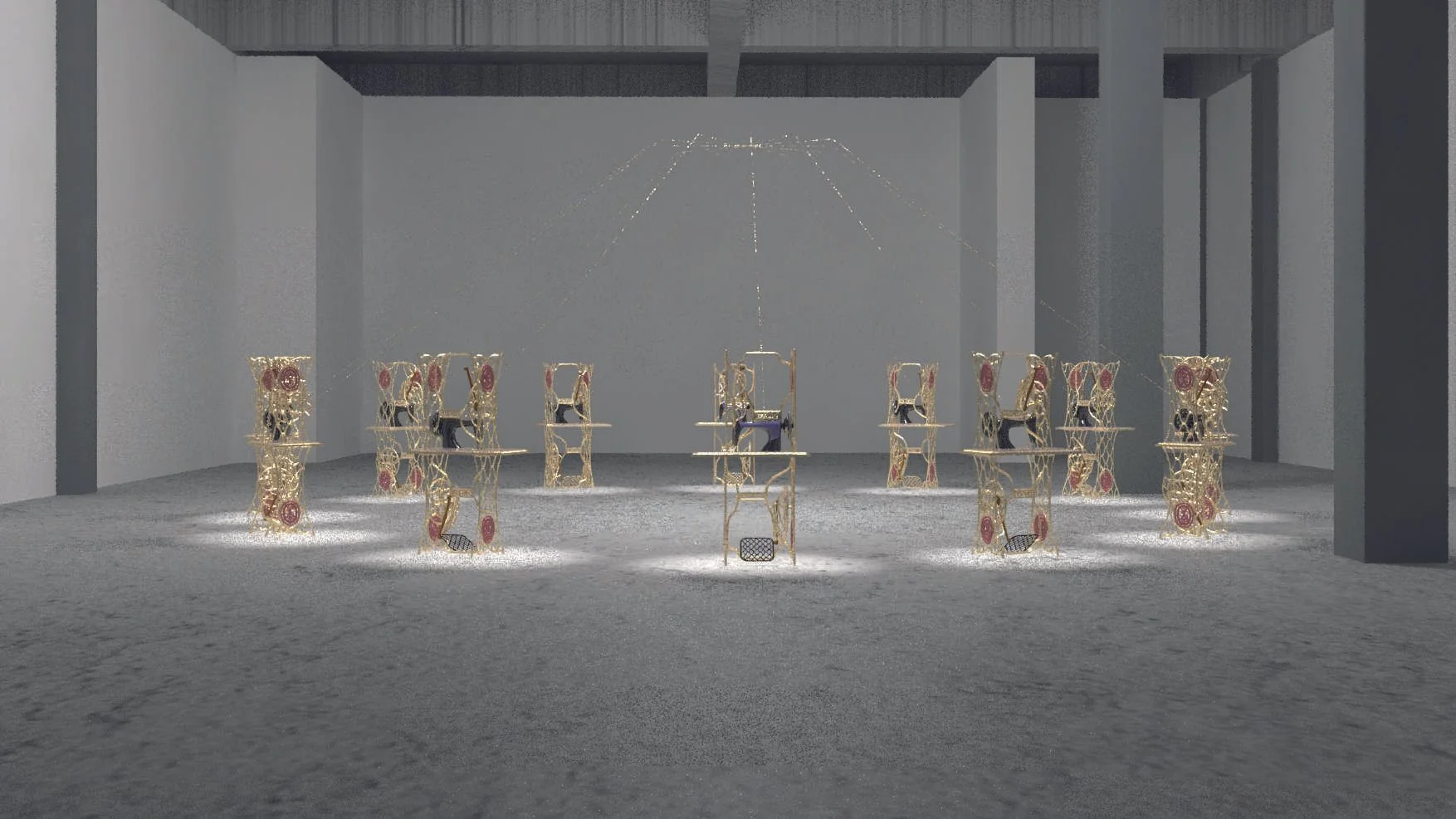
Hilo Vano · Spatial study, 2022. Unrealized configuration.
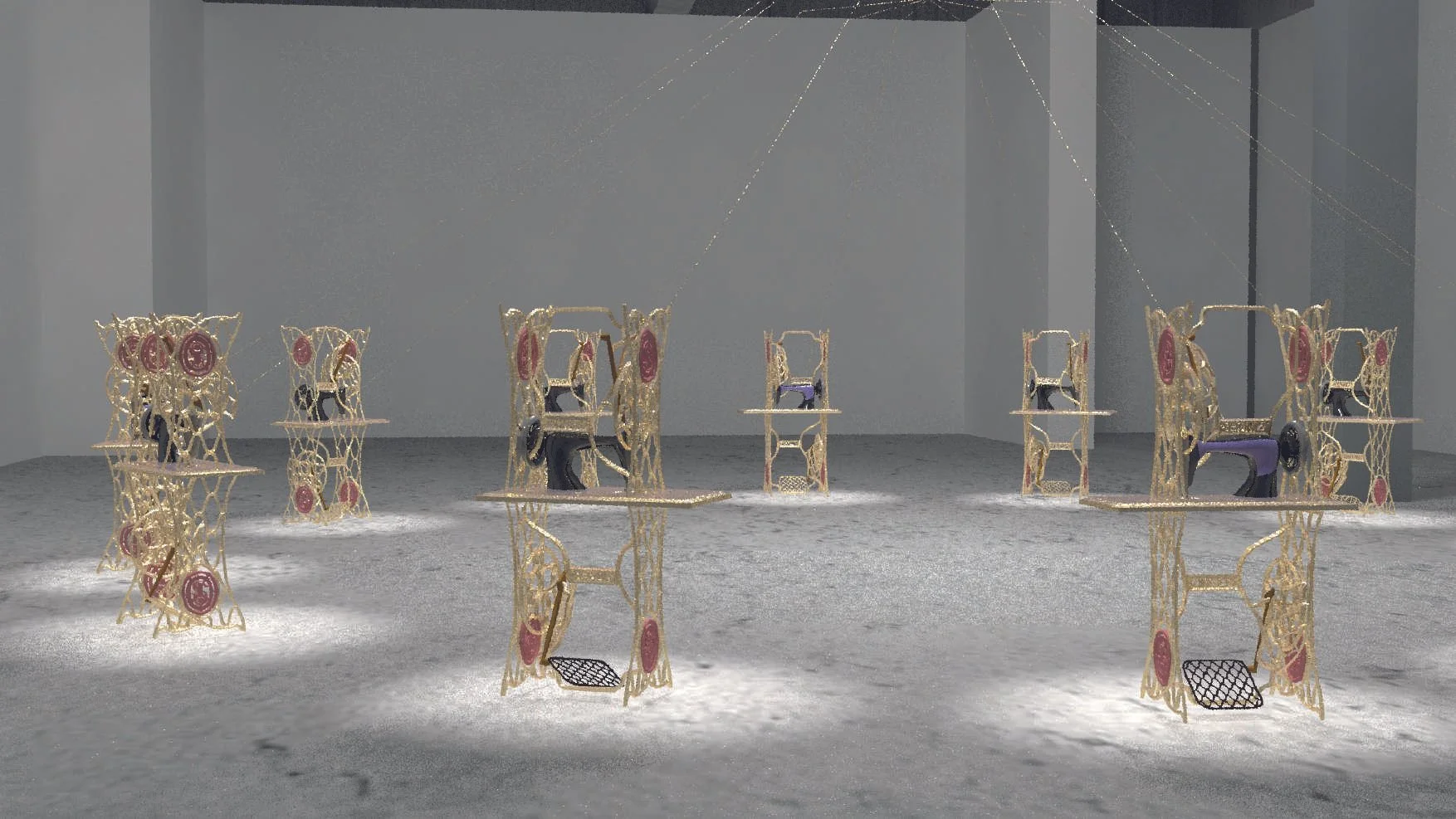
Hilo Vano · Thread and machine arrangement. Digital study, 2022.
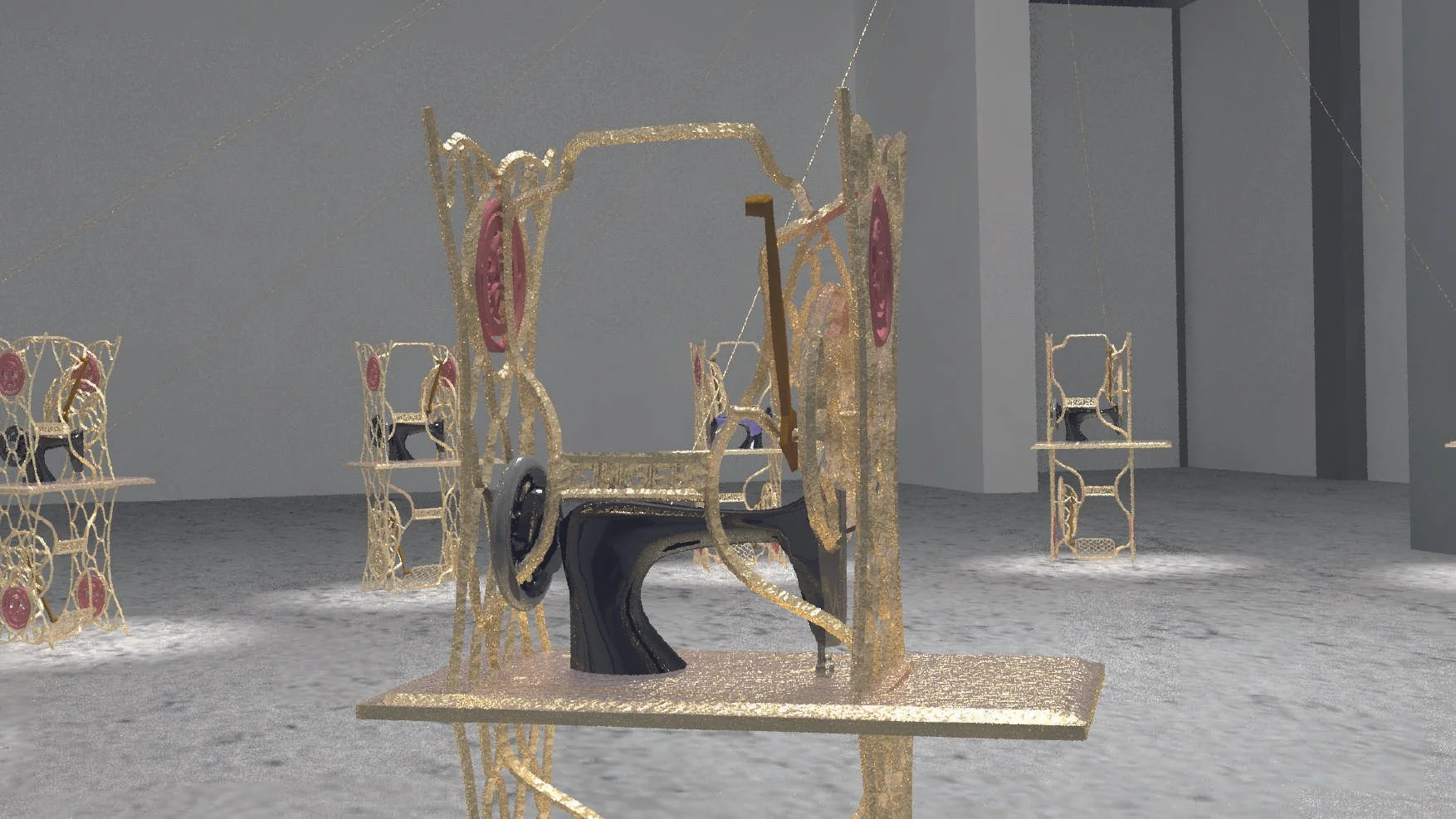
Hilo Vano · Proposed gold-leaf intervention. Digital study, 2022.
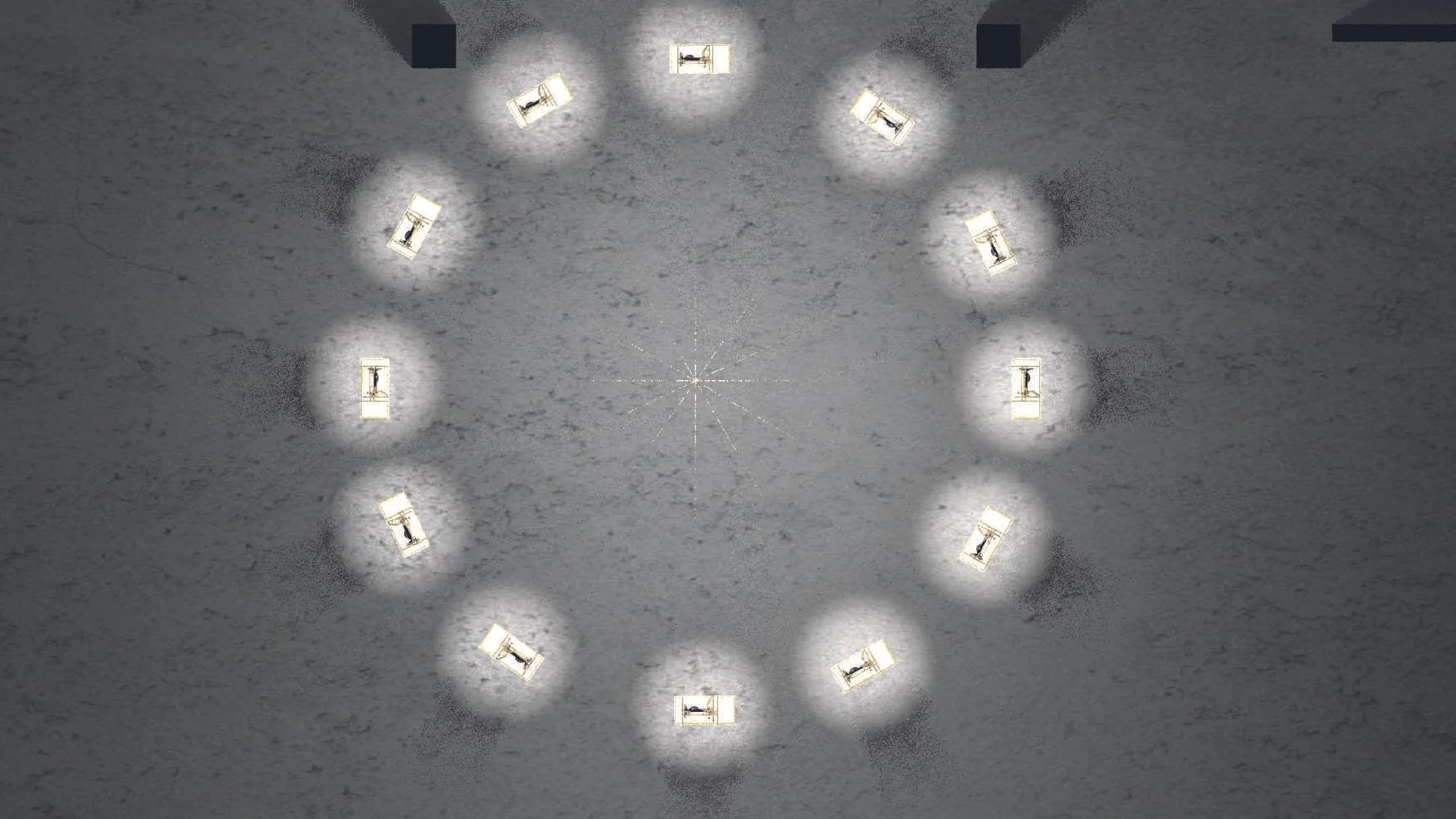
Hilo Vano · Circular arrangement of twelve machines. Planning model, 2022.
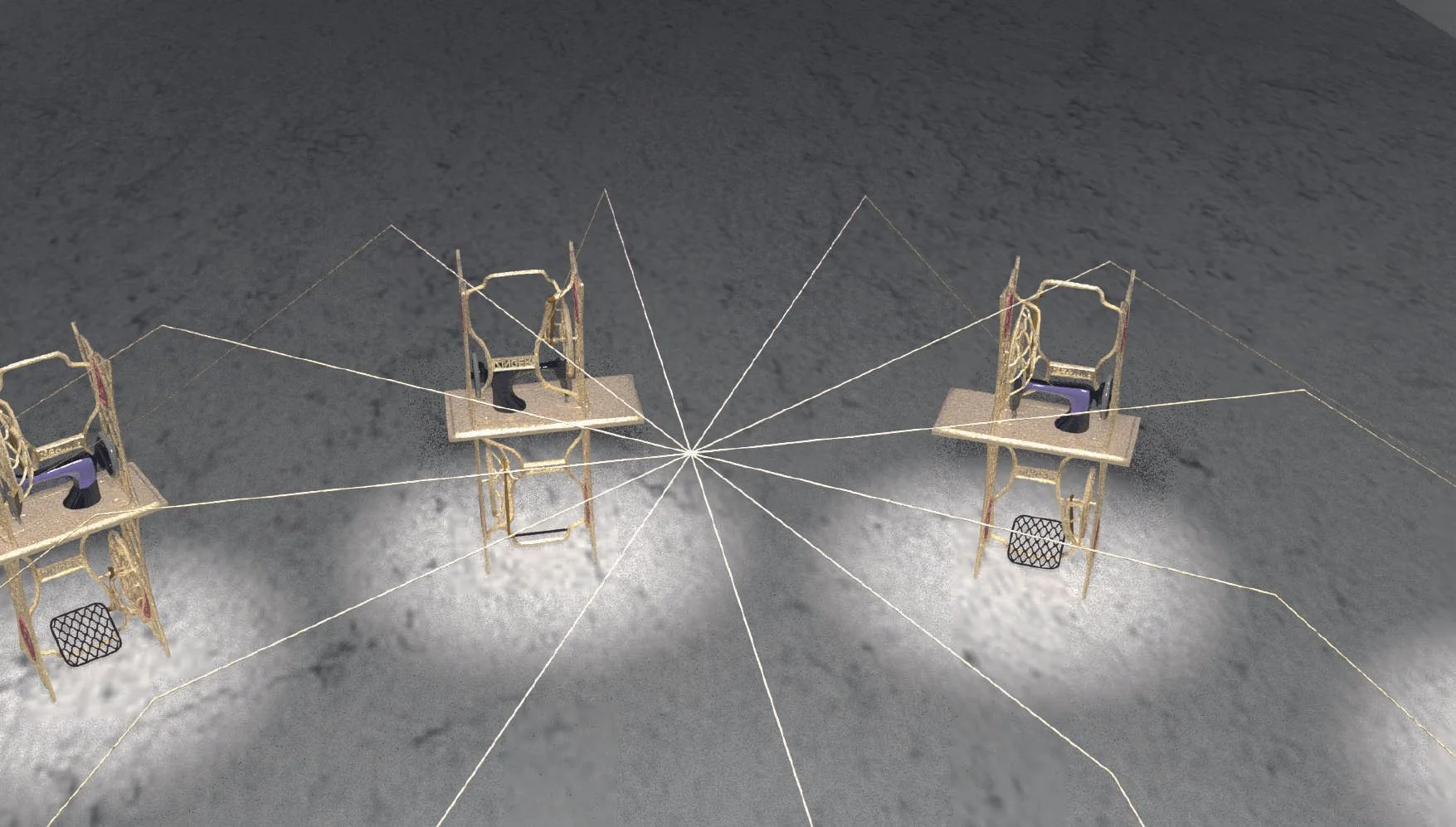
Hilo Vano · Threads converging at the centre of the room. Digital study, 2022.
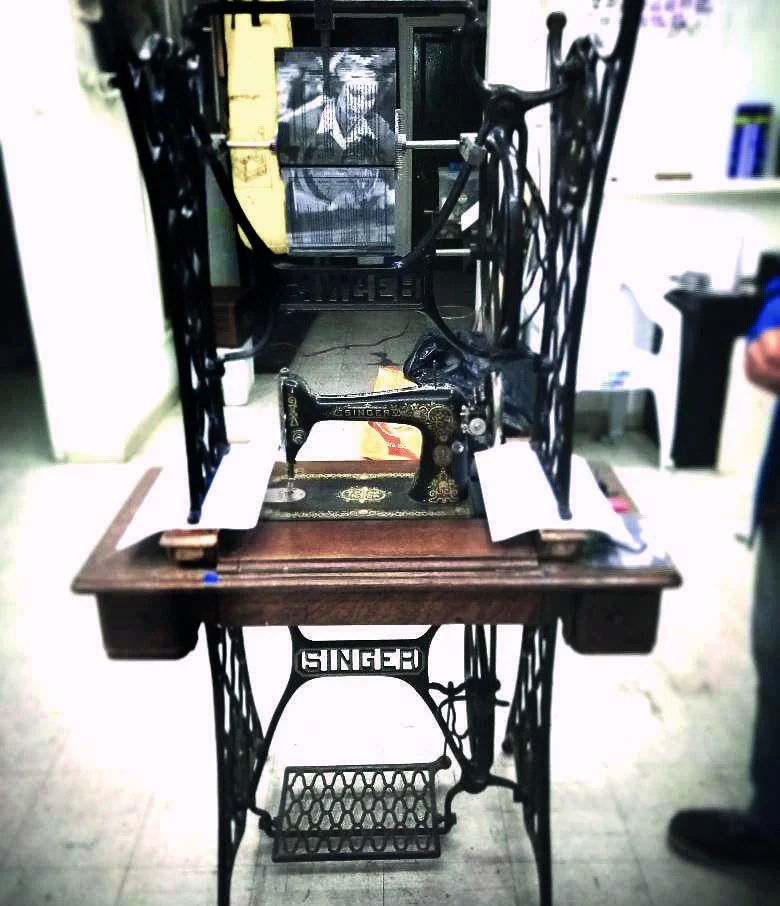
Hilo Vano · Early prototype with animation printed on pages of the Political Constitution of Colombia. Research archive, 2022.
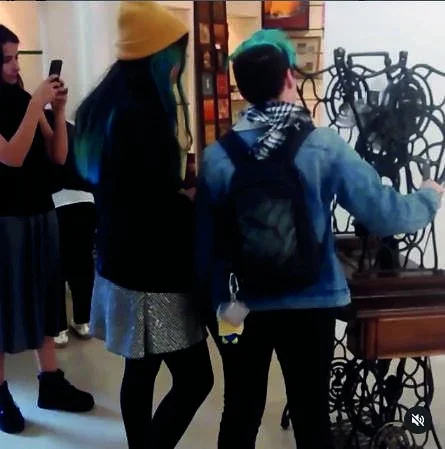
Hilo Vano · Visitors operating the early prototype by hand crank. Research archive, 2022.
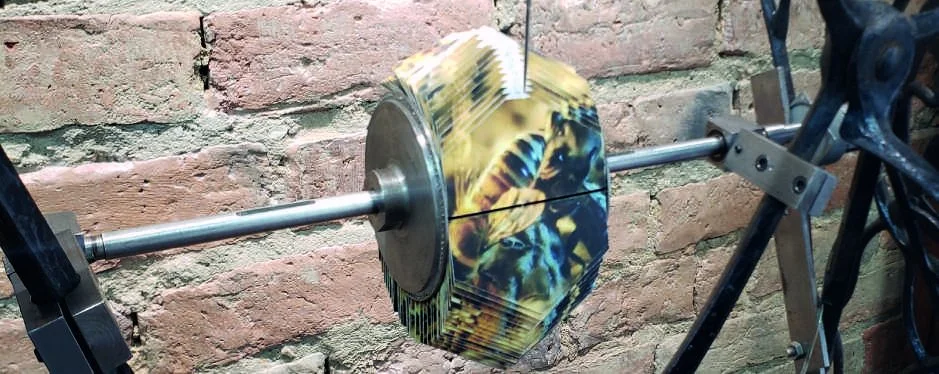
Hilo Vano · Bee animation and rotating mechanism. Early prototype, research archive, 2022.
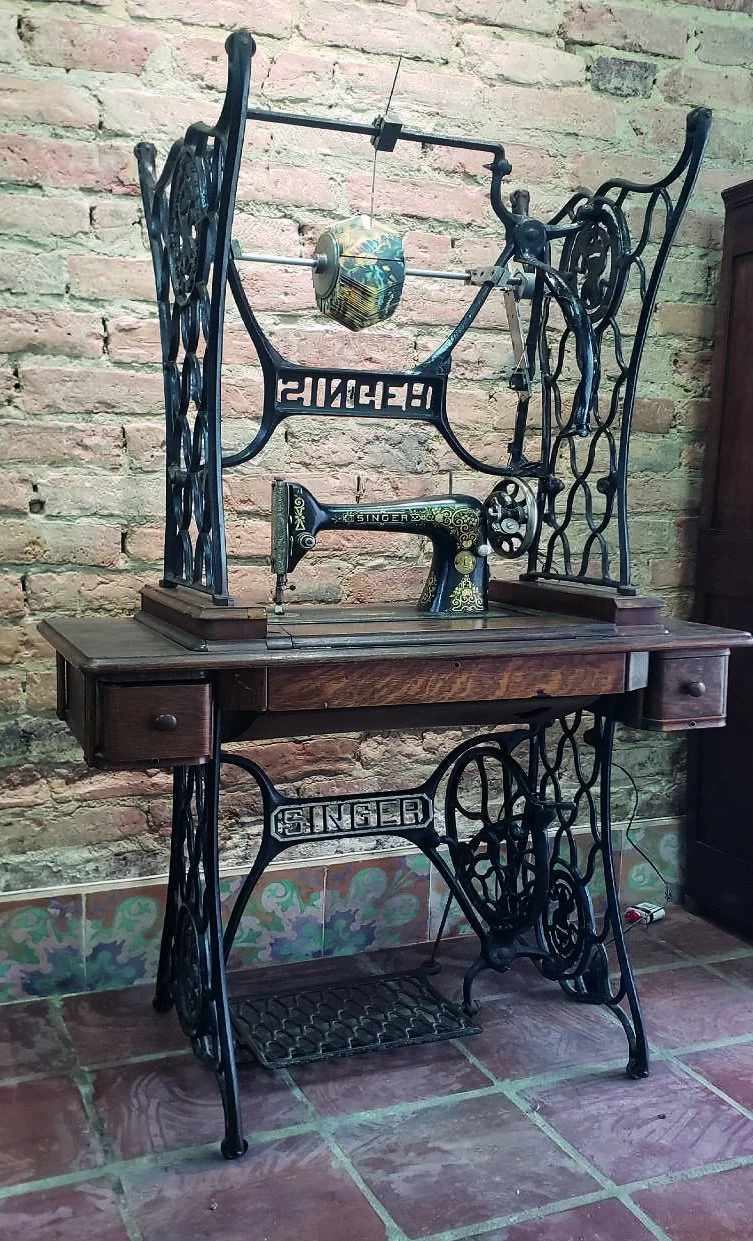
Hilo Vano · Early sewing-machine prototype. Research archive, 2022.
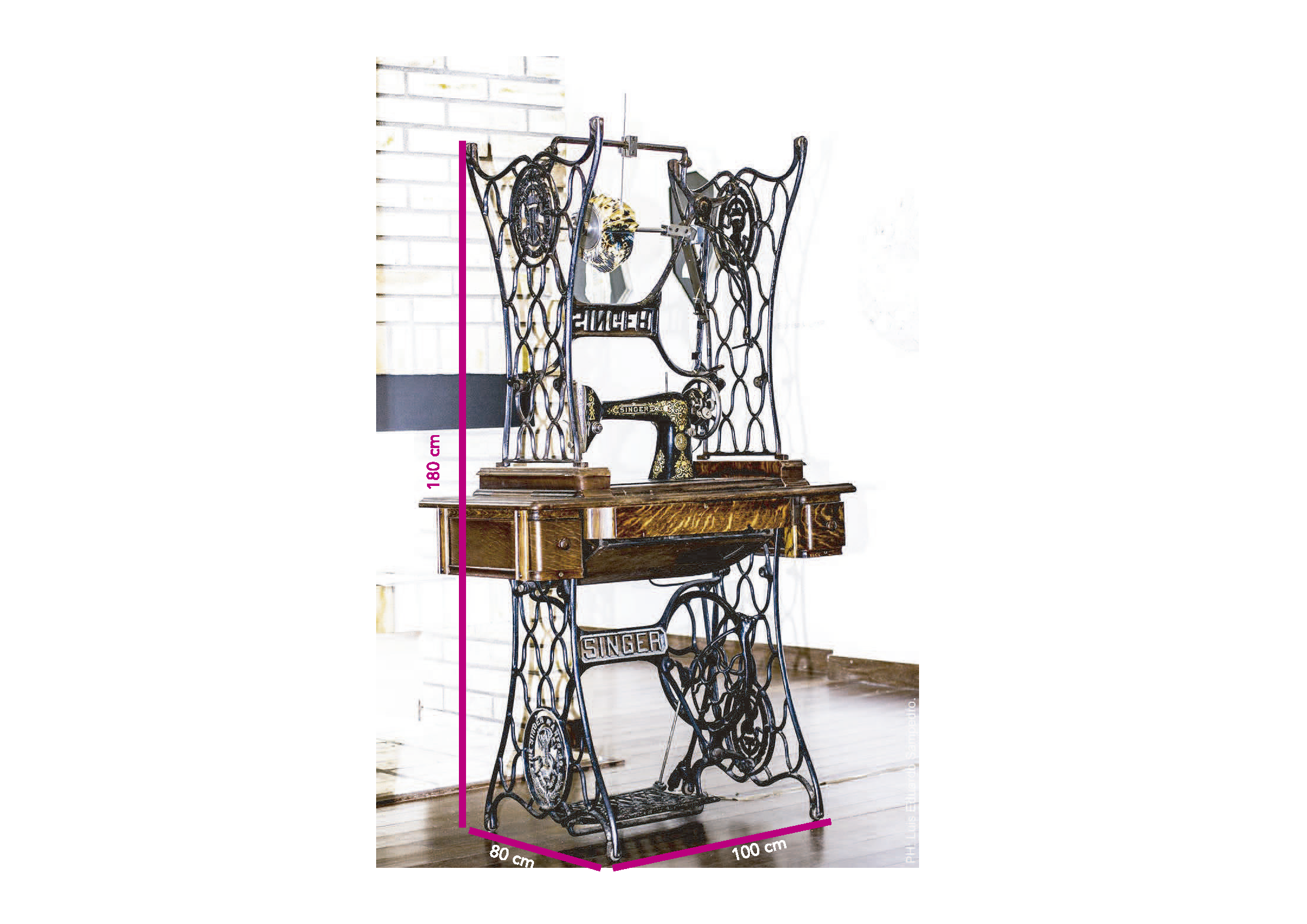
Hilo Vano, 2025 · Prototype and Tiempo narcótico (Narcotic Time)
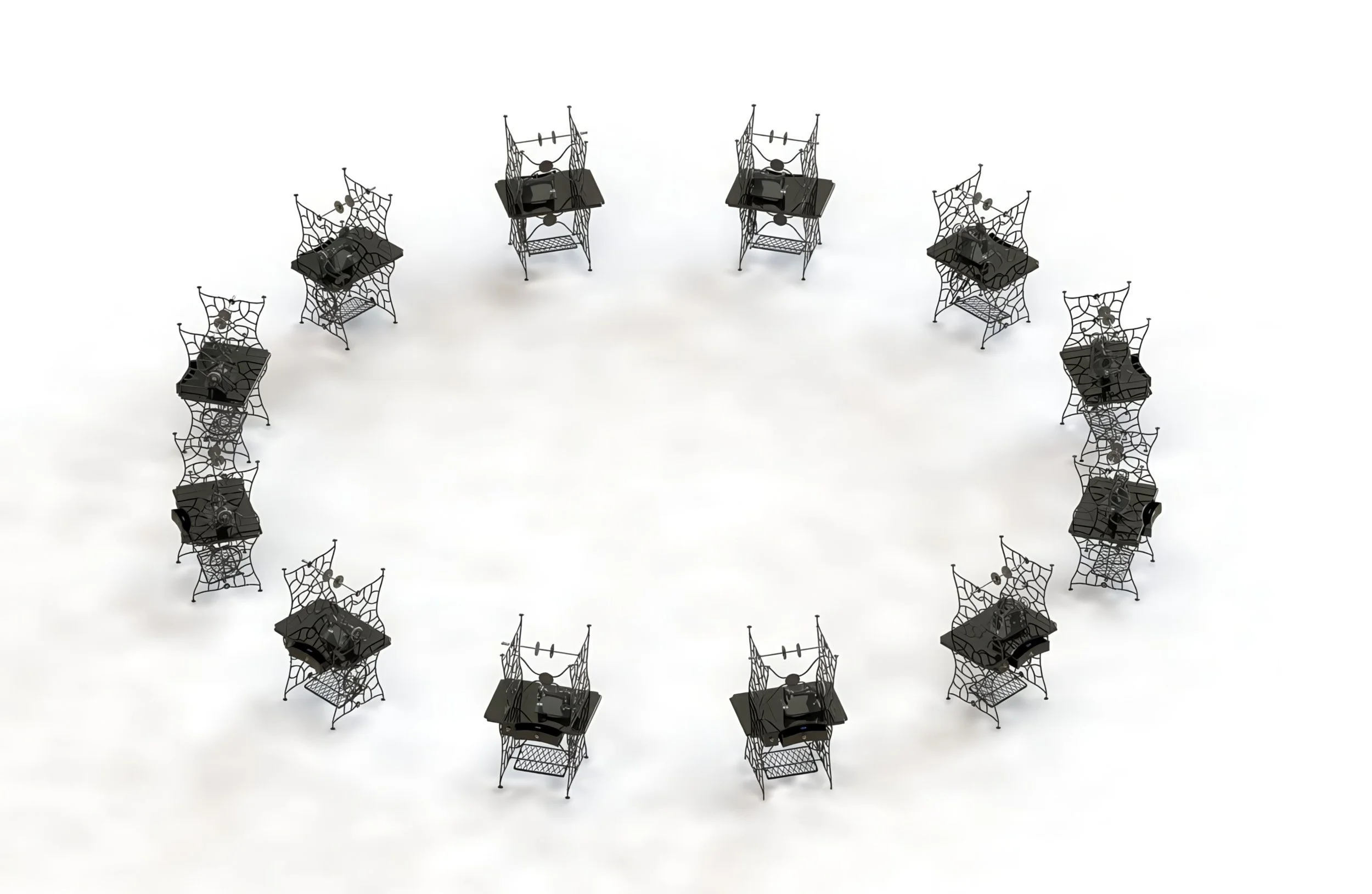
Hilo Vano, 2025 · Planning model / spatial study with twelve sewing machines.
Technical
-
Hilo Vano, 2025–Present
Installation composed of recovered Singer sewing machines, modified mechanisms, looping animations, sound and light.
Variable dimensions.